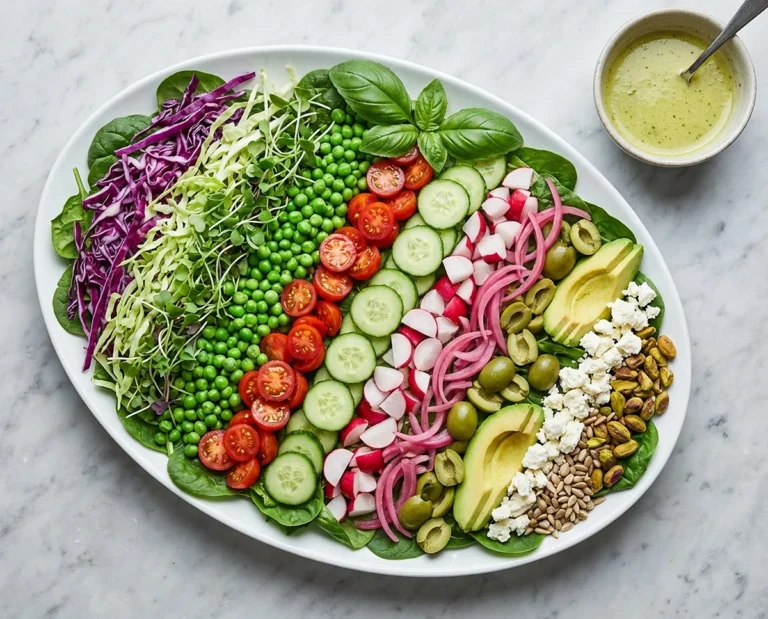
Greek Salad with Homemade Dressing
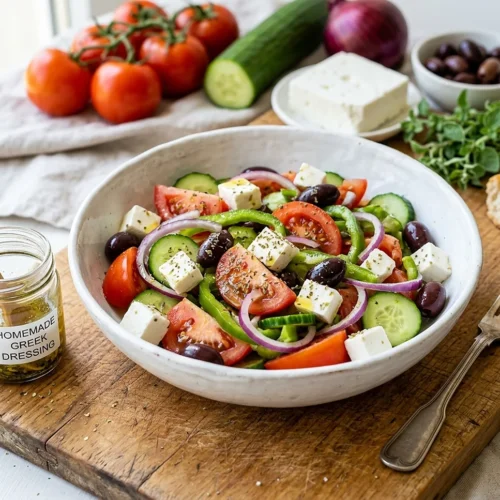
This Greek salad with homemade dressing is the kind of recipe that makes you wonder why you ever bought bottled dressing. Fresh, bold, and ready in minutes – it tastes like a little corner of the Mediterranean right on your table.
Honestly, the first time I made this, my family demolished it before I even sat down. There’s something about that tangy red wine vinegar dressing soaking into chunky tomatoes and creamy feta that just hits different. It’s become our go-to easy Greek salad for weeknights, BBQs, and everything in between.
Table of Contents
Why You’ll Love This Recipe
Obsessed with this? collection of mediterranean salads — go check them out!
This is not your average sad side salad. We’re talking thick wedges of juicy tomatoes, crisp cucumber, briny kalamata olives, and a generous slab of feta – all tossed in a garlicky, herb-forward dressing that you shake together in a jar.
It’s a fresh Mediterranean salad through and through: vibrant, satisfying, and wildly simple. No cooking, no fuss, just good ingredients doing what they do best. If you love a simple Greek salad with dressing that punches way above its weight, this one’s for you.
Ingredients
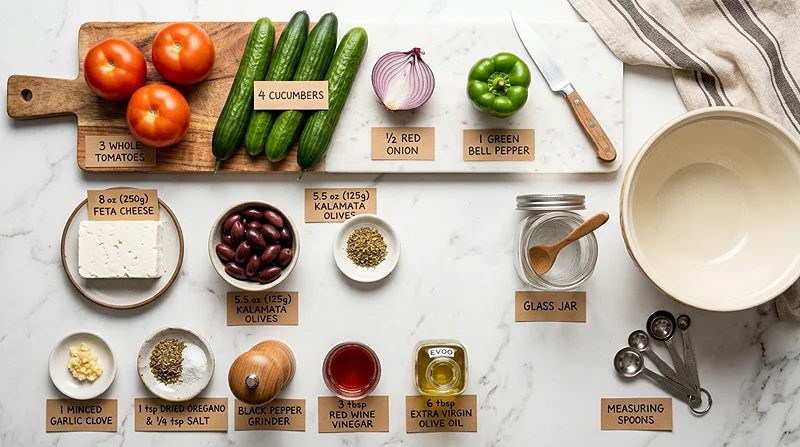
Here’s everything you need. I’ve grouped it so you can prep the dressing first while you chop the veggies – it’s a total time-saver.
| Category | Ingredient | Amount |
|---|---|---|
| Salad | Tomatoes (tennis ball size) | 3 |
| Lebanese / Persian cucumbers (~8 inches long) | 4 | |
| Small red onion | 1/2 | |
| Small green capsicum / bell pepper | 1 | |
| Feta block | 8 oz / 250 g | |
| Black kalamata olives | 5.5 oz / 125 g | |
| Dried oregano | 1 tsp | |
| Dressing | Garlic clove, minced | 1 (about 1/2 tsp) |
| Dried oregano | 1 tsp | |
| Salt | 1/4 tsp (or 1/2 tsp Kosher salt) | |
| Freshly ground black pepper | To taste | |
| Red wine vinegar | 3 tbsp | |
| Extra virgin olive oil (Greek preferred) | 6 tbsp |
A note on the olives: Kalamata olives are the real deal here. They’re meatier and more flavourful than your average canned black olives. If you can find them at the deli counter, even better.
How to Make Greek Salad with Homemade Dressing
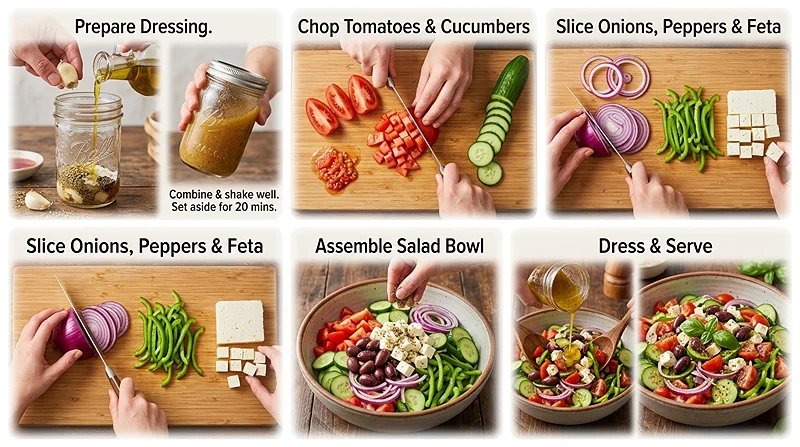
Step 1: Make the Dressing First
Pop all the dressing ingredients into a jar – garlic, oregano, salt, pepper, red wine vinegar, and that good extra virgin olive oil. Seal it up and give it a good shake.
Now here’s the secret: let it sit for 20 minutes. I know, I know – waiting is hard. But those 20 minutes let the garlic and oregano properly infuse into the oil and vinegar, and the difference is honestly remarkable. Make it while you chop!
Step 2: Prep the Tomatoes
Cut each tomato into 6 wedges, then cut each wedge into 3 or 4 pieces. You want chunky, rustic bites – not dice. This is a Greek salad, not a bruschetta topping.
If your tomatoes are super watery (summer tomatoes, I’m looking at you), scoop out the seedy middle with a teaspoon. This keeps the salad from going soupy, especially if it’s sitting out for a bit.
Step 3: Slice the Cucumbers
Slice the cucumber into rounds about 1/2 cm thick. If you’re using thicker cucumbers, halve them lengthways first, then slice. Lebanese or Persian cucumbers are ideal here – they’re less watery and have a snappier crunch.
This is a key part of what makes it a great fresh Mediterranean salad: the cucumber needs to hold its texture, not turn into mush. Keep the slices generous.
Step 4: Prep the Onion, Capsicum, and Feta
Finely slice the red onion into rings. If raw onion is a bit intense for you, soak the slices in cold water for 10 minutes – it takes the sharpness right off. For the capsicum, cut it into short strips about the same size as the cucumber slices.
For the feta: cut it into cubes roughly 1 cm / 2/5 inch. Don’t crumble it. One of the joys of a proper easy Greek salad is getting a big creamy chunk of feta in every few bites.
Step 5: Toss and Serve
Add everything to a large bowl – tomatoes, cucumber, onion, capsicum, feta, and olives. Sprinkle over the oregano, then pour the dressing all over. Toss gently (you don’t want to smash the feta) and serve immediately.
Seriously, don’t wait. This salad is at its absolute best the moment it’s dressed. The vegetables are crisp, the feta is still intact, and the dressing is pooling in all the right places.
Expert Tips for the Best Results
Use the Best Olive Oil You Can Find
The dressing is simple, which means the quality of each ingredient really shows. A good Greek extra virgin olive oil makes a noticeable difference. It’s fruitier and a little more robust than standard olive oils, which complements the oregano beautifully.
Don’t Skip the Resting Time
That 20-minute wait for the dressing isn’t optional – it’s the move. Garlic in particular needs a little time to mellow and meld. If you’re in a rush, 10 minutes is the absolute minimum.
Keep It Chunky
Resist the urge to finely chop everything. Big, rustic cuts are traditional and they give each bite real substance. This isn’t a dainty salad – it’s a hearty simple Greek salad with dressing that can easily hold its own as a meal.
Variations to Try
Add Some Protein
Want to make it a full meal? Grilled chicken, pan-seared salmon, or even chickpeas work beautifully here. Pair it alongside something like a classic easy quiche for a complete, fuss-free spread.
Make It Vegan
Swap the feta for a good vegan feta alternative (there are some surprisingly tasty ones now) and you’ve got a fully plant-based fresh Mediterranean salad that still hits all the right notes.
Add Extra Veggies
Sliced radishes, roasted red peppers, or even artichoke hearts are great additions. Just don’t go overboard – the beauty of this salad is its simplicity.
Troubleshooting
My Salad Is Too Watery
This usually comes down to the tomatoes. Make sure you’re scooping out the seeds if they’re very juicy. Also, dress the salad just before serving – the salt in the dressing draws moisture out of the vegetables over time.
The Dressing Tastes Too Sharp
Red wine vinegar can be punchy. If it feels too acidic, add another tablespoon of olive oil or a very small pinch of sugar to balance it out. Taste as you go.
The Onion Is Too Overwhelming
Just soak the sliced rings in cold water for 10 minutes, then drain and pat dry. It removes the harsh bite while keeping that mild onion flavour you want in a good easy Greek salad.
Storage Instructions
| Method | Duration | Notes |
|---|---|---|
| Refrigerator (undressed) | Up to 2 days | Store chopped veggies and dressing separately |
| Refrigerator (dressed) | Same day only | Best eaten immediately; gets watery over time |
| Dressing (jar) | Up to 1 week | Keep in fridge; shake before each use |
No-waste kitchen tip: Got leftover salad? Don’t toss it. The next morning, roughly chop everything smaller and fold it into scrambled eggs, or use it as a topping for fluffy savoury pancakes for a Mediterranean-inspired brunch.
Leftover dressing is liquid gold. Use it to drizzle over garlic roasted potatoes, grain bowls, or roasted veggies throughout the week.
Nutritional Information
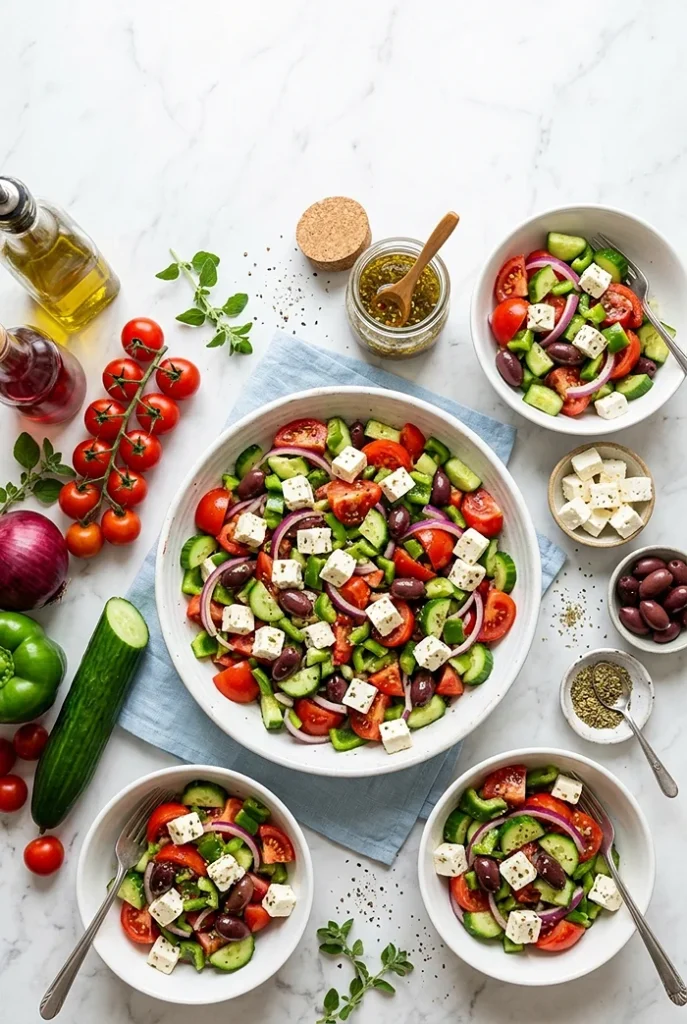
Approximate values per serving (based on 5 servings):
| Nutrient | Per Serving |
|---|---|
| Calories | ~290 kcal |
| Total Fat | ~25 g |
| Saturated Fat | ~8 g |
| Carbohydrates | ~10 g |
| Fibre | ~3 g |
| Protein | ~8 g |
| Sodium | ~680 mg |
Nutritional values are estimates and will vary depending on specific brands and portion sizes.
Frequently Asked Questions
Can I make this Greek salad ahead of time?
You can prep all the vegetables and the dressing in advance – just keep them separate until you’re ready to serve. The dressing actually improves with time, so making it a few hours ahead is genuinely a good idea. But once dressed, the salad should be eaten right away for the best texture.
What type of feta is best for Greek salad?
Go for a block of feta in brine rather than pre-crumbled. It’s creamier, more flavourful, and holds its shape better when cubed. Greek PDO feta is the gold standard – it has a protected designation of origin and is made with sheep’s and goat’s milk for a richer flavour.
What type of feta is best for Greek salad?
Go for a block of feta in brine rather than pre-crumbled. It’s creamier, more flavourful, and holds its shape better when cubed. Greek PDO feta is the gold standard – it has a protected designation of origin and is made with sheep’s and goat’s milk for a richer flavour.
Can I use regular black olives instead of kalamata?
You can, but kalamata olives have a much deeper, more complex flavour that really makes a difference in this simple Greek salad with dressing. If kalamata aren’t available, look for other brined or cured olives rather than canned ones – they’ll be far more flavourful.
What can I serve this with?
This fresh Mediterranean salad pairs brilliantly with grilled meats, flatbread, hummus, or a hearty egg dish like a homemade quiche. It’s also great alongside lighter snacks – think homemade no-bake granola bars and strawberry yogurt bites for a full grazing spread.
Is this salad gluten-free?
Yes! Every ingredient in this Greek salad with homemade dressing is naturally gluten-free. Just double-check your feta and olive packaging to make sure no additives have been included, and you’re good to go.
Try It and Share!
If you give this Greek salad with homemade dressing a go, I’d absolutely love to hear how it turned out. Did you add your own twist? Try it with a different protein? Go wild with the olives?
Drop your thoughts in the comments below – and if you loved it, please save it to Pinterest so other people can find it too. Sharing is caring, especially when it involves good food. Now go make the salad. You won’t regret it.
Greek Salad with Homemade Dressing
Equipment
- Large mixing bowl
- Jar with lid (for dressing)
- Cutting board
- Sharp knife
- Teaspoon (for seeding tomatoes)
Ingredients
Salad
- 3 Tomatoes tennis ball size; seeds scooped out if very watery
- 4 Lebanese / Persian cucumbers about 8 inches / 20 cm long
- ½ Small red onion tennis ball size; finely sliced into rings
- 1 Small green capsicum / bell pepper cut into short strips
- 250 g Feta block cut into 1 cm cubes; block in brine preferred
- 125 g Black kalamata olives deli-counter or jarred in brine
- 1 tsp Dried oregano
Greek Salad Dressing
- 1 Garlic clove minced (about 1/2 tsp)
- 1 tsp Dried oregano
- ¼ tsp Salt or 1/2 tsp Kosher salt
- Freshly ground black pepper to taste
- 3 tbsp Red wine vinegar
- 6 tbsp Extra virgin olive oil Greek preferred for best flavour
Instructions
- Place all dressing ingredients — garlic, oregano, salt, pepper, red wine vinegar, and extra virgin olive oil — into a jar. Seal and shake well until combined. Set aside for 20 minutes to allow the flavours to infuse.
- Cut each tomato into 6 wedges, then cut each wedge into 3 or 4 chunky pieces. If the tomatoes are very watery, scoop out the seedy centre with a teaspoon to prevent the salad from going soupy.
- Slice the cucumbers into rounds about 1/2 cm thick. If using thicker cucumbers, halve them lengthways first, then slice into half-moons.
- Peel and finely slice the red onion into rings. For a milder flavour, soak the sliced rings in cold water for 10 minutes, then drain and pat dry before using.
- Cut the capsicum into short strips roughly the same size as the cucumber pieces. Cut the feta block into 1 cm cubes — do not crumble.
- Add the tomatoes, cucumber, onion, capsicum, feta, and olives to a large bowl. Sprinkle over the dried oregano, then pour the dressing all over. Toss gently to combine and serve immediately.