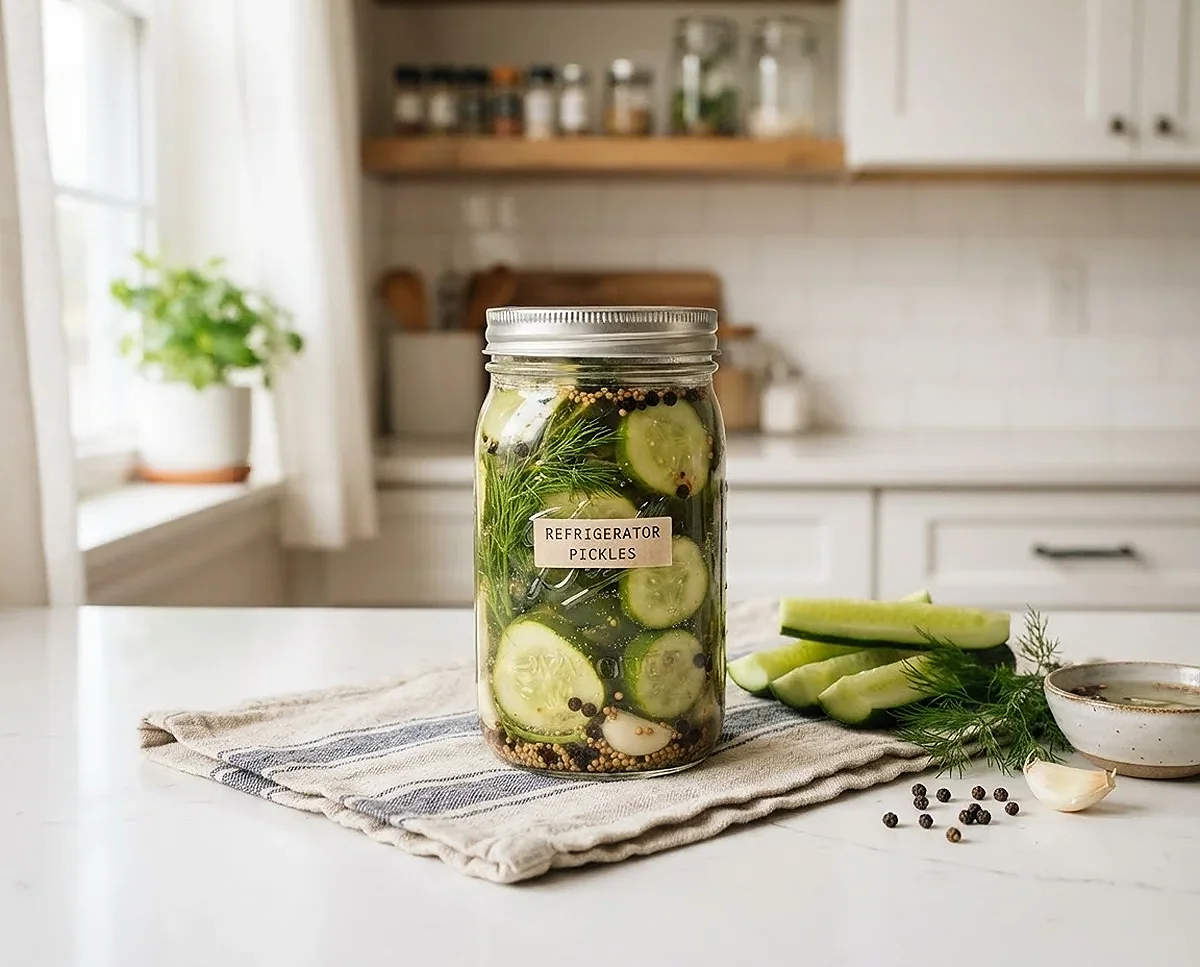
Refrigerator Pickle Recipe
Refrigerator pickle recipe makes crunchy Refrigerator Pickles with garlic, dill, and zero canning drama—quick, tangy, and fridge-ready.
Refrigerator pickle recipe is the no-stress way to get crunchy, tangy pickles without pretending you own a canning factory. These Refrigerator Pickles are crisp, garlicky, loaded with dill, and take just a few minutes to throw together.
If you’ve ever thought homemade pickles sounded too “grandma-level expert,” same. But this Homemade Pickles Recipe is basically just slice, pour, chill, and snack. These Quick Cucumber Pickles are perfect for sandwiches, burgers, or standing in front of the fridge eating one straight from the jar. No judgment.
Table of Contents
Why You’ll Love This Recipe
This isn’t your fussy, water-bath-canning situation. No sterilizing equipment for hours, no worrying about seals popping, none of that. Just crunchy cucumbers, a quick brine, and a wait that’s honestly the hardest part.
These quick cucumber pickles come out snappy, garlicky, and packed with fresh dill flavor. They’re the kind of homemade pickles recipe that makes people ask “wait, you made these?” like you did something impressive. You kind of did.
- Ready to eat in about a week, but you can sneak a taste sooner
- No canning equipment or special skills required
- Stays crisp and fresh in the fridge for weeks
- Endlessly customizable with spices and herbs
Ingredients You’ll Need
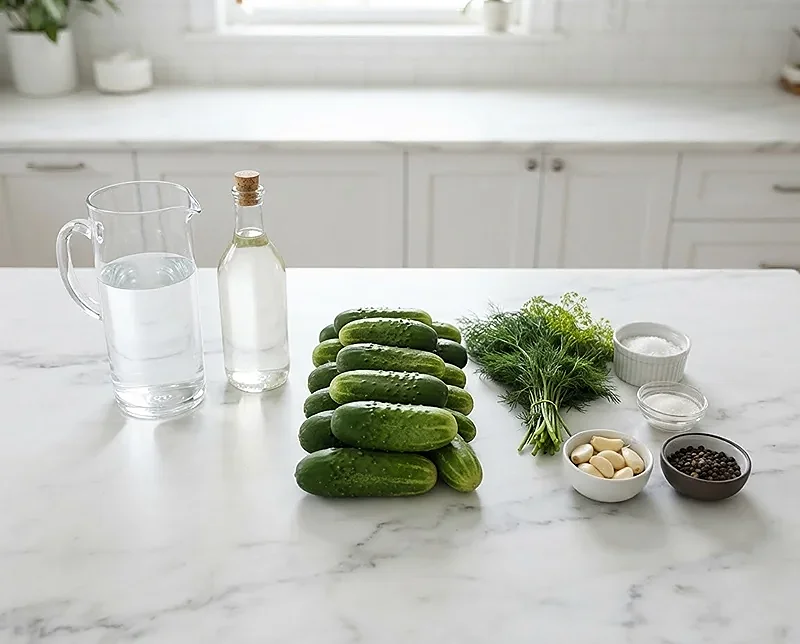
Here’s everything this refrigerator pickle recipe calls for, grouped so you can see exactly what goes where. Nothing fancy, just good, honest pantry and produce staples.
| For the Pickles | Amount |
|---|---|
| Pickling cucumbers | 12 (quantity can vary depending on size) |
| Fresh dill, thick stems removed | 1 bunch (amount can vary depending on preference) |
| Garlic, skins removed and cloves smashed | 1 head (use fewer cloves if it’s a strong garlic) |
| Peppercorn kernels | 1 tablespoon (about 10 peppercorns per jar, give or take) |
| For the Brine | Amount |
|---|---|
| Water | 4 cups |
| White vinegar | 2 cups |
| Kosher salt | 2 tablespoons |
| Sugar | 1 teaspoon |
This batch makes enough brine and filling to land you one pint jar plus two quart jars, so plan your containers accordingly.
How to Make Refrigerator Pickles
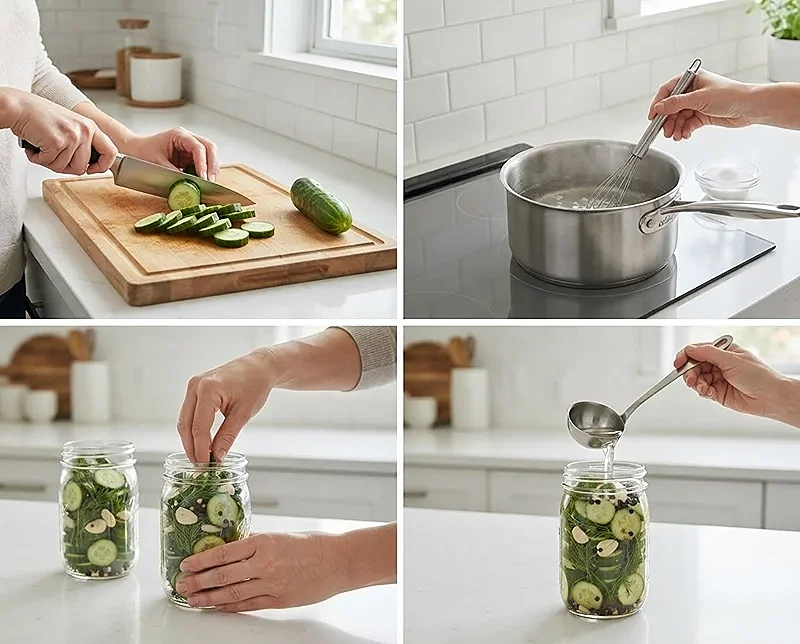
Making quick cucumber pickles really comes down to three simple stages: prepping, brining, and packing the jars. Let’s walk through it together.
Step 1: Prep Your Ingredients
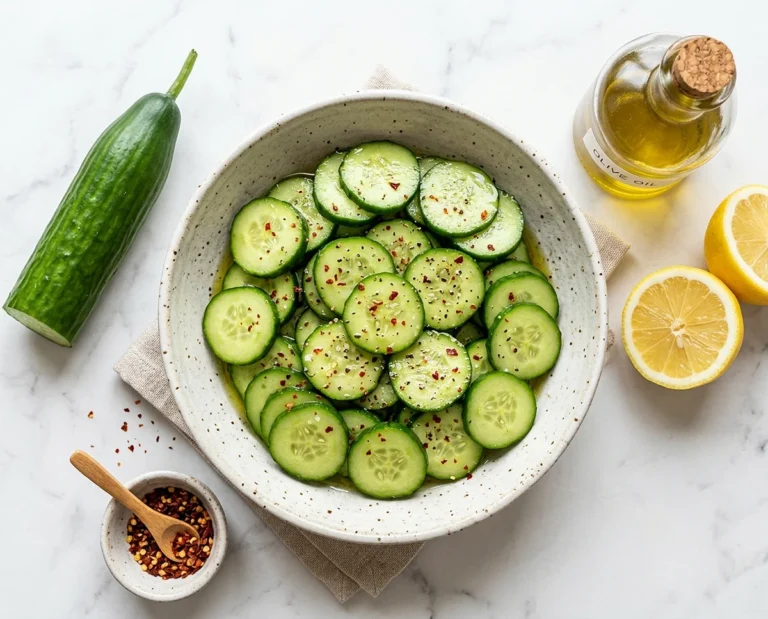
Start by giving your 12 pickling cucumbers a good, thorough wash. Slice them into 1/4-inch thick rounds or spears, whichever you’re feeling that day (spears feel fancier, rounds are easier for sandwiches).
Set the sliced cucumbers aside. Smash your garlic cloves with the flat side of a knife, and pull the dill fronds away from those thick, woody stems since those don’t add much flavor. Run your mason jars through the dishwasher to sanitize them while you work.
Step 2: Make the Brine
In a medium saucepan, combine the 4 cups water, 2 cups white vinegar, 2 tablespoons kosher salt, and 1 teaspoon sugar. Bring it to a boil, swirling the pan occasionally so the salt and sugar fully dissolve into the liquid.
“Don’t rush this part,” I always tell myself, because dissolving the salt and sugar properly is what gives the brine its balanced flavor. Once it’s boiled, pull the pan off the heat and let the brine cool to room temperature before moving on.
Step 3: Layer and Pack the Jars
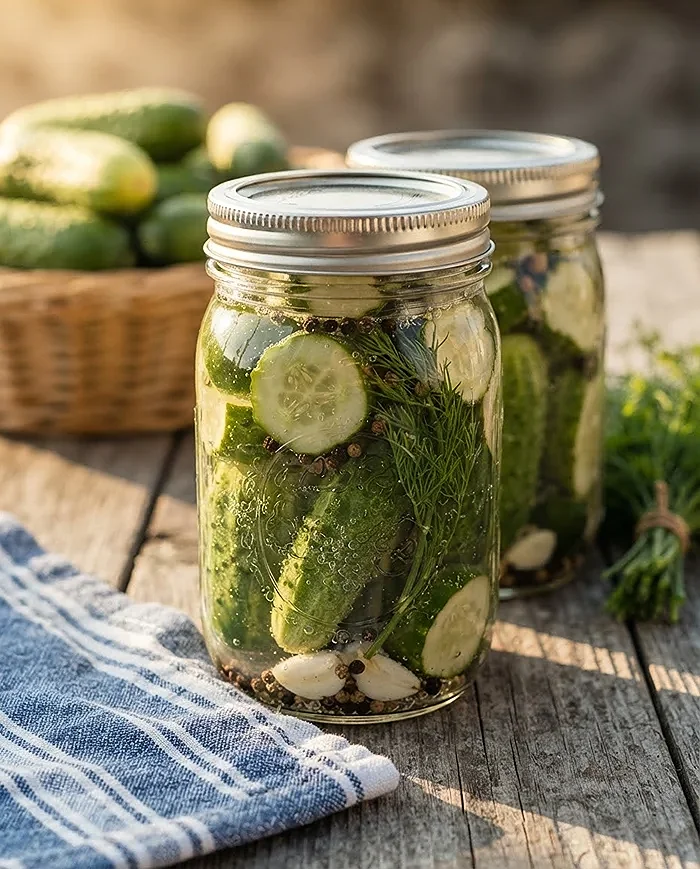
Now the fun part. Layer your cucumber slices with the fresh dill, smashed garlic, and peppercorns right in your sanitized jars, alternating as you go for even flavor distribution.
Don’t pack everything in super tight. You’ll want a little breathing room so the brine can actually circulate and reach every cucumber slice, not just the ones near the top.
Pour in enough cooled brine to fully cover the cucumbers, then seal each jar with an airtight lid. Pop them in the refrigerator, and now the hardest part begins: waiting.
Step 4: Let Them Work Their Magic
The flavor really comes alive after at least one week in the fridge, though nobody’s stopping you from sneaking a slice sooner. Once that first week passes, these homemade pickles recipe results stay good for about 4 to 6 weeks.
I know a week feels like forever when you can smell the dill and garlic every time you open the fridge. Trust the process, it’s worth it.
Expert Tips, Variations, and Troubleshooting
Tips for the Crunchiest Pickles
Use the freshest cucumbers you can find, ideally ones labeled specifically for pickling since they’re bred to stay firmer. Trimming a tiny slice off the blossom end of each cucumber also helps prevent mushiness, since that end holds enzymes that soften the fruit over time.
Fun Variations to Try
Want a little heat? Toss a sliced jalapeño or a pinch of red pepper flakes into the jar. Craving something sweeter? Bump the sugar up slightly for a bread-and-butter style refrigerator pickle recipe instead of the classic dill version.
You can also swap some of the peppercorns for mustard seeds or coriander seeds for a different flavor profile entirely. These quick cucumber pickles are pretty forgiving, so don’t be afraid to experiment with what’s already in your spice cabinet.
Troubleshooting Common Issues
If your pickles turn out softer than expected, it’s usually because the cucumbers weren’t fresh enough or were sliced too thin. Try slightly thicker slices next time, and make sure you’re using cucumbers within a day or two of buying them.
Cloudy brine is usually just from the salt or spices settling and is totally normal, not a sign anything’s gone wrong. If you ever notice mold, an off smell, or sliminess, though, toss that batch and start fresh.
Storage, Reheating, and No-Waste Ideas
Good news: there’s no reheating involved here since these are served cold straight from the jar. Storage, though, is worth getting right so your pickles stay crisp and safe to eat.
| Storage Method | How Long They Last |
|---|---|
| Refrigerator, sealed jar | 4 to 6 weeks after the first week of brining |
| Refrigerator, opened jar | Best eaten within a few weeks, keep submerged in brine |
| Freezer | Not recommended, texture becomes mushy |
Once your jar’s empty, don’t dump that leftover brine. Use it to make a quick vinaigrette, marinate chicken thighs, or even add a tangy kick to potato salad. Nothing about this homemade pickles recipe has to go to waste.
Leftover dill and garlic scraps are great tossed into salad dressings too. If you’re already in a fresh-produce mood, this pairs beautifully alongside a Greek salad with homemade dressing for a light, tangy meal.
Nutritional Information
These numbers are approximate and will vary slightly depending on cucumber size and how much brine you consume along with the slices.
| Nutrient | Amount Per Serving (approx. 1/2 cup) |
|---|---|
| Calories | 15 |
| Carbohydrates | 3g |
| Sugar | 1g |
| Sodium | 580mg |
| Fiber | 1g |
| Protein | 0.5g |
Ways to Serve Your Refrigerator Pickles
These quick cucumber pickles are amazing straight out of the jar as a snack, but they’re just as good chopped into a bright, herby orzo salad for extra crunch and tang. They also make a fantastic sandwich or burger topping.
If you’re building out a full spread, this refrigerator pickle recipe pairs nicely with something like a spring mix salad with balsamic honey dressing for a little contrast between tangy and sweet flavors on the table.
Frequently Asked Questions
How long do refrigerator pickles last?
They’re best after about one week of brining and typically stay good in the fridge for 4 to 6 weeks after that, as long as they stay submerged in brine.
Can I use regular cucumbers instead of pickling cucumbers?
You can, but pickling cucumbers are bred to stay firmer and crunchier. Regular cucumbers will still taste great, just expect a slightly softer texture.
Do I need to can or process these pickles?
No canning or water-bath processing is needed for this refrigerator pickle recipe. The jars just need to be sanitized and kept refrigerated the whole time.
Can I make this homemade pickles recipe less garlicky?
Absolutely. Just use fewer smashed garlic cloves per jar, especially if your garlic is on the stronger side.
Why is my brine cloudy?
Cloudy brine usually comes from settled salt, sugar, or spices and is completely normal. It only signals a problem if you also notice mold, sliminess, or an off smell.
Final Thoughts
This refrigerator pickle recipe proves that homemade pickles don’t need to be complicated to taste incredible. A handful of ingredients, a little patience, and you’ve got jars of crunchy, dill-packed goodness ready whenever you need them.
Give this homemade pickles recipe a try this week, then snap a photo of your jars and pin it to Pinterest so you can find it again next time that pickle craving hits. I’d genuinely love to hear how yours turned out, so drop a comment and let me know what mix-ins you tried.
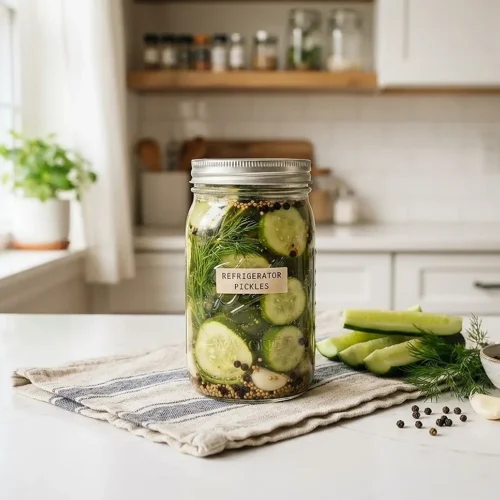
Foolproof Refrigerator Pickle Recipe That’ll Ruin Store-Bought Jars For You
Equipment
- Medium saucepan
- Mason jars (1 pint and 2 quart size)
- Cutting board and knife
- Dishwasher (for sanitizing jars)
Ingredients
For the Pickles
- 12 pickling cucumbers quantity can vary depending on size
- 1 bunch fresh dill, thick stems removed amount can vary depending on preference
- 1 head garlic, skins removed and cloves smashed use fewer cloves if it’s a strong garlic
- 1 tablespoon peppercorn kernels about 10 peppercorns per jar, give or take
For the Brine
- 4 cups water
- 2 cups white vinegar
- 2 tablespoons kosher salt
- 1 teaspoon sugar
Instructions
- Wash the 12 pickling cucumbers thoroughly, then slice them into 1/4-inch thick rounds or spears. Set the slices aside.
- Smash the garlic cloves and pull the dill fronds away from the thick, woody stems. Run the mason jars through the dishwasher to sanitize them.
- In a medium saucepan, combine the water, white vinegar, kosher salt, and sugar. Bring to a boil, swirling the pan so the salt and sugar fully dissolve.
- Remove the brine from heat and let it cool to room temperature before using.
- Layer the cucumber slices with the fresh dill, smashed garlic, and peppercorns in the sanitized jars, alternating for even flavor. Don’t pack too tightly, leaving room for the brine.
- Pour enough cooled brine into each jar to fully cover the cucumbers, then seal with an airtight lid.
- Store the sealed jars in the refrigerator. Flavor is best after at least one week, and the pickles will keep for 4 to 6 weeks after that.