Ramen Broth Recipe
This ramen broth recipe is the cozy bowl of comfort you didn’t know you were missing. Deeply savory, a little spicy, and rich enough to make you forget takeout ever existed.
I stumbled onto this recipe on a rainy Tuesday when I was craving Japanese ramen soup but couldn’t justify the delivery fee. Spoiler: I’ve never called for delivery since.
Table of Contents
What Makes This Ramen Broth Recipe So Good
This recipe is just the beginning. Over in the collection, you’ll find even more dishes that are just as easy and packed with flavor. Go take a peek — your next favorite is waiting.
This isn’t your average Japanese noodle soup broth. It’s built on slow-simmered bone-in beef, bloomed gochujang, and a finishing splash of sesame oil that ties everything together beautifully.
Think of it as the love child of a classic Tonkotsu ramen broth and a bold Korean-inspired stew. Warming, deeply flavored, and totally worth the two hours on the stove.
It’s also incredibly forgiving. Not a seasoned cook? No worries. If you can brown meat and simmer a pot, you’ve got this.
Ingredients
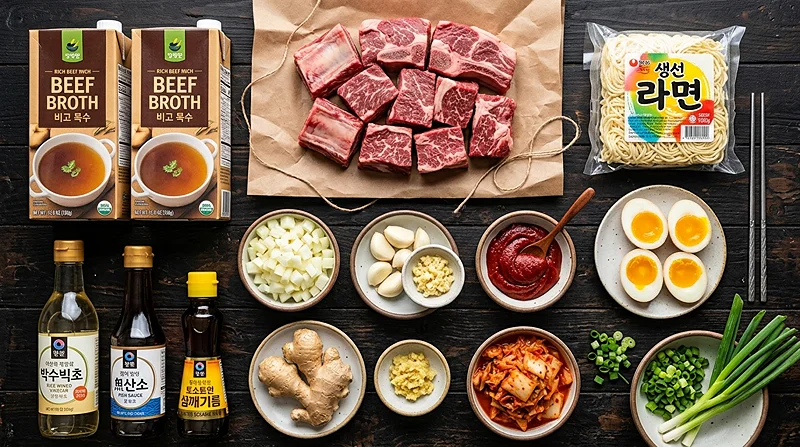
Here’s everything you’ll need to pull this Japanese ramen soup together. I’ve grouped it into the broth base and the toppings so it’s easy to shop and prep.
Noodle Soup
| Ingredient | Amount |
|---|---|
| Neutral oil | 2 tablespoons |
| Bone-in beef chuck | 3 lbs |
| Yellow onion, diced | 1 medium |
| Garlic cloves, minced | 4 cloves |
| Fresh minced ginger | 2 tablespoons |
| Gochujang paste | 1/4 cup |
| Beef broth | 8 cups |
| Rice wine vinegar | 1 tablespoon |
| Fish sauce (optional) | 1 tablespoon |
| Toasted sesame oil | 2 tablespoons |
| Fresh ramen noodles | 20 oz |
| Kosher salt | To taste |
| Freshly cracked pepper | To taste |
Toppings
| Topping | Notes |
|---|---|
| Soft boiled eggs | Halved lengthwise |
| Green onions, minced | For freshness |
| Kimchi, chopped | Adds tang and heat |
| Sesame oil | For drizzling at the end |
A quick note on fish sauce: it’s optional, but don’t skip it if you have it. That tiny tablespoon adds a deep, savory umami backbone that really elevates the Japanese noodle soup broth.
Love building big, satisfying bowls? You might also enjoy these loaded taco rice bowls for another weeknight winner.
How to Make This Ramen Broth Recipe Step by Step
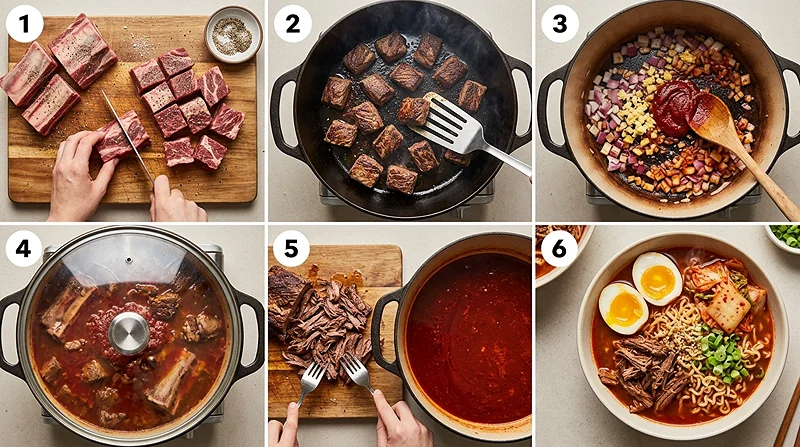
Let’s walk through it together. Nothing complicated, I promise — just a little patience and a good pot.
Step 1: Prep the Beef
If your chuck roast has a large bone, go ahead and cut it away from the meat. Don’t toss the bone — it goes into the broth later and adds incredible body to your ramen broth recipe.
Cut the beef into roughly 2-inch cubes. Season generously with kosher salt and freshly cracked pepper. Don’t be shy here — good seasoning at this stage makes a huge difference in the final bowl.
Step 2: Sear the Beef
Heat your neutral oil in a Dutch oven over medium-high heat. You want it hot — like, properly sizzling when the beef hits the pan.
Add the beef in a single layer. You may need to do this in batches, and that’s fine. Crowding the pan leads to steaming, not searing, and we want that gorgeous brown crust.
Sear each side until deeply browned, then remove with a slotted spoon and set aside on a plate. Those browned bits left in the pot? Pure gold for your Japanese noodle soup broth.
“Don’t rush the sear. That browning is where a huge chunk of flavor lives.”
Step 3: Saute the Aromatics
In the same pot, add the diced onion, minced garlic, and fresh ginger. Cook over medium heat for 3 to 4 minutes, stirring occasionally, until softened and fragrant.
Your kitchen will start smelling incredible right about now. Next, add the gochujang paste and stir it into the aromatics. Let it cook for another 2 to 3 minutes — this step blooms the spice and deepens the color of your broth beautifully.
Step 4: Add the Beef and Broth
Pour in the 8 cups of beef broth and stir well to lift up all those browned bits from the bottom. Bring everything to a gentle simmer.
Add back in the seared beef cubes and the reserved beef bone. Cover the pot, reduce heat to medium-low, and let it simmer for about 2 hours. You’re looking for beef that’s tender enough to shred with a fork.
This low-and-slow approach is what gives this ramen broth recipe that deep, almost Tonkotsu ramen broth richness — without actually needing pork bones or 12 hours of cooking.
Step 5: Season and Finish
Once the beef is tender, fish out the bone and discard it. Gently shred the beef right into the broth — it should fall apart with almost no effort at this point.
Stir in the rice wine vinegar, fish sauce (if using), and toasted sesame oil. Taste and adjust salt and pepper as needed. This is your moment to make the broth exactly how you like it.
You can cook the ramen noodles directly in the broth or separately in salted water — both work great. If cooking separately, make sure to check out this guide to cooking rice perfectly for tips that apply to noodles too.
Step 6: Assemble Your Bowls
Ladle the hot broth and noodles into deep bowls. Top each one with chopped kimchi, a soft boiled egg, minced green onions, and a small drizzle of sesame oil.
Serve immediately. This Japanese ramen soup is best eaten while it’s steaming hot, with a spoon in one hand and zero regrets about making it on a weeknight.
Expert Tips, Variations, and Troubleshooting
Tips for the Best Ramen Broth Recipe
Use bone-in beef whenever possible. The bone releases collagen as it simmers, which gives your Japanese noodle soup broth that silky, slightly thick texture you get at good ramen spots.
Don’t skip the gochujang bloom. Cooking it in the pot before adding liquid deepens its flavor dramatically. Raw gochujang tastes flat by comparison.
Taste as you go. Broth is all about balance. Too salty? A splash of rice wine vinegar fixes it. Too flat? A tiny bit more fish sauce or sesame oil works wonders.
Variations Worth Trying
Lighter version: Swap beef chuck for chicken thighs and use chicken broth. The cook time drops to about 45 minutes and the result is a lighter, brothier Japanese ramen soup.
Vegetarian ramen broth recipe: Use mushroom broth, a strip of kombu, and miso paste instead of gochujang. Skip the fish sauce and add extra sesame oil. It’s surprisingly rich and satisfying.
Extra spicy: Add a teaspoon of Korean chili flakes (gochugaru) along with the gochujang for serious heat. Pair it with a cold beer and enjoy.
If you love high-protein, satisfying bowls like this one, you might also love these high-protein burger bowls for a different kind of comfort food fix.
Troubleshooting Common Issues
Broth tastes thin or watery: Simmer it uncovered for another 15 to 20 minutes to reduce and concentrate the flavors. A splash more fish sauce also helps.
Beef isn’t shredding: Give it more time. Tough chuck needs a full 2 hours — sometimes a little more depending on your stove. If it’s still firm after 2 hours, just keep going.
Too spicy: Stir in a small spoonful of butter or a splash of coconut milk. Both mellow out heat without messing up the flavor profile of your Tonkotsu ramen broth-style base.
Storage Instructions
Good news: this ramen broth recipe makes excellent leftovers. Store the broth and noodles separately to prevent the noodles from getting mushy.
| Storage Method | Container | Duration |
|---|---|---|
| Refrigerator (broth) | Airtight container | Up to 4 days |
| Refrigerator (noodles) | Airtight container | Up to 3 days |
| Freezer (broth only) | Freezer-safe bag or container | Up to 3 months |
Reheating Tips
Reheat the broth on the stovetop over medium heat until steaming. Add fresh or pre-cooked noodles directly into the hot broth and let them warm through for a minute or two.
Avoid microwaving the noodles in the broth — it tends to make them gummy. The stovetop method keeps everything tasting fresh and restaurant-quality.
No-Waste Kitchen Ideas
Leftover shredded beef is fantastic tucked into tacos, rice bowls, or scrambled eggs the next morning. Try it with these high-protein egg bites for a seriously satisfying breakfast.
Extra broth can be frozen in ice cube trays and used as a flavor boost for stir-fries, rice dishes, or instant ramen upgrades. Nothing goes to waste here.
Nutritional Information
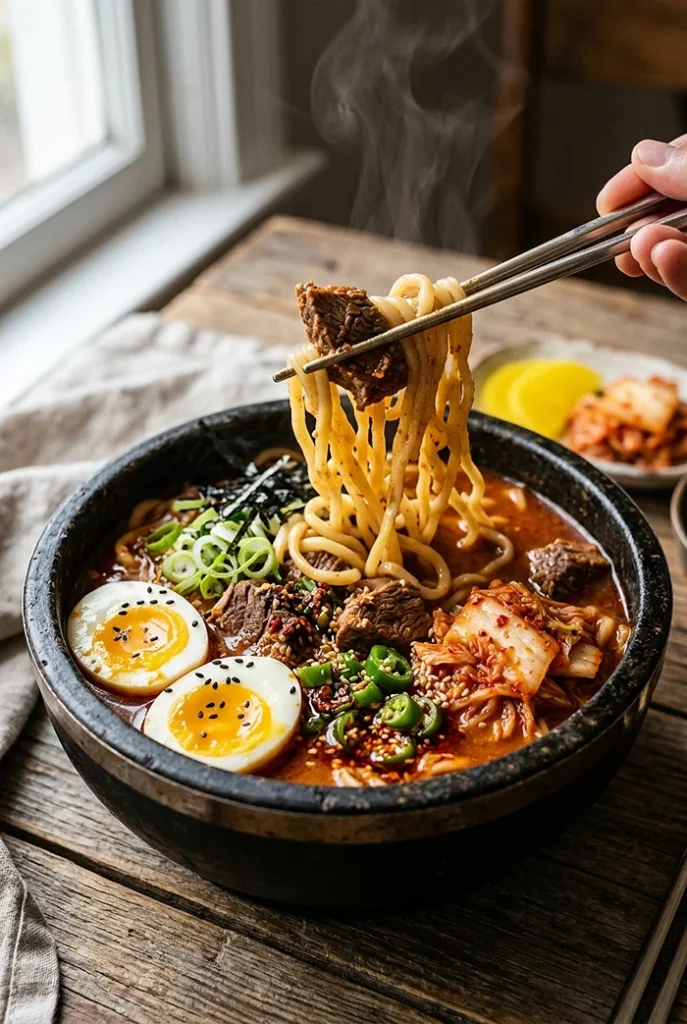
Nutritional values are estimated per serving and will vary based on specific brands and portion sizes used.
| Nutrient | Per Serving (approx.) |
|---|---|
| Calories | 520 kcal |
| Protein | 38g |
| Carbohydrates | 42g |
| Fat | 22g |
| Saturated Fat | 7g |
| Sodium | 1,240mg |
| Fiber | 3g |
| Sugar | 5g |
FAQs About This Ramen Broth Recipe
Can I make this ramen broth recipe ahead of time?
Yes, and honestly it tastes even better the next day. Make the broth up to 4 days ahead and store it in the fridge. Cook fresh noodles when you’re ready to serve for the best texture.
What’s the difference between this and a Tonkotsu ramen broth?
Traditional Tonkotsu ramen broth uses pork bones simmered for many hours to create a creamy, milky-white soup. This recipe uses beef chuck and gochujang for a bolder, spicier flavor profile that comes together much faster.
Can I use store-bought broth instead of homemade?
Absolutely. A good-quality store-bought beef broth works great here. Look for low-sodium versions so you can control the salt level yourself as you season the Japanese noodle soup broth to taste.
What noodles work best for this Japanese ramen soup?
Fresh ramen noodles are ideal — they cook quickly and have a great chewy texture. In a pinch, dried ramen noodles or even soba noodles work well. Just follow the package directions and add them to the hot broth when serving.
Can I make this in a slow cooker?
Yes. After searing the beef and sauteing the aromatics, transfer everything to a slow cooker and cook on low for 7 to 8 hours or high for 4 to 5 hours. Finish with the sesame oil, vinegar, and fish sauce before serving.
Make This Bowl Tonight
This ramen broth recipe is the kind of meal that makes a regular Tuesday feel like something worth celebrating. It’s cozy, deeply flavorful, and surprisingly simple once you get going.
Whether you’re craving Japanese ramen soup on a cold night or just want to impress yourself with a homemade bowl, this recipe delivers every time.
Give it a try this week, then save it to your boards on Pinterest so you can find it again easily. And if you make it, leave a comment below — I’d love to know how your bowl turned out!
Craving more cozy, satisfying recipes? Don’t miss these strawberry ice cream sandwiches for dessert after your bowl.
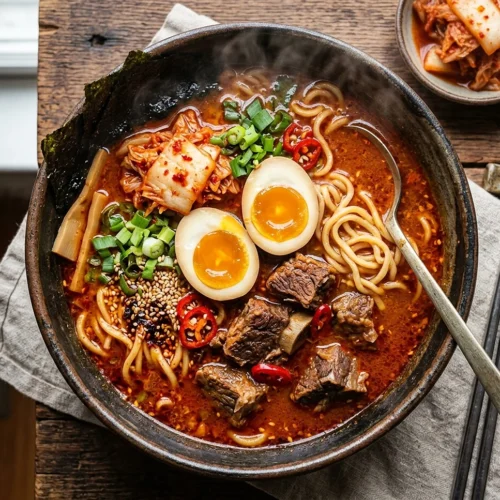
The Most Irresistible Ramen Broth Recipe You’ll Ever Make at Home
Equipment
- Dutch oven
- Slotted spoon
- Cutting board
- Chef’s knife
- Ladle
Ingredients
Noodle Soup
- 2 tablespoons neutral oil
- 3 lbs bone-in beef chuck
- 1 yellow onion diced
- 4 cloves garlic minced
- 2 tablespoons fresh ginger minced
- ¼ cup gochujang paste
- 8 cups beef broth
- 1 tablespoon rice wine vinegar
- 1 tablespoon fish sauce optional
- 2 tablespoons toasted sesame oil
- 20 oz fresh ramen noodles
- kosher salt to taste
- freshly cracked pepper to taste
Toppings
- soft boiled eggs halved lengthwise
- green onions minced
- kimchi chopped
- sesame oil for drizzling
Instructions
- If using a large piece of bone-in chuck, cut the bone away from the meat and set it aside — it goes into the broth later. Cut the beef into roughly 2-inch cubes and season generously with kosher salt and freshly cracked pepper.
- Heat the neutral oil in a Dutch oven over medium-high heat until properly sizzling. Add the beef in a single layer — work in batches if needed to avoid crowding the pan. Sear until deeply browned on all sides, then remove with a slotted spoon and transfer to a plate.
- Add the diced onion, minced garlic, and fresh ginger to the same pot. Cook over medium heat for 3 to 4 minutes, stirring occasionally, until softened and fragrant. Add the gochujang paste and stir it into the aromatics. Cook for another 2 to 3 minutes to bloom the spice and deepen the color.
- Pour in the beef broth and stir well to lift up all the browned bits from the bottom of the pot. Bring to a gentle simmer, then add back the seared beef cubes and reserved beef bone. Cover, reduce the heat to medium-low, and simmer for about 2 hours until the beef is tender enough to shred with a fork.
- Remove the beef bone from the pot and discard it. Gently shred the beef directly into the broth. Stir in the rice wine vinegar, fish sauce (if using), and toasted sesame oil. Taste and adjust salt and pepper as needed.
- Cook the ramen noodles directly in the broth, or separately in salted boiling water according to package directions. Ladle the hot broth and noodles into deep bowls and top with chopped kimchi, soft boiled eggs, minced green onions, and a drizzle of sesame oil. Serve immediately.