Butternut Squash Recipes
Discover the best butternut squash recipes that are simple, healthy, and absolutely delicious. From easy weeknight dinners to impressive side dishes, this golden veggie never disappoints.
Okay, real talk — I used to be a little intimidated by butternut squash. That tough skin, the awkward shape… it just felt like a lot. But then one chilly October evening I roasted a batch with nothing but olive oil, garlic, salt, and pepper, and my whole world changed.
The edges caramelized, the inside turned buttery soft, and my kitchen smelled like a cozy dream. I’ve been obsessed with butternut squash recipes ever since, and I’m dragging you along for the ride.
Table of Contents
Why You’ll Love This Recipe
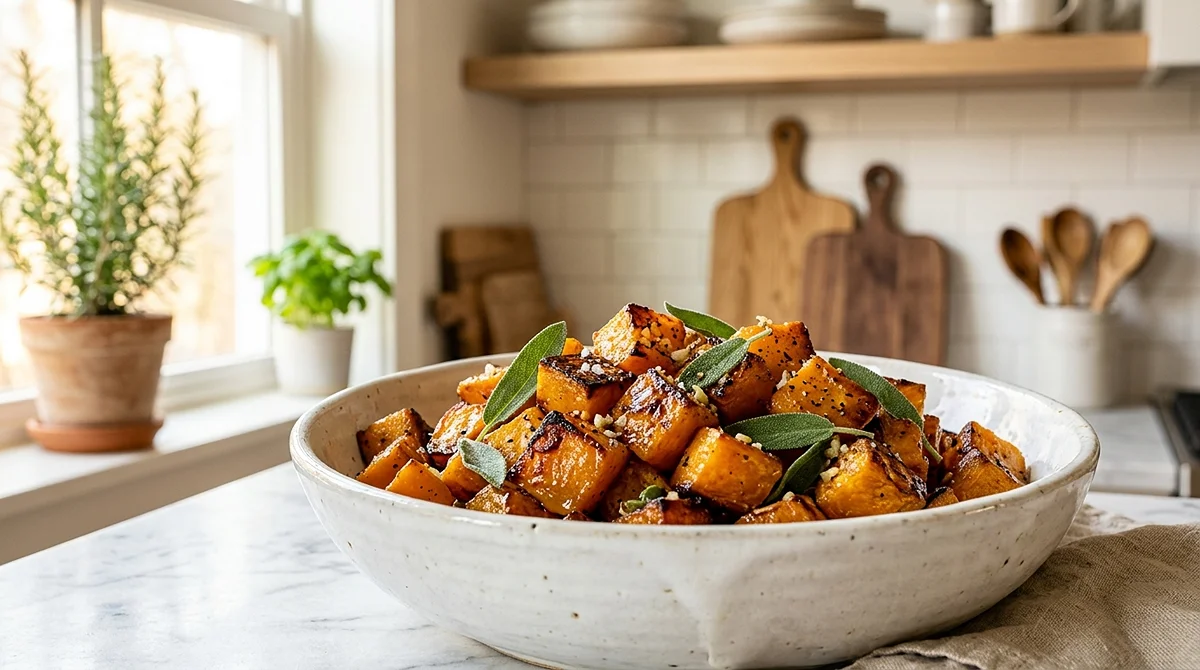
This is one of those easy butternut squash recipes that sounds fancy but requires almost zero effort. Four ingredients. One bowl. One pan. Done in under 40 minutes.
It’s naturally sweet, lightly garlicky, and gets those gorgeous golden edges that make everything taste better. It works as a side dish, a meal prep hero, or even tossed into grain bowls.
If you’re looking for healthy butternut squash recipes that don’t taste like diet food, you’ve found your match. This one is packed with vitamins, fiber, and flavor — all at once.
Ingredients
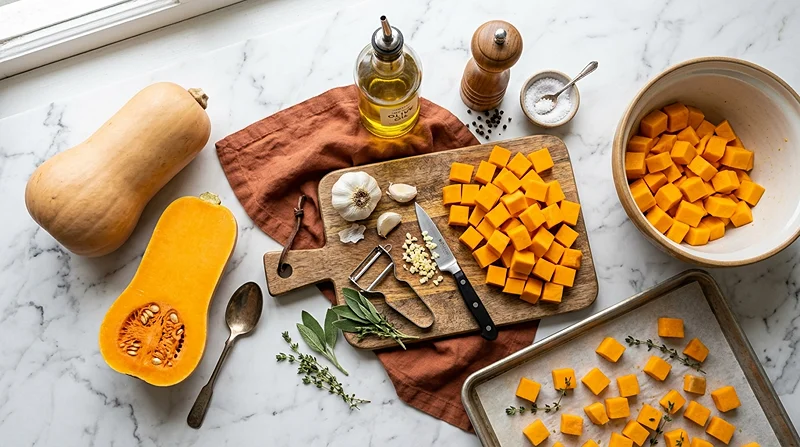
Here’s everything you need for this simple, satisfying roasted butternut squash. Nothing fancy, just real, good food.
| Category | Ingredient | Amount |
|---|---|---|
| Produce | Butternut squash (medium) | 1 whole |
| Fat | Olive oil | 2 tablespoons |
| Aromatics | Garlic, minced | 2 cloves |
| Seasoning | Salt and pepper | To taste |
Step-by-Step Instructions
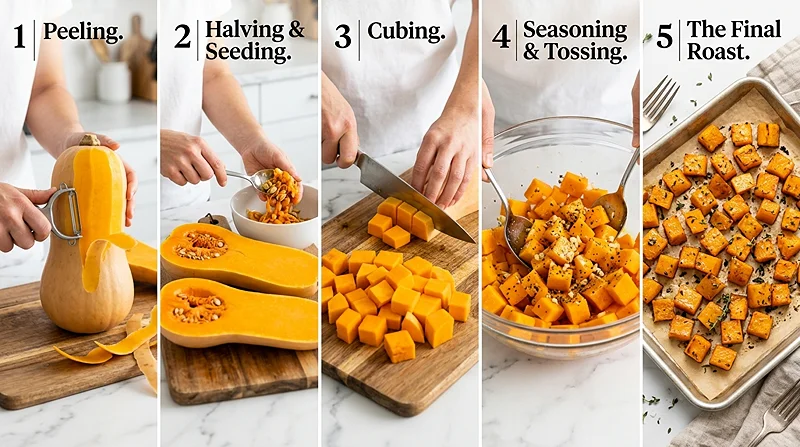
These instructions are written so clearly that even your most kitchen-averse friend could pull this off. Let’s do it together.
Step 1 — Get That Oven Going
Preheat your oven to 400 degrees F (200 degrees C). This high heat is what gives you those golden, slightly crispy edges. Don’t skip the preheat — a cold oven means sad, steamed squash instead of roasted perfection.
Step 2 — Peel and Prep the Squash
Use a sturdy vegetable peeler to remove the skin. It takes a little muscle, but you’ve got this. Once peeled, slice it in half lengthwise and scoop out the seeds with a spoon.
Don’t toss those seeds! Rinse them, toss with a little salt and olive oil, and roast them separately for a crunchy snack. Zero waste, full flavor.
Step 3 — Cut Into Cubes
Cut your squash halves into 1-inch cubes. Try to keep the pieces roughly the same size so they roast evenly. Uneven cubes mean some will burn while others are still raw — not the vibe.
Step 4 — Toss and Season
Add the squash cubes to a large bowl with the olive oil and minced garlic. Toss everything together until each cube is well coated. Season generously with salt and pepper.
This is your moment. Taste a raw cube if you’re curious, then season like you mean it. Under-seasoned roasted squash is the saddest thing in the world.
Step 5 — Spread It Out on the Pan
Arrange the squash in a single layer on a baking sheet. This part matters more than you’d think. If the pieces are piled on top of each other, they’ll steam instead of roast, and you’ll miss those gorgeous caramelized edges.
Use two baking sheets if needed. Crowding is the enemy of crispy.
Step 6 — Roast Until Golden and Tender
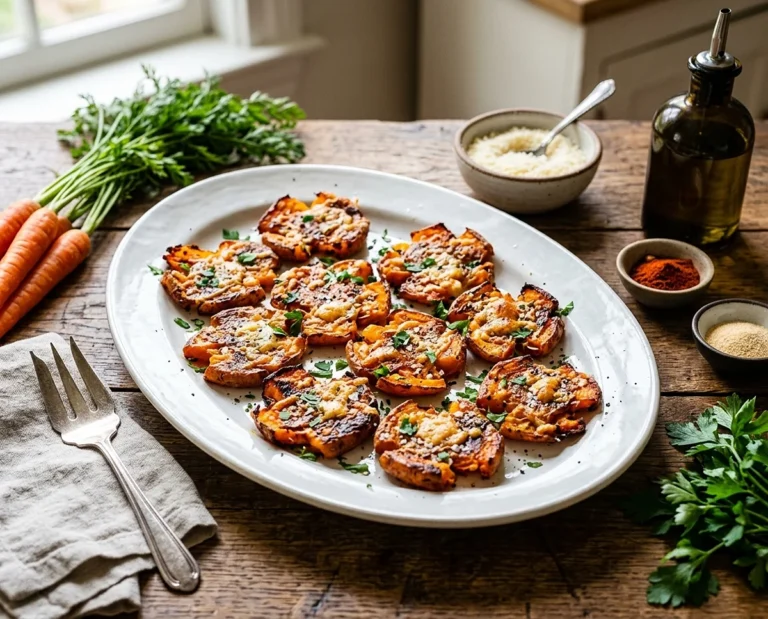
Slide the pan into your preheated oven and roast for 25 to 35 minutes. You’re looking for deep golden color on the edges and a fork that slides in with zero resistance.
Give the pan a gentle shake or flip the cubes halfway through for even browning. Your kitchen will smell absolutely amazing at this point. Fair warning: your family may start circling the oven.
Expert Tips, Variations, and Troubleshooting
Tips for the Best Roasted Butternut Squash
Dry your squash cubes before tossing with oil. Any surface moisture will create steam in the oven, which works against that golden crust. Just pat them with a paper towel after cutting.
Don’t be shy with the olive oil. You want every cube lightly coated — too little and they’ll dry out rather than caramelize. Two tablespoons is the sweet spot for one medium squash.
Flavor Variations Worth Trying
Once you nail the basic roasted butternut squash, the world is your oyster. Try adding a pinch of smoked paprika and cumin for a smoky, earthy twist. It pairs beautifully with grain bowls and wraps.
For a sweeter version, drizzle with a tiny bit of maple syrup before roasting and add a crack of cinnamon. It’s basically dessert, but healthy. You can also check out these high-protein BBQ chicken bowls for inspiration on building a full, balanced meal around roasted veggies.
If you want something more hearty, toss the roasted squash into a loaded taco rice bowl for a satisfying, colorful dinner that comes together in minutes.
Troubleshooting Common Issues
Squash came out soggy? Two culprits: too much moisture or an overcrowded pan. Pat the cubes dry before seasoning and give them plenty of space on the baking sheet.
Edges burning before the inside is cooked? Your oven might run hot, or your cubes are too small. Try cutting slightly larger pieces next time, or tent the pan loosely with foil for the last 10 minutes.
Not enough flavor? Season more aggressively before roasting — butternut squash can handle it. A squeeze of fresh lemon juice after roasting also wakes everything up beautifully.
Storage Instructions
This is one of those healthy butternut squash recipes that gets better the next day, so make extra. Here’s how to store it properly.
| Storage Method | Container | Duration |
|---|---|---|
| Refrigerator | Airtight container | Up to 5 days |
| Freezer | Freezer-safe bag or container | Up to 3 months |
| Meal Prep | Glass containers with lids | 4–5 days refrigerated |
Reheating Tips
To reheat, spread the cubes on a baking sheet and pop them in a 375 degree oven for 8 to 10 minutes. This brings back the crispy edges instead of making them mushy like the microwave will.
In a hurry? The microwave works fine — just 60 to 90 seconds on high. The texture won’t be as great, but the flavor is still there.
No-Waste Kitchen Ideas
Leftover roasted squash is a weeknight dinner MVP. Mash it slightly and stir into pasta for a creamy, no-cook sauce. Or blend it into a quick soup with a little broth and cream.
You can also toss it straight into a cottage cheese scrambled egg bowl for a nourishing, protein-packed breakfast that uses up leftovers brilliantly. Or try it in a cottage cheese taco bowl for a fun, nutrient-dense lunch twist.
Nutritional Information
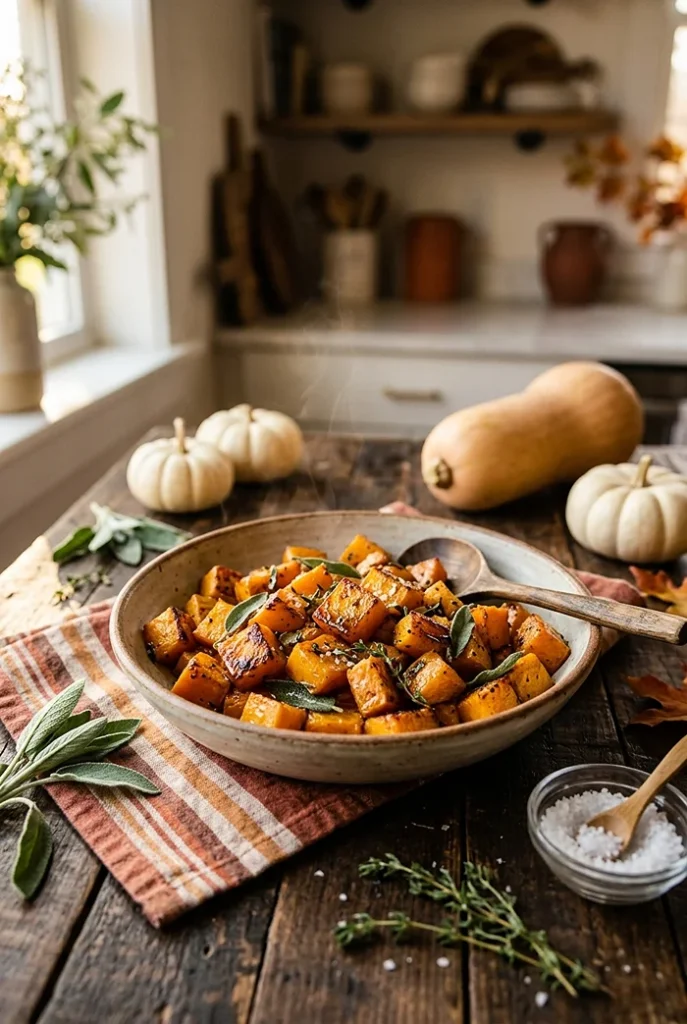
Here’s the approximate nutritional breakdown per serving (based on 4 servings). This is one of the most genuinely healthy butternut squash recipes you’ll find — naturally low in calories and high in vitamins A and C.
| Nutrient | Per Serving (approx.) |
|---|---|
| Calories | 120 kcal |
| Carbohydrates | 18 g |
| Protein | 2 g |
| Fat | 7 g |
| Fiber | 3 g |
| Sugar | 4 g |
| Vitamin A | 457% DV |
| Vitamin C | 35% DV |
| Potassium | 582 mg |
Nutritional values are estimates only and will vary based on specific ingredients and portion sizes used.
Frequently Asked Questions
Do I have to peel butternut squash before roasting?
Yes, for this recipe you do need to peel it. The skin is quite tough and doesn’t soften the way delicata squash skin does. A sturdy Y-shaped vegetable peeler makes the job much easier and faster.
Can I make this recipe ahead of time?
Absolutely. You can cut and season the squash up to 24 hours ahead and keep it in the fridge until you’re ready to roast. Roasted squash also stores well for up to 5 days, making it a great meal prep option.
Can I freeze roasted butternut squash?
Yes, it freezes really well. Let it cool completely, spread on a baking sheet to freeze individually, then transfer to a freezer bag. It’ll keep for up to 3 months. Reheat straight from frozen in a 375 degree oven.
What can I serve with roasted butternut squash?
So many things! It’s amazing alongside roasted chicken, tossed into grain bowls, stirred into pasta, or served over rice. It also pairs beautifully with a simple green salad for a light, balanced meal.
How do I know when butternut squash is done roasting?
You’re looking for deep golden edges and a fork that slides in with zero resistance. Start checking at the 25-minute mark, but don’t pull it too early — that extra caramelization is where all the flavor lives.
Final Thoughts
There you have it — one of the easiest, most satisfying butternut squash recipes you’ll ever make. Four humble ingredients, one pan, and about 35 minutes stand between you and something genuinely delicious.
Whether you’re new to cooking with squash or you’re a seasoned roasted butternut squash fan, this recipe is one you’ll come back to again and again. It’s the kind of dish that earns a permanent spot in your weeknight rotation.
Give it a try this week and let me know how it goes! Drop a comment below with your favorite way to serve it — I read every single one. And if you loved it, please share it on Pinterest so more people can discover how brilliant easy butternut squash recipes can be.
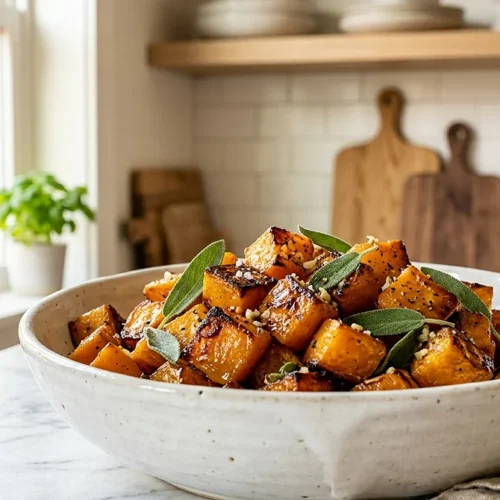
Roasted Butternut Squash
Equipment
- Vegetable peeler
- Large bowl
- Baking sheet
- Chef’s knife
- Spoon (for scooping seeds)
Ingredients
Produce
- 1 butternut squash medium
Fat
- 2 tablespoons olive oil
Aromatics
- 2 cloves garlic minced
Seasoning
- salt to taste
- black pepper to taste
Instructions
- Preheat your oven to 400°F (200°C). A fully preheated oven is essential for getting golden, caramelized edges rather than steamed squash.
- Use a sturdy vegetable peeler to remove the skin from the butternut squash. Halve it lengthwise, then scoop out and discard the seeds with a spoon.
- Cut the squash halves into 1-inch cubes. Try to keep the pieces roughly the same size so they roast evenly.
- Add the squash cubes to a large bowl along with the olive oil and minced garlic. Toss well to coat every piece, then season generously with salt and pepper.
- Arrange the squash in a single layer on a baking sheet, making sure the pieces are not crowded. Use two baking sheets if needed to avoid steaming.
- Roast in the preheated oven for 25 to 35 minutes, flipping the cubes halfway through, until the edges are deep golden and a fork slides in with zero resistance.