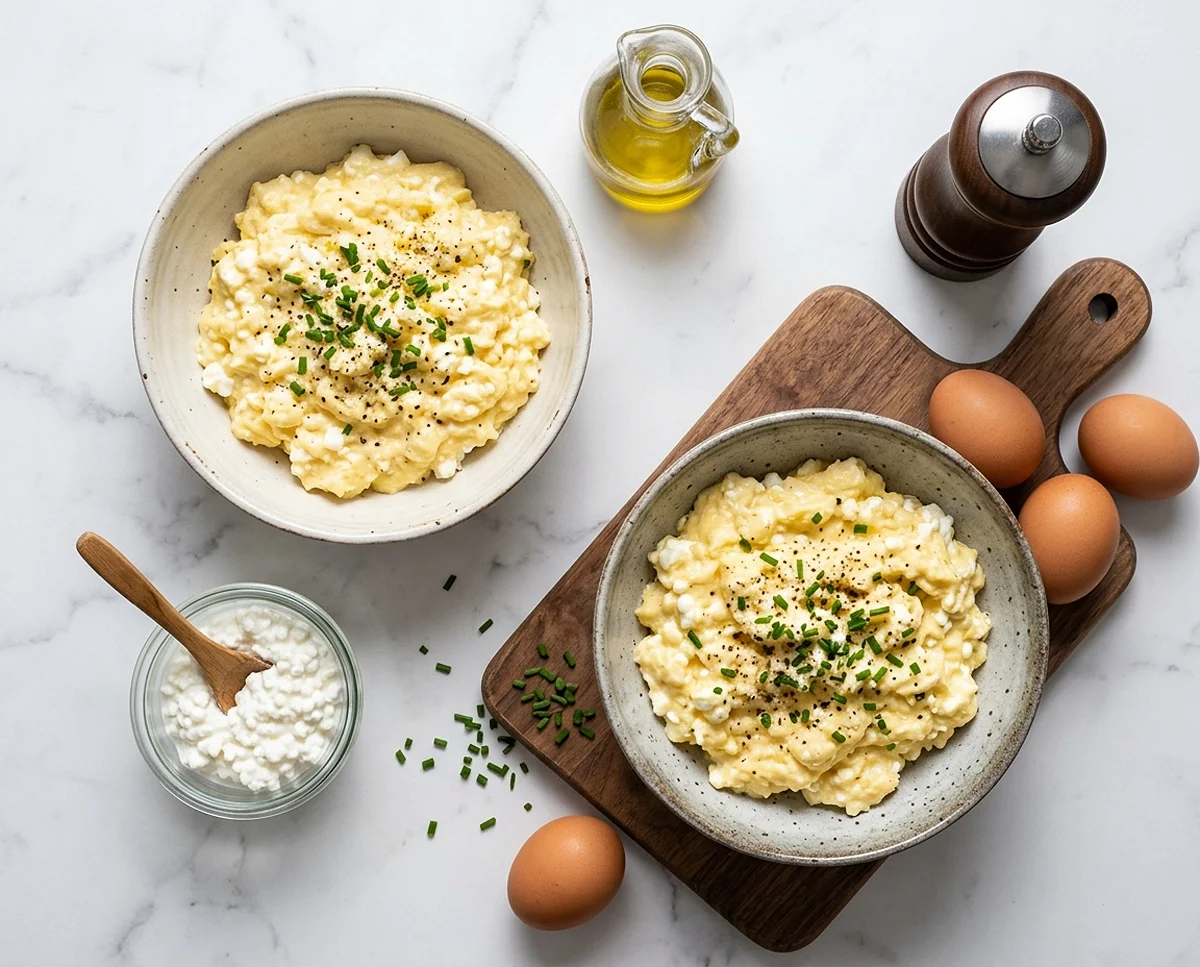
Cottage Cheese Scrambled Egg Bowls
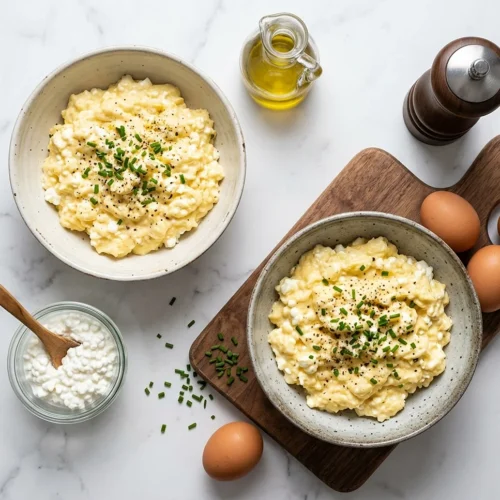
Discover the creamy, protein-packed magic of Cottage Cheese Scrambled Egg Bowls — the healthy breakfast idea that’s been living rent-free in my head (and on my stove) for months.
I know, I know — cottage cheese in eggs sounds like a dare. But stick with me here, because once you try it, plain scrambled eggs are going to feel a little boring.
The first time I made these, I was just trying to use up half a container of cottage cheese before it went bad. Spoiler: I’ve been making them on purpose ever since.
Table of Contents
What Makes This Recipe So Good
These cottage cheese eggs are ridiculously simple — four ingredients, one pan, done in under five minutes.
The cottage cheese melts right into the eggs as they cook, making them extra creamy and fluffy without a single tablespoon of butter or cream.
You’re also getting a serious protein boost. Two eggs plus half a cup of cottage cheese delivers around 25 grams of protein per serving. That’s the kind of breakfast that actually keeps you full.
If you’re into scrambled egg meal prep, this recipe is a dream. You can whisk the egg mixture the night before, pop it in the fridge, and cook it fresh in minutes the next morning.
Ingredients
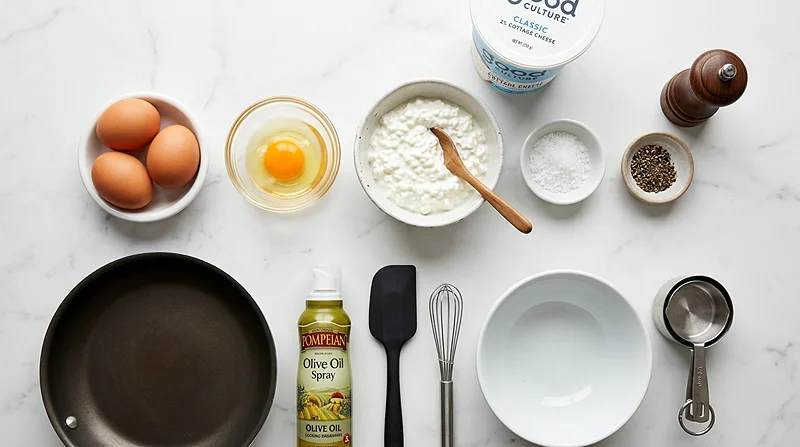
Here’s everything you need for two servings. Short list, big payoff.
| Category | Ingredient | Amount |
|---|---|---|
| Eggs | Large eggs | 4 |
| Dairy | 2% cottage cheese (I love Good Culture) | 1/2 cup |
| Seasoning | Kosher salt | 1/8 teaspoon |
| Seasoning | Fresh ground black pepper | To taste |
| Cooking | Olive oil spray | A few sprays |
Good Culture cottage cheese is my personal go-to — it’s creamy, not watery, and whisks into the eggs like a dream. But any 2% cottage cheese works just fine.
How to Make Cottage Cheese Scrambled Egg Bowls
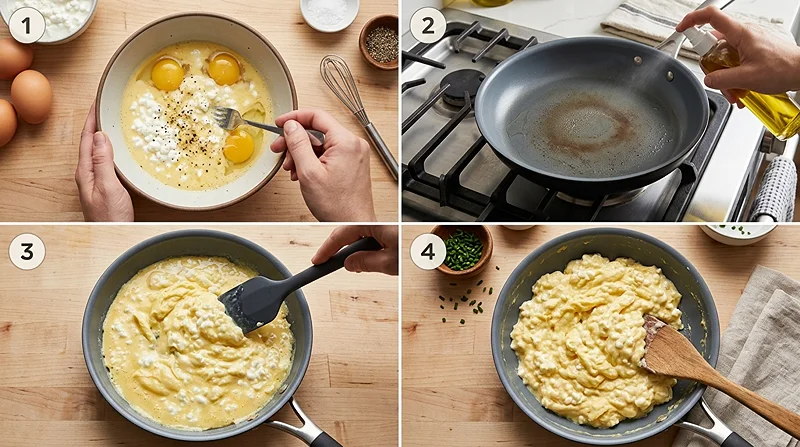
This whole thing comes together in about five minutes flat. Here’s how to do it without overthinking it.
Step 1: Whisk It All Together
Grab a medium bowl and crack in your four eggs. Add the 1/2 cup of cottage cheese, the kosher salt, and a few good grinds of black pepper.
Use a fork to whisk everything together until it’s well combined. You’ll notice the mixture looks a little lumpy from the cottage cheese — that’s totally fine and exactly what you want.
Tip: Don’t use a blender or over-whisk. A fork and a relaxed attitude is all you need here.
Step 2: Heat the Pan
Set a medium nonstick skillet over medium-low heat. Give it a few sprays of olive oil and let it warm up for about 30 seconds.
Medium-low is the key here. High heat is the enemy of creamy scrambled eggs — it makes them rubbery and sad. Low and slow is where the magic lives.
Step 3: Cook Low and Slow
Pour the egg mixture into the warm pan. Now comes the fun part: patience.
Using a rubber spatula, gently scrape sections of the eggs toward the center of the pan as the bottom starts to set. Think soft, lazy folds — not aggressive stirring.
Keep doing this for about 1.5 to 2 minutes total, until the eggs are just set but still look slightly glossy. That glossy look means they’re perfectly done.
Note: Pull them off the heat just before they look fully done — they’ll keep cooking from the pan’s residual heat.
Step 4: Serve Right Away
Remove the pan from the heat and serve immediately. These cottage cheese eggs are best eaten hot, straight from the pan.
Pile them into a bowl and add your favorite toppings — more on that in the variations section below.
Expert Tips for Perfect Results
Use a Nonstick Pan
A good nonstick skillet is non-negotiable here. Cottage cheese has a tendency to stick if your pan isn’t properly coated, and nobody wants to spend five minutes scrubbing a pan after a five-minute breakfast.
Don’t Walk Away
Scrambled eggs require your full, undivided attention for those 1.5 to 2 minutes. Seriously, put the phone down. The difference between creamy and overcooked is about 30 seconds.
Season After, Not Just Before
The cottage cheese already has some salt in it, so go light with the kosher salt in the mix. Taste after cooking and add a pinch more if needed.
Go Full-Fat for Extra Creaminess
The recipe calls for 2% cottage cheese, which works beautifully. But if you want an even richer result, full-fat cottage cheese takes these eggs to another level entirely.
Variations and Topping Ideas
The base recipe is simple on purpose — it’s your blank canvas. Here are some of my favorite ways to build out the bowl for a complete, healthy breakfast idea.
Veggie Lover’s Bowl
Sautee a handful of cherry tomatoes, spinach, or diced bell peppers in the pan before adding your egg mixture. The veggies add color, flavor, and extra nutrients without much effort.
Savory Herb Bowl
Stir in fresh chives, dill, or flat-leaf parsley after cooking. Fresh herbs make everything feel a little more fancy without requiring any actual cooking skill.
Spicy Kick Bowl
Top with a drizzle of hot sauce or a few slices of pickled jalapenos. If you’re a heat person, a pinch of red pepper flakes in the egg mixture also works really well.
High-Protein Meal Prep Bowl
For scrambled egg meal prep, cook a big batch and serve over cooked quinoa or brown rice with roasted veggies on the side. It reheats well enough to be a solid weekday lunch too.
If you’re looking for more easy, protein-forward meals, this dense bean salad is another favorite that comes together in minutes and keeps you full for hours.
Troubleshooting Common Issues
My Eggs Turned Out Rubbery
This almost always comes down to heat that’s too high or cooking for too long. Drop your burner to medium-low and pull the pan off the heat while the eggs still look a little underdone.
The Eggs Are Watery
Some cottage cheese brands release more liquid than others. If yours is on the watery side, drain it briefly through a fine mesh strainer before whisking it into the eggs.
It Doesn’t Taste Cheesy Enough
If you want a more pronounced cheesy flavor, try stirring in a tablespoon of shredded parmesan or sharp cheddar after cooking. The cottage cheese gives creaminess; aged cheese gives that punchy, savory kick.
Storage Instructions
These eggs are really best fresh, but here’s everything you need to know about storing and reheating them.
| Storage Method | Container | Duration |
|---|---|---|
| Refrigerator | Airtight container | Up to 2 days |
| Freezer | Not recommended | N/A |
| Uncooked egg mixture | Covered bowl in fridge | Up to 24 hours |
Reheating Tips
To reheat, use a nonstick skillet over low heat for 1 to 2 minutes, stirring gently. The microwave works in a pinch — 30-second intervals, stirring in between, so they don’t dry out.
No-Waste Kitchen Ideas
Got leftover egg mixture? Pour it into a muffin tin and bake at 350 degrees Fahrenheit for 12 to 15 minutes for adorable little egg muffins you can grab all week.
Leftover cooked eggs work well stuffed into a warm tortilla with salsa and avocado for a quick breakfast taco situation that nobody will judge you for eating at 11am.
Nutritional Information
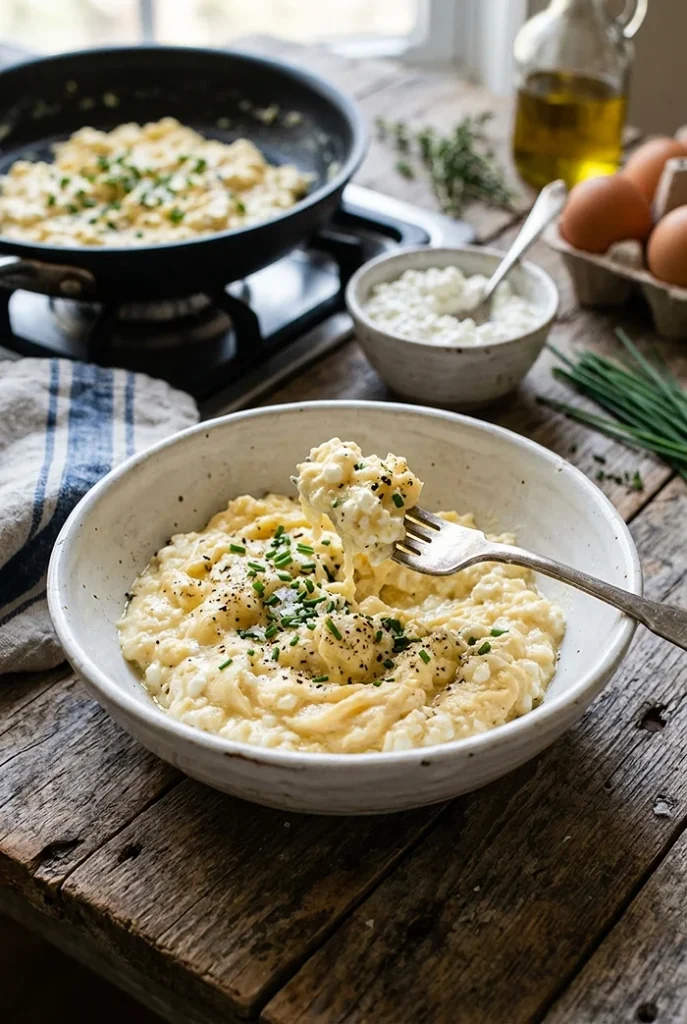
Here’s an approximate breakdown per serving (based on 2 servings from the full recipe). Values may vary slightly depending on your specific ingredients.
| Nutrient | Per Serving |
|---|---|
| Calories | ~190 kcal |
| Protein | ~22g |
| Fat | ~10g |
| Carbohydrates | ~3g |
| Sodium | ~320mg |
| Calcium | ~120mg |
For more healthy breakfast ideas that are just as quick and satisfying, check out these chocolate chip overnight oats — they’re meal-prep gold and taste like dessert for breakfast.
If you’re after something sweet and indulgent for the weekend, these lemonade cheesecake bars are worth every single calorie. And for anyone avoiding dairy in their baked goods, this dairy-free banana bread is soft, moist, and totally foolproof.
Frequently Asked Questions
Can I use low-fat or fat-free cottage cheese?
Yes, you can, but the eggs will be slightly less creamy. Full-fat and 2% cottage cheese give the best texture. Fat-free versions can make the eggs a little watery, so drain them first if that’s what you have on hand.
Can I make cottage cheese scrambled eggs ahead of time?
You can whisk the uncooked egg and cottage cheese mixture up to 24 hours ahead and keep it covered in the fridge. Cook it fresh in the morning for the best texture. Cooked eggs can be stored for up to 2 days, though they’re best right off the stove.
Does the cottage cheese make the eggs taste cheesy?
Not in an overwhelming way. The cottage cheese melts into the eggs during cooking, making them creamier and fluffier rather than strongly cheesy. It’s subtle and delicious — most people can’t even pinpoint what makes them taste so good.
What can I serve with cottage cheese scrambled egg bowls?
These eggs pair well with toasted sourdough, sliced avocado, fresh fruit, or roasted vegetables. For a higher-calorie meal, serve them over cooked grains like quinoa or farro. They’re also great tucked into a warm tortilla for a breakfast wrap.
Are cottage cheese scrambled eggs good for meal prep?
They’re great for meal prep when you prep the uncooked mixture ahead and cook to order. Fully cooked scrambled eggs can be stored in the fridge for up to 2 days and reheated gently. Cooking fresh each morning only takes about 5 minutes, so it’s worth it for the best texture.
Final Thoughts
These Cottage Cheese Scrambled Egg Bowls are genuinely one of the easiest ways to upgrade your morning routine without adding any extra effort.
Four ingredients, one pan, five minutes — and you’ve got a creamy, protein-packed breakfast that keeps you full until lunch. That’s a pretty good deal.
Give this recipe a try and let me know what you think in the comments below! And if you love it as much as I do, share it on Pinterest so your friends can discover their new favorite healthy breakfast idea too.
Cottage Cheese Scrambled Egg Bowls
Equipment
- Medium mixing bowl
- Fork
- Medium nonstick skillet
- Rubber spatula
Ingredients
Eggs
- 4 large eggs
Dairy
- ½ cup 2% cottage cheese I like Good Culture
Seasoning
- ⅛ tsp kosher salt
- fresh ground black pepper to taste
Cooking
- olive oil spray a few sprays
Instructions
- In a medium bowl, whisk together the eggs, cottage cheese, kosher salt, and black pepper to taste using a fork until well combined. The mixture will look slightly lumpy from the cottage cheese — that’s perfectly normal.
- Heat a medium nonstick skillet over medium-low heat and spray with olive oil. Allow it to warm up for about 30 seconds before adding the eggs.
- Pour the egg mixture into the warm skillet. Using a rubber spatula, slowly scrape sections of the eggs toward the center of the pan as the bottom starts to set, creating soft folds. Continue for about 1½ to 2 minutes total, until the eggs are just set but still look slightly glossy.
- Remove the pan from the heat and serve immediately. Add your favorite toppings and enjoy hot straight from the pan.