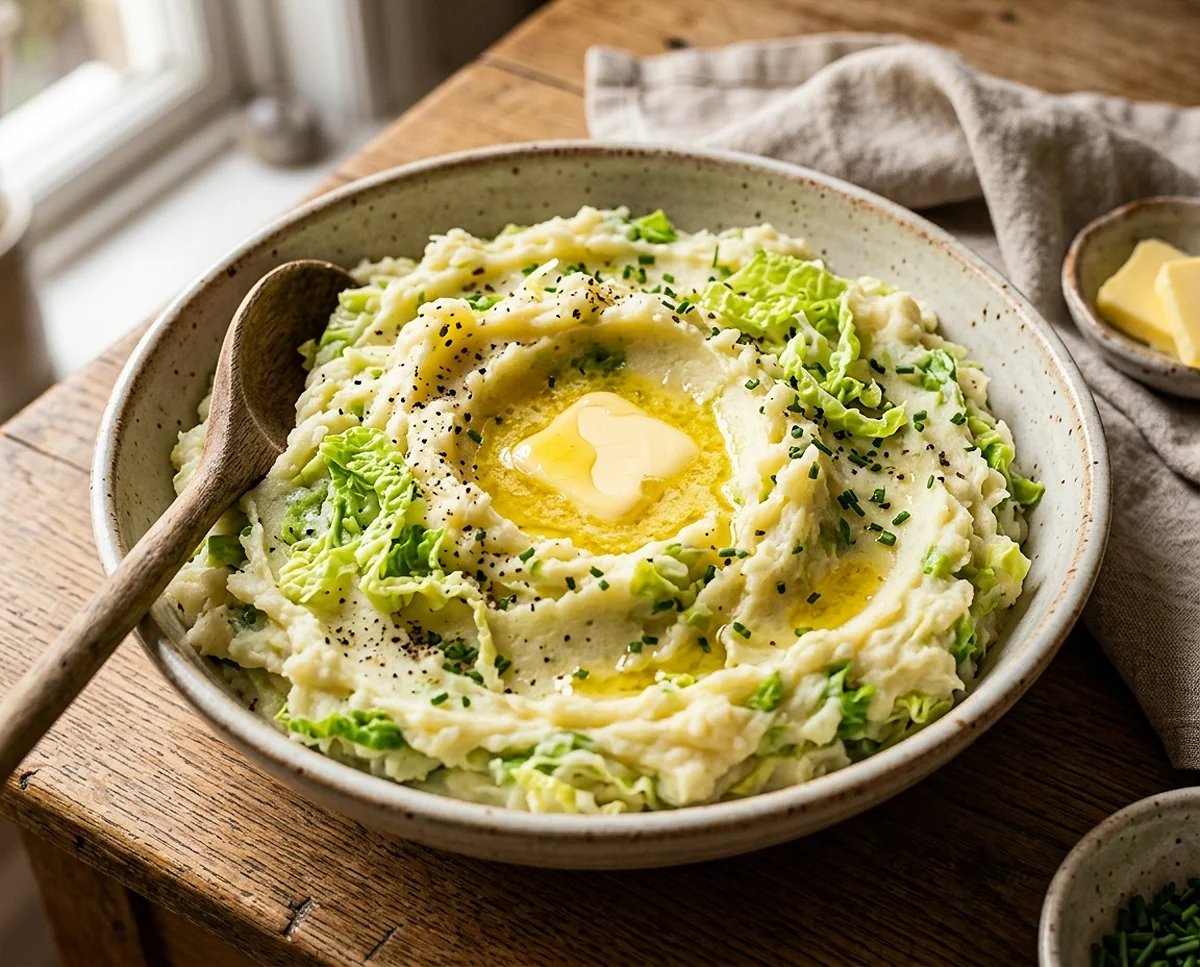
Colcannon Recipe
Discover the ultimate colcannon recipe — Ireland’s beloved mashed potatoes blended with buttery cabbage. It’s the kind of dish that feels like a warm hug on a cold evening, and once you try it, you’ll understand why it’s been on Irish tables for centuries.
My grandmother used to say that mashed potatoes without cabbage are just “half a story.” She wasn’t wrong. The first time I made this traditional colcannon at home, the whole kitchen smelled like Sunday dinner at her house — and honestly, that alone was worth it.
Table of Contents
What Makes This Colcannon Recipe So Special
This isn’t just any mashed potato situation. This is a classic Irish side dish that’s been perfected over generations — creamy, fluffy, and packed with tender savoy cabbage.
It’s incredibly simple, uses just a handful of ingredients, and comes together in under 30 minutes. Whether you’re serving it alongside a hearty stew or as part of a St. Patrick’s Day spread, it delivers every single time.
Think of it as Irish mashed potatoes, but better. The cabbage adds texture, color, and a gentle earthiness that balances the richness of the butter and milk beautifully.
Ingredients
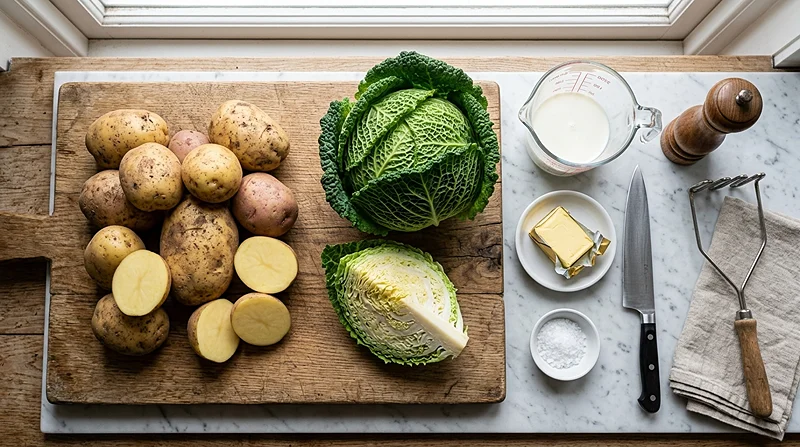
| Category | Ingredient | Amount |
|---|---|---|
| Potatoes | Floury potatoes (Golden Wonder or Kerr’s Pink) | 1.2kg |
| Greens | Small Savoy cabbage | 1 small head |
| Dairy | Whole milk | 250ml |
| Dairy | Unsalted butter (plus extra to serve) | 55g |
| Optional | Extra virgin olive oil (for drizzling) | To taste |
| Seasoning | Salt and black pepper | To taste |
A note on potatoes: Floury varieties like Golden Wonder or Kerr’s Pink are key here. They mash up light and fluffy instead of gluey — which makes all the difference in a proper colcannon recipe. Waxy potatoes will let you down, so don’t skip this detail.
Step-by-Step Instructions
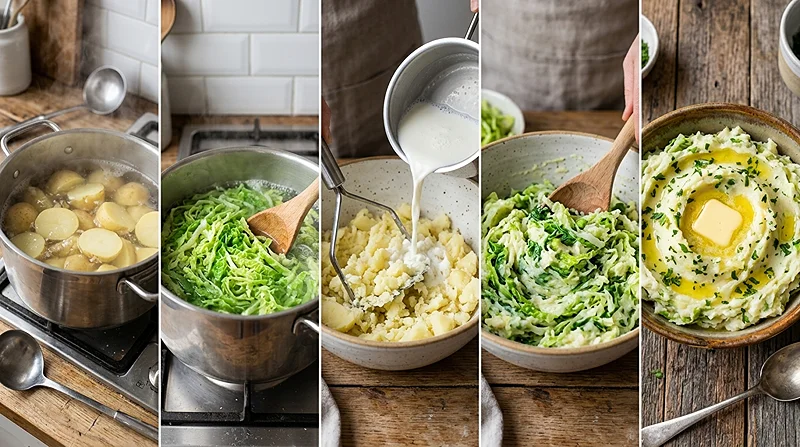
Step 1 — Cook the Potatoes
Peel and halve your potatoes, then drop them into a large pan of well-salted water. Bring it to a boil, then lower the heat to a steady simmer and cover the pan.
Cook for 10 to 15 minutes, or until a knife slides in easily with no resistance. Don’t rush this part — undercooked potatoes make lumpy mash, and nobody wants that.
Once they’re done, drain them and let them steam-dry for at least 5 minutes. That steam-drying step is everything. It removes excess moisture so your mash comes out fluffy rather than wet and dense.
“The drier the potato, the fluffier the mash. Never skip the steam-dry.”
Step 2 — Prep and Cook the Cabbage
While the potatoes are doing their thing, strip away and discard the dark outer leaves from your savoy cabbage. Then finely shred the rest — you want thin, even strips so it cooks quickly and evenly.
Bring a separate pan of salted water to a boil and cook the cabbage for about 4 minutes. You want it al dente — tender but with a little bite still left in it. Overcooked cabbage goes mushy and loses its lovely green color.
Drain it well, then season with salt, pepper, and a little knob of butter. Even at this stage, season it properly — it makes a real difference to the final dish.
Step 3 — Heat the Milk
This is the move that most people skip, and it’s a game changer. While your potatoes are steam-drying, pour the milk into a small saucepan and bring it to a boil over medium heat.
Hot milk blends into the mash much more smoothly than cold milk. Cold milk can make the mash dense and a little gluey — not what we’re going for here.
Step 4 — Mash and Combine
Mash the potatoes while they’re still hot. Add the hot milk gradually — you might not need all of it, so go slowly and stop when you reach a smooth, fluffy consistency.
Now stir in your buttery cabbage. Mix it through gently so the green bits are evenly distributed throughout. Taste and adjust the seasoning — this is the moment to make it perfect.
Step 5 — Serve It Right
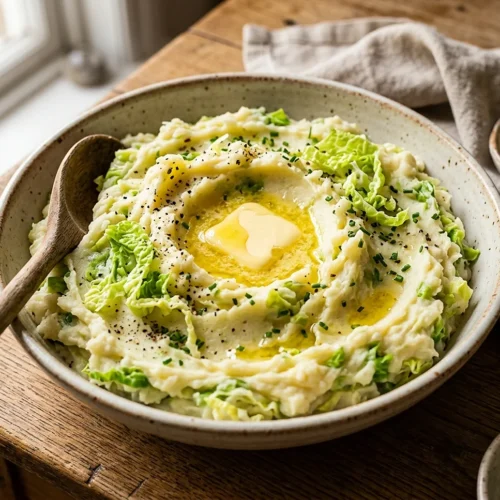
Spoon your colcannon into a hot dish (warming the dish first really helps keep everything at the right temperature). Make a little well in the center and add a generous pat of butter or a drizzle of good extra virgin olive oil.
Watch the butter melt into the middle as you carry it to the table. That’s the classic Irish colcannon experience right there — simple, generous, and completely satisfying. Pair it with a rich homemade onion gravy and you’ve got a proper comfort meal.
Expert Tips for the Best Colcannon Recipe
Potato Choice Matters
Always use floury potatoes for traditional colcannon. Golden Wonder and Kerr’s Pink are the gold standard in Ireland, but Maris Piper or King Edward work well too if that’s what you can find.
Avoid waxy varieties like Charlotte or new potatoes — they don’t mash well and you’ll end up with a sticky, gluey mess instead of a light, airy mash.
Don’t Over-Mash
Mash until just smooth — seriously, stop there. Over-mashing breaks down the starch cells and turns your beautiful mash into wallpaper paste. A hand masher is ideal; avoid a food processor at all costs.
Season Every Layer
Season the potato water, the cabbage water, and the final mash separately. Seasoning at every stage builds a much deeper, more rounded flavor than just seasoning at the end.
Variations to Try
Use kale instead of cabbage: Kale gives this classic Irish side dish a slightly more robust, peppery flavor. Blanch it just like the cabbage and it works brilliantly.
Add spring onions: Many traditional colcannon recipes include finely chopped spring onions stirred through the mash. It adds a mild, fresh onion flavor that complements the butter beautifully.
Make it richer: Swap some of the milk for cream for an extra indulgent version. It’s not traditional, but it’s absolutely delicious.
Troubleshooting
Mash is too wet: You probably added too much milk, or the potatoes weren’t dry enough before mashing. Next time, steam-dry longer and add the milk more slowly.
Cabbage is too soft: It was likely overcooked. Four minutes is really the maximum for savoy — keep an eye on it.
Mash is lumpy: The potatoes may have been slightly undercooked. Make sure a knife goes in without any resistance before draining them.
What to Serve With Colcannon
This Irish mashed potatoes recipe is one of the most versatile side dishes you’ll ever make. It goes with almost everything. Try it alongside garlic steak tortellini for a hearty weeknight dinner, or serve it as part of a bigger spread with French onion chicken orzo casserole.
It’s also brilliant as a base for leftovers. Leftover colcannon fried up in a pan with a little butter makes incredible potato cakes — crispy on the outside, soft in the middle. Don’t sleep on that move.
If you’re building out a full comfort food menu, a fresh taco pasta salad makes a surprisingly good contrast to the richness of colcannon, and for dessert, you can’t go wrong with easy brownie mix cookies to round things off.
Storage and Reheating
| Method | Duration | Notes |
|---|---|---|
| Fridge | Up to 3 days | Store in an airtight container |
| Freezer | Up to 2 months | Freeze in portions for easy reheating |
| Reheat (stovetop) | 5-8 minutes | Add a splash of milk and stir over low heat |
| Reheat (microwave) | 2-3 minutes | Cover with a damp paper towel, stir halfway through |
No-waste idea: Leftover colcannon makes incredible fried potato cakes. Just shape cold mash into patties, press them into a little flour, and fry in butter until golden on both sides. Serve with a fried egg on top for a next-level breakfast.
Nutritional Information
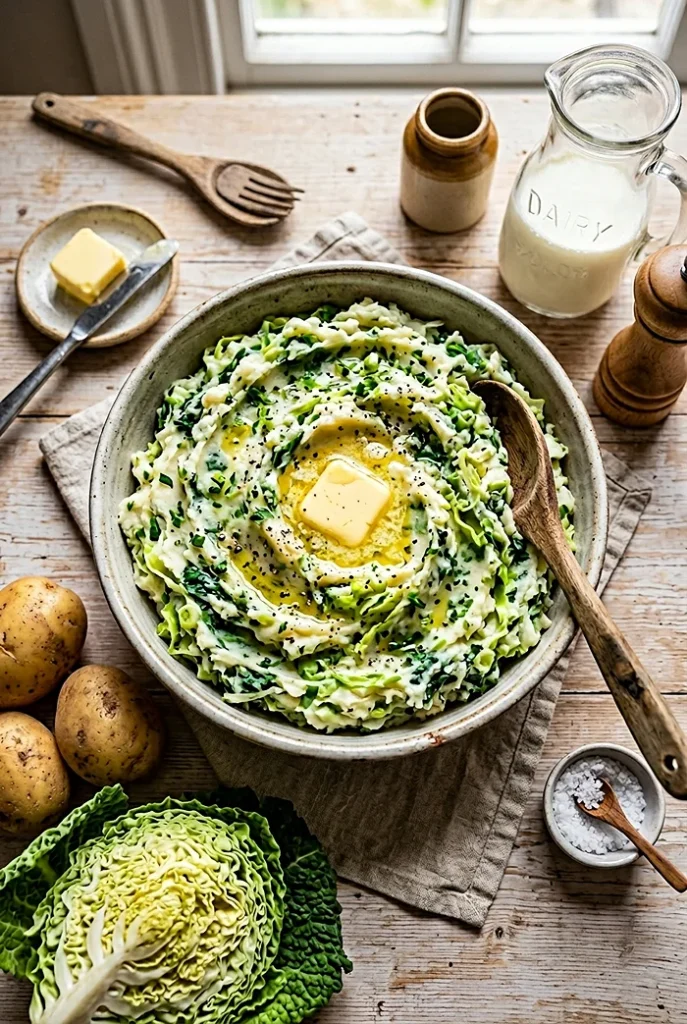
Per serving (based on 8 servings):
| Nutrient | Amount |
|---|---|
| Calories | Approx. 195 kcal |
| Carbohydrates | 29g |
| Protein | 4g |
| Fat | 7g |
| Saturated Fat | 4g |
| Fiber | 4g |
| Sodium | Approx. 180mg (varies with seasoning) |
Nutritional values are estimates and may vary depending on exact ingredients used.
FAQs About Colcannon
What is colcannon made of?
Traditional colcannon is made from mashed floury potatoes, cooked cabbage or kale, butter, and hot milk. Some versions also include spring onions. It’s a classic Irish side dish that’s been a staple of Irish cooking for centuries.
Can I make colcannon ahead of time?
Yes, and it reheats really well. Make it up to a day ahead, store it covered in the fridge, and reheat gently on the stovetop with a splash of milk to loosen it. Give it a good stir and it’ll be almost as good as fresh.
What potatoes are best for this colcannon recipe?
Floury potatoes are essential. In Ireland, Golden Wonder and Kerr’s Pink are the go-to choices. Outside Ireland, Maris Piper or King Edward work brilliantly. Avoid waxy potatoes — they don’t mash well and you’ll end up with a gluey texture instead of a light, fluffy mash.
Can I freeze colcannon?
You can, though the texture does change slightly after freezing. Let it cool completely, freeze in portions in airtight containers, and defrost overnight in the fridge before reheating with a little extra milk. It’s perfectly fine for weeknight meals, even if it’s not quite as fluffy as the freshly made version.
Is colcannon gluten-free?
Yes, this colcannon recipe is naturally gluten-free as written. Just double-check your butter and any optional add-ins to make sure there’s no cross-contamination if you’re cooking for someone with celiac disease.
Give This Colcannon Recipe a Try
If you’ve never made homemade colcannon before, this is your moment. It’s one of those recipes that takes almost no effort but delivers a ridiculous amount of comfort and flavor.
Whether you’re cooking it for St. Patrick’s Day, a cozy Sunday dinner, or just because you fancy something deeply satisfying on a cold night, this traditional colcannon will not let you down.
Give it a go, and if you love it, share it on Pinterest so other comfort food fans can find it too. Drop your thoughts in the comments below — did you add spring onions? Try it with kale? I’d genuinely love to hear how yours turned out.
The Most Comforting Colcannon Recipe You’ll Ever Make
Equipment
- Large high-sided saucepan
- Medium saucepan
- Small saucepan
- Potato masher
- Colander
- Sharp knife and chopping board
- Hot serving dish
Ingredients
Potatoes
- 1.2 kg Floury potatoes Golden Wonder or Kerr’s Pink recommended; Maris Piper or King Edward also work
Greens
- 1 small head Savoy cabbage Dark outer leaves removed and discarded, remainder finely shredded
Dairy
- 250 ml Whole milk You may not need all of it
- 55 g Unsalted butter Plus extra to serve if desired
Optional
- to taste Extra virgin olive oil For drizzling over the finished dish
Seasoning
- to taste Salt For potato water, cabbage water, and final seasoning
- to taste Black pepper
Instructions
- Peel and halve the potatoes, then place them in a large high-sided pan of well-salted water. Bring to a boil, then lower the heat to a steady simmer and cover the pan. Cook for 10 to 15 minutes, or until a knife slides in easily with no resistance.
- Drain the potatoes and allow them to steam dry for at least 5 minutes. This step removes excess moisture and ensures a light, fluffy mash rather than a wet, dense one. Do not skip it.
- Remove and discard the dark outer leaves from the cabbage, then finely shred the rest. Bring a separate pan of salted water to a boil and cook the cabbage for 4 minutes, or until just al dente. Drain well, then season with salt, pepper, and a little knob of butter.
- While the potatoes are steam-drying, pour the milk into a small saucepan and bring it to a boil over medium heat. Hot milk blends more smoothly into the mash and prevents a dense or gluey texture.
- Mash the potatoes while still hot. Gradually add the hot milk, stirring as you go — you may not need all of it. Stop adding milk once you reach a smooth, fluffy consistency. Avoid over-mashing.
- Stir the buttered cabbage into the mashed potatoes and mix gently until evenly distributed. Taste and adjust seasoning with salt and pepper as needed.
- Spoon the colcannon into a hot serving dish. Make a small well in the centre and add a generous pat of butter or a drizzle of extra virgin olive oil. Serve immediately.