Eggs Benedict Recipe
Discover the ultimate eggs benedict recipe — poached eggs, Canadian bacon, and silky homemade hollandaise sauce layered on toasted English muffins for the perfect brunch.
Okay, real talk — I used to think eggs benedict was one of those restaurant-only dishes, like it required a culinary degree and a French accent to make. Turns out, it’s way more forgiving than it looks, and once you nail it, you’ll feel like a total brunch legend.
This breakfast eggs benedict has become my go-to weekend splurge. Nothing beats pulling it off at home where you can pile on that hollandaise sauce without anyone judging you.
Table of Contents
What Makes This Eggs Benedict Recipe So Good
This is classic brunch eggs benedict done right — golden-toasted English muffins, smoky Canadian bacon, perfectly poached eggs with jammy yolks, and a buttery lemon hollandaise that ties it all together.
No fancy equipment needed. Just a pot, a pan, a bowl, and a little patience. The whole thing comes together faster than you’d think, and the result tastes like something from a high-end brunch spot.
It’s the kind of dish that makes people go quiet mid-bite. You know the silence. That’s the good silence.
Ingredients You’ll Need

Here’s everything broken down cleanly. Nothing wild — just good, simple ingredients that do heavy lifting together.
| Category | Ingredient | Amount |
|---|---|---|
| Base | English muffins | 2 (split in half) |
| Base | Canadian bacon slices | 4 slices |
| Eggs | Large eggs | 4 |
| Eggs | White vinegar (splash) | Optional, for poaching |
| Hollandaise | Unsalted butter | 4 tablespoons |
| Hollandaise | Egg yolks | 4 |
| Hollandaise | Lemon juice (or lime juice) | 2 teaspoons |
| Hollandaise | Heavy whipping cream | 1 tablespoon |
| Hollandaise | Salt and pepper | To taste |
Tip: Canadian bacon is leaner and milder than regular bacon, making it the classic choice for poached eggs benedict. If you can’t find it, thin slices of ham work great too.
How to Make Eggs Benedict Step by Step
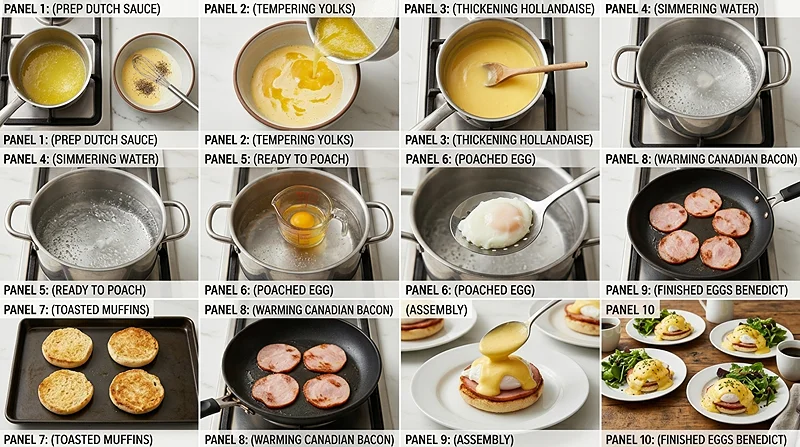
Don’t let the multi-component nature of this dish intimidate you. Work in the right order — sauce first, then eggs and bacon — and it all comes together beautifully.
Step 1: Make the Hollandaise Sauce
Start by melting the butter in a small saucepan over low heat. While that’s going, beat your 4 egg yolks in a separate bowl, then mix in the lemon juice, heavy cream, and a pinch of salt and pepper.
Here’s the key move: add the hot melted butter to the egg mixture one small spoonful at a time, stirring constantly after each addition. This process is called tempering, and it’s what keeps your eggs from scrambling into a sad, lumpy mess.
“Slow and steady wins the hollandaise. Add that butter one spoonful at a time and you’ll be golden — literally.”
Once all the butter is incorporated, pour the mixture back into the saucepan. Cook over low heat while stirring constantly for just 20–30 seconds. Pull it off the heat and set it aside — it thickens as it cools.
If it gets too thick, stir in a tiny splash of cream to loosen it back up. Easy fix, no stress.
Step 2: Poach the Eggs
Fill a medium pot with about 3 inches of water and bring it to a boil, then reduce the heat to a gentle simmer. You want small, lazy bubbles — not a rolling boil that will tear your eggs apart.
Add a small splash of white vinegar to the water. This is optional, but it really does help the egg whites hold together instead of going all wispy in the water.
Crack one egg into a small cup or measuring cup — this gives you way more control. Gently lower the cup to the surface of the water and ease the egg in slowly. No splash-and-hope tactics here.
Cook for 3–5 minutes depending on how runny you like your yolk. Use a slotted spoon to lift it out. If you see white foam forming on the water, just skim it off with a spoon — totally normal, nothing to worry about.
Step 3: Cook the Canadian Bacon
While your eggs are poaching, toss the Canadian bacon slices into a large pan over medium-high heat. Cook for about 1 minute per side until they get a little color and warm through.
The smell at this point is absolutely ridiculous. In the best way. It’s smoky, savory, and it makes you realize brunch at home might actually be better than going out.
Step 4: Toast and Assemble
Toast your English muffins until they’re golden and a little crispy on the edges — that crunch is important. It holds up under the weight of all that goodness on top.
Layer it up: toasted muffin → Canadian bacon → poached egg → hollandaise sauce. That’s it. That’s the whole magic formula for the perfect breakfast eggs benedict.
Serve immediately while everything is warm. Add a crack of black pepper on top if you’re feeling fancy — and you should be, because you just made eggs benedict from scratch.
Expert Tips for Perfect Eggs Benedict Every Time
Hollandaise Sauce Tips
The biggest fear with hollandaise is curdling. The fix? Never rush the butter addition and keep the heat low when finishing on the stove. If it does start to look grainy, whisk in a teaspoon of cold water immediately.
Make the hollandaise right before you need it. It doesn’t store well over long periods, but you can keep it warm by setting the bowl over a pot of hot (not simmering) water for up to 30 minutes.
Poaching Egg Tips
Fresh eggs poach better than older ones — the whites are tighter and more cohesive. If your eggs have been in the fridge for two weeks, consider using them for scrambled eggs instead and grabbing fresh ones for this recipe.
You can poach multiple eggs in the same water. Just give each one about a minute before adding the next, and keep track of cooking times. A simple timer per egg makes this stress-free.
Timing Everything Together
This is a dish where mise en place (having everything ready before you start) really pays off. Have your muffins ready to toast, bacon cooked, and sauce made before you start poaching. Poached eggs wait for no one.
If you’re making this for a crowd, you can poach eggs in advance and store them in cold water in the fridge. Reheat them in warm water for 30–60 seconds before serving. Game changer for hosting brunch.
Love a good brunch spread? Check out this crowd-pleasing Memorial Day breakfast casserole for feeding a big group with minimal fuss.
Variations Worth Trying
Eggs Florentine
Swap the Canadian bacon for a handful of sauteed spinach and you’ve got Eggs Florentine — equally delicious and a great option if you’re going meatless. Add a pinch of nutmeg to the spinach while it cooks.
Smoked Salmon Benedict
Replace the Canadian bacon with thin slices of smoked salmon for a luxurious twist on this brunch eggs benedict recipe. Add a little dill to your hollandaise and feel very fancy about yourself.
Spicy Benedict
Add a few drops of hot sauce or a pinch of cayenne to your hollandaise for a kick. Works incredibly well, especially if you love that contrast of rich and spicy. Trust the process.
Troubleshooting Common Issues
Hollandaise Broke or Curdled
It happens. Start a fresh bowl with one egg yolk, then slowly whisk the broken sauce into the new yolk — this often rescues it. Patience and low heat are your best friends with this sauce.
Egg Whites Are Too Wispy
This usually means the water was too hot or the eggs aren’t fresh. Try the vinegar trick and make sure you’re at a gentle simmer, not a boil. Cracking the egg into a cup first also helps a lot.
English Muffins Got Soggy
Toast them until they’re properly golden — light toasting won’t hold up. Also, let the poached egg drain well on a paper towel before placing it on the muffin. That extra second of patience makes a real difference.
Storage and Leftovers
Eggs benedict is honestly best eaten fresh, right after assembling. But if you have components left over, here’s how to handle them.
| Component | Storage Method | Duration |
|---|---|---|
| Hollandaise sauce | Airtight container, fridge | Up to 2 days |
| Poached eggs | Cold water, covered, fridge | Up to 2 days |
| Canadian bacon | Airtight container, fridge | Up to 4 days |
| English muffins | Room temp or fridge | 3–5 days |
Reheating hollandaise: Gently warm over a bowl of hot water, stirring constantly. Do NOT microwave it — it will break. Add a splash of cream if it’s too thick after reheating.
Reheating poached eggs: Drop them into a bowl of warm (not boiling) water for about 60 seconds. They’ll warm through without overcooking.
No-waste idea: Extra hollandaise makes a fantastic dipping sauce for steamed vegetables or roasted asparagus. Don’t let it go to waste — it’s liquid gold.
Nutritional Information (Per Serving)

| Nutrient | Amount (Approx.) |
|---|---|
| Calories | ~480 kcal |
| Protein | ~22g |
| Fat | ~32g |
| Saturated Fat | ~16g |
| Carbohydrates | ~26g |
| Cholesterol | ~480mg |
| Sodium | ~790mg |
Nutritional values are estimates based on standard ingredients and may vary depending on brands and exact quantities used.
Frequently Asked Questions
Can I make hollandaise sauce ahead of time?
You can make it about 30 minutes ahead and keep it warm by setting the bowl over a pot of hot (not simmering) water. Beyond that, it tends to thicken too much or lose its texture. For best results, make it fresh right before serving.
What can I use instead of Canadian bacon?
Smoked salmon, regular ham, prosciutto, or sauteed spinach all work really well. Each one gives a slightly different flavor, but the structure of this poached eggs benedict stays the same. Go with whatever you love or have on hand.
How do I know when a poached egg is done?
Gently lift it with a slotted spoon and give it a light press with your finger. The white should feel firm but the center should have a little wobble — that’s your runny yolk talking. Three minutes gives you very runny, five minutes gives you jammy and slightly set.
Is the vinegar in the poaching water necessary?
Nope, it’s optional. It does help the egg whites stay together more neatly, but plenty of people skip it with great results. If you’re sensitive to the flavor, leave it out — a proper simmer and fresh eggs will do most of the work anyway.
Can I use store-bought hollandaise sauce?
You can, and it’s a great shortcut for busy mornings. But once you try the homemade version, it’s hard to go back. It only takes about 10 minutes and the flavor difference is significant. Homemade is richer, tangier, and fresher all at once.
More Recipes You’ll Love
If you loved this eggs benedict recipe, you’re clearly someone who appreciates a well-made dish. Here are a few more worth bookmarking for your next culinary adventure.
For something totally different but equally delicious, try these authentic birria tacos — deeply flavorful and incredibly satisfying.
Craving something sweet after brunch? These mini meringues with lemon curd are light, tangy, and completely irresistible.
Or if you’re planning a bigger gathering, these BBQ bacon cheeseburger sliders are always a crowd favorite. And for dessert, this orange creamsicle cake is an absolute showstopper.
Final Thoughts
This eggs benedict recipe really is one of those dishes that feels fancy but is 100% doable at home. Once you make it yourself, you’ll never look at a brunch menu the same way.
The poached eggs benedict combo of runny yolk, smoky bacon, and rich hollandaise on a perfectly toasted muffin is genuinely one of life’s greatest small pleasures. You deserve it.
Give it a try this weekend — and when you do, save it to Pinterest so others can find it too. Drop a comment below and let me know how it turned out. Did you go classic, or did you try one of the variations? Either way, I want to hear about it.

Eggs Benedict
Equipment
- Medium saucepan
- Small saucepan
- Large skillet
- Mixing bowl
- Slotted spoon
- Measuring Cup
- Toaster
Ingredients
Base
- 2 English muffins split in half
- 4 slices Canadian bacon
Poached Eggs
- 4 large eggs
- white vinegar just a splash, optional, helps egg whites hold together
Hollandaise Sauce
- 4 tablespoons unsalted butter
- 4 egg yolks
- 2 teaspoons lemon juice or lime juice
- 1 tablespoon heavy whipping cream plus more to thin if needed
- salt and pepper to taste
Instructions
- Make the Hollandaise Sauce: Melt the butter in a small saucepan over low heat. In a separate bowl, beat the egg yolks, then mix in the lemon juice, heavy whipping cream, salt, and pepper.
- Add the hot melted butter to the egg mixture one small spoonful at a time, stirring well after each addition. This tempering process prevents the eggs from curdling. Take your time — slow and steady is the key here.
- Once all the butter is incorporated, pour the mixture back into the saucepan. Cook over low heat, stirring constantly, for just 20–30 seconds. Remove from heat and set aside — it will thicken as it cools. If it gets too thick, stir in a small splash of cream to loosen.
- Poach the Eggs: Fill a medium pot with about 3 inches of water. Bring to a boil, then reduce heat to a gentle simmer — you want small, lazy bubbles, not a rolling boil. Add a splash of white vinegar if using.
- Crack one egg into a small measuring cup. Gently lower the cup to the water’s surface and ease the egg in slowly. Cook for 3–5 minutes depending on your preferred yolk doneness. Remove with a slotted spoon. Skim off any white foam that forms on the water — this is completely normal.
- Cook the Canadian Bacon: While the eggs poach, place the Canadian bacon slices in a large skillet over medium-high heat. Cook for about 1 minute per side until warmed through and lightly browned.
- Assemble: Toast the English muffin halves until golden and crispy. Top each half with a slice of Canadian bacon, then a poached egg. Spoon hollandaise sauce generously over the top. Serve immediately with a crack of black pepper if desired.