Japanese Katsu Bowls with Tonkatsu Sauce
Craving crispy, golden comfort food that tastes like it came straight from a Tokyo street stall? These Japanese Katsu Bowls with Tonkatsu Sauce are everything — crunchy panko-coated cutlets, fluffy rice, and that deeply savory-sweet sauce you’ll want to drizzle on literally everything.
I first had a katsu bowl at a tiny hole-in-the-wall spot years ago and honestly? I went home and tried to recreate it that same night. It took a few tries, but now it’s my go-to weeknight flex — easy enough for a Tuesday, impressive enough for guests.
Table of Contents
Why You’ll Love This Recipe
These bowls check every box. Crispy outside, juicy inside, saucy, filling, and absolutely packed with flavor. It’s one of those bowl meals that feels special without requiring a culinary degree.
The tonkatsu sauce is the real star here. Sweet, tangy, and rich — it’s the backbone of so many classic Asian dishes. Once you taste it, you’ll wonder why you haven’t been making it all along.
Best of all, you only need one pan, a few pantry staples, and about 30 minutes. That’s weeknight-dinner magic right there.
Quick Overview
This recipe gives you perfectly crispy katsu cutlets — either chicken or pork — nestled over a bed of fluffy white rice and finished with a generous pour of homemade or store-bought tonkatsu sauce.
It’s a classic Japanese comfort dish that’s deeply satisfying, endlessly customizable, and genuinely foolproof once you nail the breading technique. Think of it as your new favorite Asian recipe to add to the rotation.
Ingredients
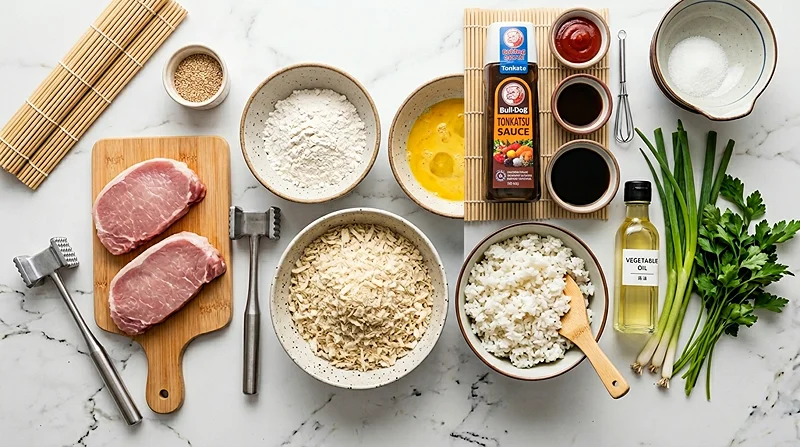
Here’s everything you’ll need, grouped so it’s easy to shop and prep:
| Category | Ingredient | Amount |
|---|---|---|
| Protein | Boneless chicken breasts or pork loin cutlets (pounded to 1/2-inch thickness) | 2 pieces |
| Breading | Panko breadcrumbs | 1 cup |
| Breading | All-purpose flour | 1/2 cup |
| Breading | Large eggs, beaten | 2 |
| Base | Cooked white rice (sushi rice preferred) | 3 cups |
| Sauce | Tonkatsu sauce (store-bought or homemade) | 1/2 cup |
| Cooking | Vegetable or canola oil for frying | As needed |
| Garnish | Fresh parsley or green onion (optional) | To taste |
| Homemade Sauce | Ketchup | 3 tbsp |
| Homemade Sauce | Worcestershire sauce | 2 tbsp |
| Homemade Sauce | Soy sauce | 1 tbsp |
| Homemade Sauce | Sugar | 1 tsp |
Tip: Sushi rice gives you that slightly sticky, restaurant-style base. Regular long-grain works fine too — no stress.
Step-by-Step Instructions
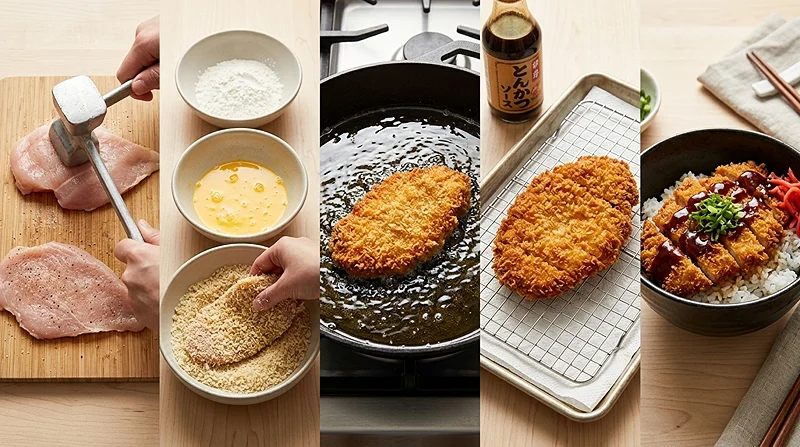
Step 1: Prep Your Cutlets
Place your chicken breasts or pork loin cutlets between two sheets of plastic wrap and pound them to about 1/2-inch thickness using a meat mallet or the bottom of a heavy pan.
Season both sides generously with salt and pepper. Don’t skip this — seasoning the meat directly is what keeps the flavor from being flat under all that breading.
“Thin, even cutlets = even cooking. Thicker in the middle means the outside burns before the inside is done. The pound is worth it, trust me.”
Step 2: Set Up the Breading Station
Grab three shallow bowls. Fill one with flour, one with beaten eggs, and the last one with your panko breadcrumbs.
Panko is non-negotiable for Japanese Katsu Bowls. It’s coarser than regular breadcrumbs and creates that signature shatteringly crispy crust. This is what separates a great katsu from a sad, soggy one.
Step 3: Bread the Cutlets
Dredge each cutlet in flour first, shaking off any excess. Then dip fully into the beaten egg, letting the extra drip off. Finally, press firmly into the panko, coating every single surface.
Press — don’t just sprinkle. You want the breadcrumbs to really stick so they don’t fall off in the oil. Give each coated cutlet a gentle pat.
Step 4: Fry Until Golden
Heat your oil in a large frying pan over medium-high heat until it reaches about 350°F (175°C). You can test it by dropping a breadcrumb in — it should sizzle immediately and turn golden within 30 seconds.
Fry chicken cutlets for 3 to 4 minutes per side, or pork for 2 to 3 minutes per side. You’re looking for a deep, even golden-brown color. Transfer to a paper towel-lined plate and resist the urge to immediately slice in — let them rest for a couple of minutes.
“Don’t crowd the pan. Fry in batches if you need to. Crowding drops the oil temperature and you’ll get steamed, soggy katsu instead of crispy perfection.”
Step 5: Make the Tonkatsu Sauce (If Homemade)
Mix together 3 tablespoons ketchup, 2 tablespoons Worcestershire sauce, 1 tablespoon soy sauce, and 1 teaspoon sugar in a small bowl. Stir until combined and taste — add more sugar if you like it sweeter, more Worcestershire for depth.
This tonkatsu sauce comes together in two minutes and honestly rivals anything from a bottle. It’s tangy, slightly sweet, and deeply savory — the kind of sauce you’ll start adding to everything, like these garlic parmesan chicken recipes when you want another flavor hit.
Step 6: Assemble the Bowls
Scoop cooked rice into each bowl — about a cup per serving. Slice your rested katsu cutlet on a diagonal (it looks way better, trust the presentation) and fan the slices over the rice.
Drizzle generously with tonkatsu sauce. Add a scatter of sliced green onions or fresh parsley if you’re feeling fancy. Serve immediately while that crust is still crackling.
Expert Tips for Perfect Japanese Katsu Bowls
Getting the Crust Right
The biggest mistake people make is not pressing the panko firmly enough. Use the palm of your hand to really press the breadcrumbs into the cutlet. If the coating feels loose, it’ll fall off in the oil.
Also, make sure your oil is hot enough before the cutlet goes in. Cold oil means the breading absorbs fat instead of crisping up. A thermometer helps, but the breadcrumb test works great too.
Choosing Your Protein
Both chicken and pork work beautifully here — it’s really about personal preference. Pork katsu (tonkatsu) is the classic Japanese version and has a slightly richer flavor. Chicken katsu is leaner and milder, great if you’re feeding picky eaters.
You could even use a thick piece of firm tofu for a plant-based version. Pat it very dry before breading and the result is surprisingly satisfying.
Rice Matters More Than You Think
Short-grain sushi rice gives you that slightly sticky, cohesive texture that holds together in the bowl. Long-grain rice works but the experience isn’t quite the same.
If you love rice-based meals, you’ll probably also enjoy these creamy slow cooker chicken recipes that pair beautifully with a simple rice base.
Variations to Try
Katsu Curry Bowl
Instead of plain tonkatsu sauce, pour a scoop of Japanese curry sauce over the rice before adding the cutlet. Katsu curry is arguably even more popular than the plain version in Japan — and once you try it, you’ll understand why.
Spicy Katsu Bowl
Mix a teaspoon of sriracha or chili garlic sauce into your tonkatsu sauce for a spicy kick. Top with sliced fresh chili and a drizzle of mayo for a fully loaded bowl.
Katsu Don
This is the egg-simmered version — slice the fried cutlet and simmer it briefly in a sweet dashi-soy broth, then add beaten egg and let it set. It’s soft, custardy, and insanely comforting. A true classic among Asian dishes.
Troubleshooting
Breading Falls Off During Frying
This usually means the cutlet wasn’t dried well enough before breading, or the panko wasn’t pressed on firmly. Pat the meat very dry with paper towels before dredging in flour, and press that coating on with real intention.
Cutlet is Cooked Outside but Raw Inside
The cutlets were probably too thick or the oil was too hot. Pound to an even 1/2-inch, and use a thermometer to keep the oil at 350°F. If the outside is browning too fast, lower the heat slightly and cover the pan for the last minute.
Sauce Too Thin or Too Sweet
For homemade tonkatsu sauce, balance is everything. Too sweet? Add a splash more Worcestershire. Too sharp? A tiny bit more sugar. Too thin? Let it sit for 10 minutes — it thickens slightly as it rests.
Storage Instructions
| Component | Storage Method | Duration |
|---|---|---|
| Fried Katsu Cutlets | Airtight container in the fridge | Up to 3 days |
| Cooked Rice | Airtight container in the fridge | Up to 4 days |
| Tonkatsu Sauce | Sealed jar in the fridge | Up to 2 weeks |
| Assembled Bowls | Not recommended — store separately | N/A |
Reheating Tips
For the crispiest results, reheat katsu cutlets in an air fryer at 375°F for 3 to 4 minutes, or in a 400°F oven on a wire rack for about 8 minutes. Microwaving works in a pinch but the crust will soften.
Reheat rice with a small splash of water, covered, in the microwave for 1 to 2 minutes. It comes back fluffy and perfect.
No-Waste Kitchen Ideas
Leftover katsu cutlets are incredible in sandwiches — a katsu sando is basically a crispy cutlet between white milk bread with tonkatsu sauce and shredded cabbage. It’s stupidly good.
Extra tonkatsu sauce? Use it as a dipping sauce for fries, drizzle it on roasted vegetables, or use it as a glaze for grilled chicken. It works on almost everything.
Nutritional Information
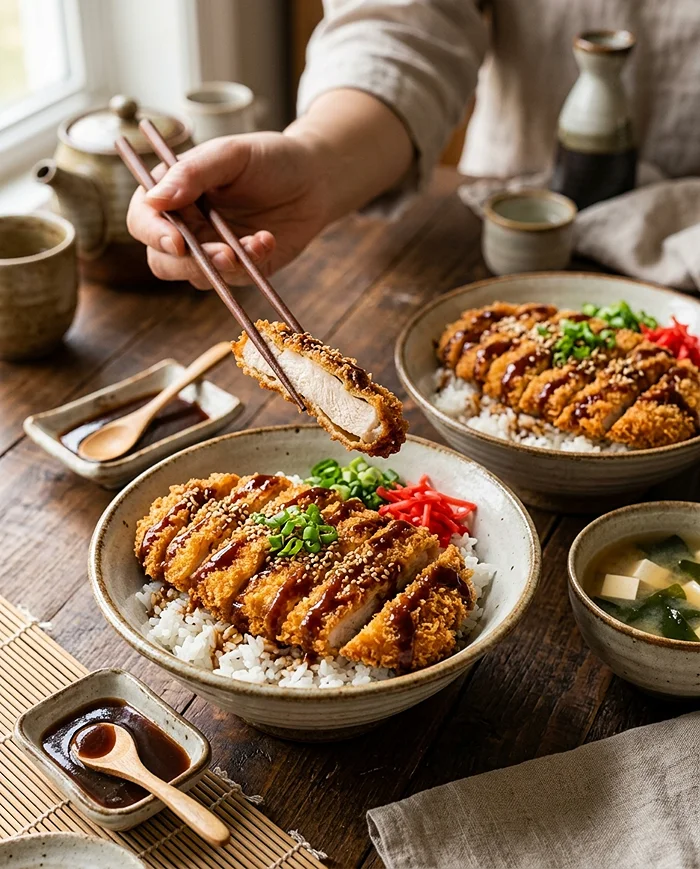
Approximate values per serving (1 bowl with chicken katsu and homemade sauce):
| Nutrient | Per Serving |
|---|---|
| Calories | ~620 kcal |
| Protein | ~38g |
| Carbohydrates | ~72g |
| Fat | ~18g |
| Fiber | ~2g |
| Sodium | ~780mg |
Values are estimates and will vary based on oil absorption, portion sizes, and specific ingredients used.
Japanese Katsu Bowls with Tonkatsu Sauce FAQs
Can I bake the katsu instead of frying it?
You can! Brush the breaded cutlets lightly with oil and bake at 400°F (200°C) for about 20 to 25 minutes, flipping halfway through. The crust won’t be quite as shatteringly crispy as the fried version, but it’s still really tasty and a bit lighter. An air fryer at 375°F for 12 to 15 minutes is honestly the best baked alternative.
What’s the difference between chicken katsu and tonkatsu?
It’s just the protein. Tonkatsu uses pork loin or pork tenderloin, while chicken katsu uses — you guessed it — chicken. Both are breaded in panko and fried the same way. The name “tonkatsu” comes from “ton” (pork in Japanese) and “katsu” (cutlet). Both are wildly delicious Asian recipes worth mastering.
Can I make tonkatsu sauce ahead of time?
Absolutely, and I’d actually encourage it. Making the sauce a day ahead lets the flavors meld together and deepen. Store it in a sealed jar in the fridge for up to two weeks. It’s one of those condiments that genuinely improves with a little time to sit.
What can I serve alongside Japanese Katsu Bowls?
A simple miso soup and a small side of shredded cabbage with a light sesame dressing are the classic companions. A soft-boiled egg on top of the bowl is also a popular addition. For dessert, something sweet and simple like a classic key lime pie or a slice of pumpkin pie makes a fun contrast to the savory bowl.
Can I freeze the fried katsu cutlets?
Yes! Let them cool completely, then freeze in a single layer on a baking sheet before transferring to a freezer bag. They’ll keep for up to one month. Reheat directly from frozen in the oven at 400°F for about 15 minutes or in the air fryer for 6 to 8 minutes. The crust comes back beautifully crispy.
Ready to Make Your New Favorite Bowl?
These Japanese Katsu Bowls with Tonkatsu Sauce are the kind of recipe that earns a permanent spot in your weekly lineup. They’re crispy, saucy, filling, and just genuinely fun to make and eat.
Give them a try this week, and if you nail it (you will), share it on Pinterest so others can find their new favorite weeknight dinner. Leave a comment below letting me know how it went — did you go chicken or pork? Did you make the sauce from scratch? I want to hear all about it.
And if you’re on a bowl kick right now, don’t miss these loaded burger bowls or these crowd-pleasing French dip sliders for your next dinner lineup. Happy cooking!
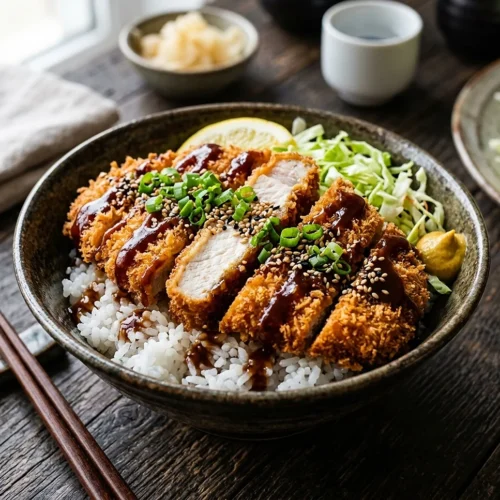
Japanese Katsu Bowls with Tonkatsu Sauce
Equipment
- Meat mallet or heavy pan
- 3 Shallow Bowls (for breading station)
- Large frying pan
- Cooking thermometer
- Paper towel-lined plate
- Small mixing bowl
Ingredients
Protein
- 2 Boneless chicken breasts or pork loin cutlets pounded to 1/2-inch thickness
Breading
- 1 cup Panko breadcrumbs
- ½ cup All-purpose flour
- 2 Large eggs beaten
Bowl Base
- 3 cups Cooked white rice sushi rice preferred
Sauce
- ½ cup Tonkatsu sauce store-bought or homemade
Cooking
- Vegetable or canola oil for frying, as needed
Garnish
- Fresh parsley or green onion optional
Homemade Tonkatsu Sauce
- 3 tbsp Ketchup
- 2 tbsp Worcestershire sauce
- 1 tbsp Soy sauce
- 1 tsp Sugar
Instructions
- Place chicken breasts or pork loin cutlets between two sheets of plastic wrap and pound to about 1/2-inch thickness using a meat mallet or the bottom of a heavy pan. Season both sides generously with salt and pepper.
- Set up a breading station with three shallow bowls: one with all-purpose flour, one with beaten eggs, and one with panko breadcrumbs.
- Dredge each cutlet in flour, shaking off any excess. Dip fully into the beaten egg, letting the extra drip off. Press firmly into the panko breadcrumbs, coating every surface. Pat with the palm of your hand to ensure the coating adheres well.
- Heat oil in a large frying pan over medium-high heat to about 350°F (175°C). Test by dropping in a breadcrumb — it should sizzle immediately and turn golden within 30 seconds.
- Fry chicken cutlets for 3 to 4 minutes per side, or pork cutlets for 2 to 3 minutes per side, until deep golden brown and cooked through. Do not crowd the pan — fry in batches if needed. Transfer to a paper towel-lined plate and rest for 2 minutes.
- If making homemade tonkatsu sauce, whisk together ketchup, Worcestershire sauce, soy sauce, and sugar in a small bowl. Taste and adjust — add more sugar for sweetness or more Worcestershire for depth.
- Assemble the bowls by adding cooked rice to each bowl. Slice the rested katsu cutlet on a diagonal and fan the slices over the rice. Drizzle generously with tonkatsu sauce and garnish with sliced green onions or fresh parsley if desired. Serve immediately.