Make Authentic Croissants at Home
Learn how to make authentic croissants at home with this step-by-step guide — buttery, flaky, golden layers that rival your favorite French bakery, right from your own oven.
I’ll be upfront with you: the first time I tried this homemade croissant recipe, I thought I’d made fancy butter-flavored hockey pucks. But once I figured out the lamination process? Game changer. Now I make a batch almost every weekend, and my family literally won’t let me stop.
Table of Contents
What You’re Getting Into (And Why It’s 100% Worth It)
This croissant recipe delivers the real deal — shatteringly crisp outer layers, a soft honeycomb interior, and that obscene amount of butter that makes everything in life feel okay. Yield: 12 to 15 standard croissants.
Yes, it takes a couple of hours spread across a day (or two). But most of that is just waiting — chilling dough, resting dough, watching dough. You could binge an entire TV season between folds. The hands-on time is actually pretty manageable, and the results are absolutely stunning. These homemade croissants are the kind of thing people photograph before they eat.
Ingredients To Make Authentic Croissants at Home
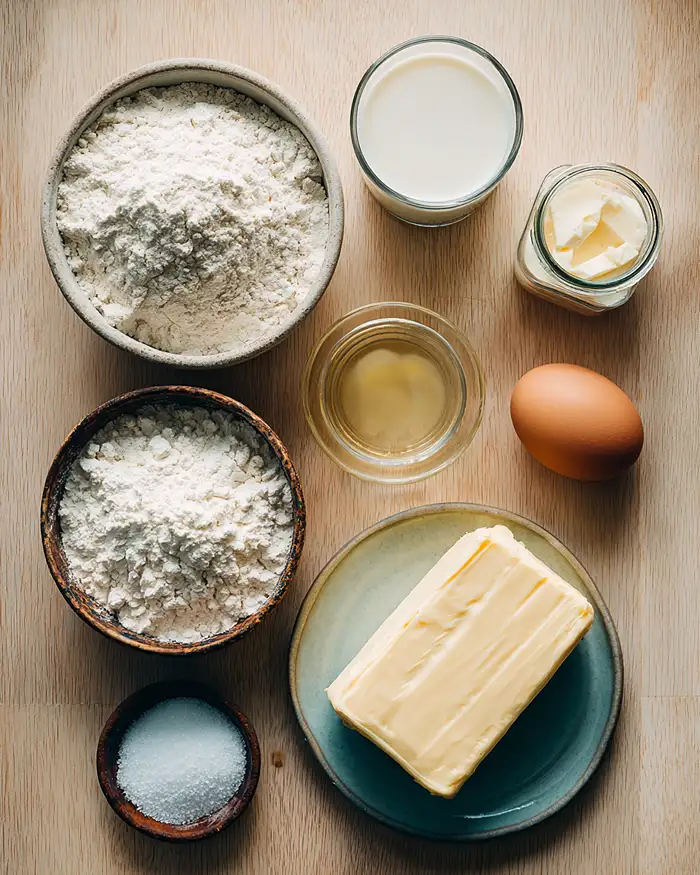
For the Dough (Détrempe)
| Ingredient | Amount |
|---|---|
| All-purpose flour | 4 cups (500g) |
| Granulated sugar | 1/4 cup (50g) |
| Salt | 1 tablespoon (10g) |
| Active dry yeast | 1 tablespoon (10g) |
| Warm milk | 1 1/4 cups (300ml) |
| Unsalted butter, melted | 2 tablespoons |
For the Butter Block (Beurrage)
| Ingredient | Amount |
|---|---|
| Unsalted butter, cold | 1 cup (225g) |
The butter block is the heart of your croissant recipe — use the best quality European-style butter you can find. The higher fat content makes a real difference in those flaky layers.
For the Egg Wash
| Ingredient | Amount |
|---|---|
| Egg | 1 large |
| Milk | 1 tablespoon |
Step-by-Step Instructions
Step 1: Make the Dough
In a large bowl or stand mixer, combine your flour, sugar, and salt. In a separate small bowl, dissolve the yeast in the warm milk and let it sit for 5 to 10 minutes until it looks foamy and alive — if it doesn’t foam, your yeast might be past its prime, so grab a fresh packet.
Add the milk-yeast mixture and the melted butter to your dry ingredients, then knead everything together until you get a smooth, elastic dough — about 3 to 5 minutes. It shouldn’t be sticky. Shape it into a rough rectangle, wrap it tightly in plastic wrap, and pop it in the fridge for at least 1 hour.
“The dough rest is non-negotiable. It relaxes the gluten, which means it’ll roll out like a dream instead of snapping back at you.”
Step 2: Prepare the Butter Block
Take your cold butter and place it between two sheets of parchment paper. Using a rolling pin, bash and roll it into a flat 6-inch square. You want it pliable but still cold — if it starts to look greasy, slide it back into the fridge for a few minutes.
This is called the beurrage, and it’s what makes authentic croissants different from regular buttery rolls. The butter stays as distinct layers in the dough, not just mixed in. That’s your ticket to those gorgeous, flaky sheets.
Step 3: Lock the Butter Into the Dough (Enclosing)
Pull your chilled dough out and roll it into a 12-inch square on a lightly floured surface. Place the butter block diagonally in the center — like a diamond on a square — and fold the four corners of the dough over the butter, pinching the seams to seal completely. Think of it like wrapping a really important present.
Make sure there are no gaps or tears! If butter leaks out during rolling, you lose layers and end up with uneven croissants. Take your time here.
Step 4: First Turn (Lamination Begins!)
Roll the dough out into a long rectangle, roughly 8×20 inches. Try to keep the edges as even as possible. Then fold it into thirds, like you’re folding a letter to put in an envelope — left third over the center, right third on top.
This is your first turn. Wrap the dough and refrigerate it for 30 minutes. Cold dough = cold butter = beautiful, separate layers. If the dough feels warm or the butter is starting to squelch, chill it immediately.
Step 5: Second and Third Turns
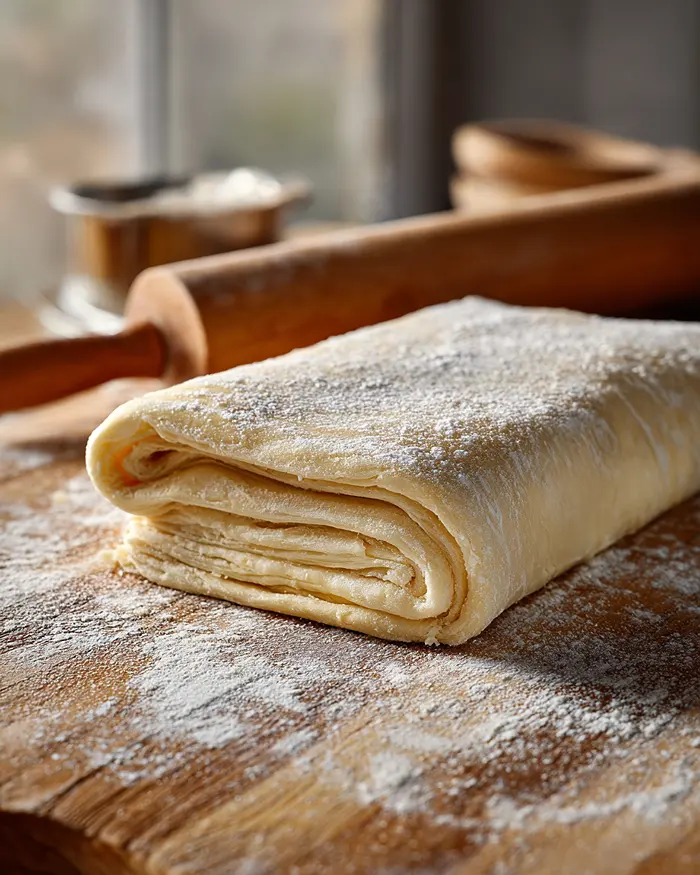
Repeat that rolling and folding process two more times, chilling for 30 minutes between each turn. That’s a total of three turns. Each one multiplies the layers — by the end, you’ve got dozens of paper-thin sheets of butter tucked inside your dough.
“Don’t be tempted to rush through the turns — this is the difference between a flaky, bakery-worthy homemade croissant and a dense, bready disappointment.”
Step 6: Shape the Croissants

After your final rest, roll the dough out into a large rectangle about 1/4-inch thick. Use a sharp knife or pizza cutter to trim the edges clean (this helps the layers puff up evenly during baking), then cut triangles that are roughly 5 inches wide at the base.
Starting at the wide end, gently stretch each triangle just a little, then roll it up toward the pointed tip. The tension as you roll creates that tight spiral that holds its shape in the oven. Curve the ends slightly inward to form that classic crescent shape.
Step 7: Proof the Croissants
Place your shaped croissants on lined baking sheets with a couple of inches between each one. Cover loosely with plastic wrap or a clean kitchen towel and let them rise at room temperature for 1.5 to 2 hours. They should look noticeably puffier, and if you jiggle the pan, they’ll wobble a little — that’s the sign they’re ready.
“The proof is where the magic happens. Rushing it means dense croissants; letting them over-proof means they collapse. Trust the wobble test.”
Step 8: Bake to Golden Perfection
Preheat your oven to 400°F (200°C). Whisk together the egg and milk for your egg wash, then gently brush it over each croissant — be careful not to drip it on the cut sides, or it can glue the layers shut.
Bake for 18 to 22 minutes until they’re deeply golden, puffed up, and your kitchen smells absolutely insane. Rotate the pan halfway through for even browning. Let them cool on a wire rack for at least 10 minutes before you eat one — the layers are still setting inside! (I know. It’s hard. But worth it.)
Expert Tips, Variations & Troubleshooting
Tips for Success
Temperature is everything. Keep your dough and butter cold throughout the lamination process. If either gets too warm, the butter smears into the dough instead of staying as separate layers. If things start feeling soft, refrigerate immediately — no shame in it.
Use a scale. Grams are your best friend in this homemade croissants recipe. Baking is chemistry, and the right ratios matter. A digital kitchen scale costs about $10 and will change your baking life.
Don’t skimp on the proof time. Properly proofed croissants are light and airy inside. Under-proofed ones are dense and bready. If your kitchen is cold, the rise will take longer — that’s totally okay.
Flavor Variations
Love chocolate? Try our chocolate-filled croissant rolls recipe — you use this same dough base and it’s incredible. You can also tuck in a little almond paste or ham and cheese before rolling for savory versions.
For a fun weekend brunch idea, leftover croissants are amazing in a berry croissant breakfast bake — it’s like a French version of a bread pudding and it uses up every last crumb.
Troubleshooting Common Issues
My butter broke through the dough. This usually means the butter got too cold and cracked, or the dough was too warm. Patch the holes with a little extra dough, refrigerate everything, and continue more gently.
My croissants came out bready, not flaky. You either didn’t complete enough turns, the butter melted into the dough, or they were under-baked. Make sure to complete all three turns with proper chilling in between.
They didn’t rise much. Yeast might be old, or the kitchen was too cold for proofing. Try placing them in a slightly warm oven (just the oven light on works!) to encourage the rise.
Storage, Reheating & No-Waste Ideas
Storage Guide
| Method | Duration | Notes |
|---|---|---|
| Room temperature | Up to 2 days | Store in a paper bag or loosely covered — avoid airtight containers, which soften the crust |
| Freezer (unbaked, shaped) | Up to 1 month | Freeze on tray, then transfer to bags; proof overnight in fridge before baking |
| Freezer (baked) | Up to 2 months | Wrap tightly in foil and freeze; reheat in oven |
Reheating Tips
To revive a day-old croissant, pop it in a 350°F (175°C) oven for 4 to 5 minutes. Avoid the microwave — it makes the layers soggy. A toaster oven also works perfectly.
No-Waste Kitchen Ideas
Stale croissants? Don’t toss them! Tear them up for a rich, buttery breadcrumb topping for pasta, use them in a savory bread pudding, or build that breakfast bake we mentioned. They’re also incredible crumbled over a fresh chickpea feta avocado salad for a little crunch. Or go full comfort food and try them alongside a crispy frika potato and cheese hash for a hearty weekend brunch spread.
Nutritional Information

Approximate values per croissant (based on 12 croissants)
| Nutrient | Amount Per Serving |
|---|---|
| Calories | ~290 kcal |
| Total Fat | 18g |
| Saturated Fat | 11g |
| Carbohydrates | 27g |
| Sugar | 4g |
| Protein | 5g |
| Sodium | 320mg |
Nutritional values are estimates and will vary based on exact ingredient brands and croissant size.
Frequently Asked Questions
Can I make the dough the night before?
Absolutely — and honestly, it’s one of the best strategies for this croissant recipe. You can complete all three turns in the evening, leave the dough wrapped in the fridge overnight, then shape and proof the croissants the next morning. Fresh croissants at breakfast with minimal morning effort? Yes please.
Can I freeze the shaped, unbaked croissants?
Yes! This is a great strategy for always having fresh homemade croissants on demand. After shaping, freeze them on a tray until solid, then transfer to freezer bags. The night before you want to bake, move them to the fridge to thaw and proof slowly overnight. Brush with egg wash and bake as normal.
What’s the best flour for croissants?
Regular all-purpose flour works wonderfully for this croissant recipe. Some bakers prefer bread flour for a chewier texture, while all-purpose gives you a slightly more tender result. Avoid cake flour — it’s too low in protein to develop the structure you need.
Why do my croissants look flat after baking?
Two main culprits: over-proofing (they rise too much before the oven and then collapse) or insufficient lamination (not enough butter layers). Make sure you’re doing all three turns with proper chilling, and watch your proof time closely — you want puffed, not collapsed.
Can I use salted butter instead?
You can, but it’ll make your croissants noticeably saltier since you’re using a full cup of butter. If salted is all you have, just reduce or skip the salt in the dough. That said, unsalted butter gives you much more control over the flavor, which is why most croissant recipes call for it specifically.
Go On, Make Them This Weekend
There’s something genuinely magical about pulling a tray of golden, puffed-up croissants out of your own oven. It feels like a real accomplishment — because it is one! This authentic croissants at home recipe takes patience, but every step has a purpose, and the results are absolutely worth it.
Give this homemade croissant recipe a try and let me know how it goes in the comments below! Did you go classic plain, or stuff them with chocolate? I’d love to hear. And if you’re proud of your golden results (you should be!), save this recipe to Pinterest so you can find it again — and share it with any fellow baking-obsessed friends who need this in their lives.
Looking for more recipes to serve alongside your croissants? Try our berry croissant breakfast bake or the crowd-pleasing chocolate-filled croissant rolls for your next brunch spread.

Authentic Croissants at Home
Equipment
- Stand mixer or large mixing bowl
- Rolling pin
- Plastic wrap
- Parchment paper
- Sharp knife or pizza cutter
- Baking sheet
- Wire cooling rack
- Pastry brush
- Digital kitchen scale
Ingredients
For the Dough (Détrempe)
- 4 cups all-purpose flour 500g
- ¼ cup granulated sugar 50g
- 1 tablespoon salt 10g
- 1 tablespoon active dry yeast 10g
- 1 ¼ cups warm milk 300ml
- 2 tablespoons unsalted butter melted
For the Butter Block (Beurrage)
- 1 cup unsalted butter 225g, cold, shaped into a flat square — use high-fat European-style butter for best results
For the Egg Wash
- 1 large egg
- 1 tablespoon milk
Instructions
- Make the dough: In a large bowl or stand mixer, combine the flour, sugar, and salt. In a separate small bowl, dissolve the yeast in the warm milk and let it sit for 5–10 minutes until foamy. Add the milk-yeast mixture and melted butter to the dry ingredients and knead until smooth and elastic, about 3–5 minutes. Shape into a rectangle, wrap tightly in plastic wrap, and refrigerate for 1 hour.
- Prepare the butter block (beurrage): Place the cold butter between two sheets of parchment paper. Use a rolling pin to pound and roll it into a flat 6-inch square. It should be pliable but still cold — if it starts to look greasy, refrigerate for a few minutes before continuing.
- Enclose the butter in the dough: Roll the chilled dough into a 12-inch square on a lightly floured surface. Place the butter block diagonally in the center like a diamond. Fold the four corners of the dough over the butter to enclose it completely, pinching the seams firmly to seal. There should be no gaps or tears.
- First turn: Roll the dough into a long rectangle, approximately 8×20 inches. Fold it into thirds like a letter — left third over the center, then right third on top. This is your first turn. Wrap the dough and refrigerate for 30 minutes.
- Second and third turns: Repeat the rolling and folding process two more times, chilling for 30 minutes between each turn, for a total of three turns. Each turn builds more layers — and more layers means flakier croissants. Don’t rush this step. Cold dough and cold butter make all the difference.
- Shape the croissants: After the final rest, roll the dough into a large rectangle about 1/4-inch thick. Trim the edges with a sharp knife or pizza cutter, then cut triangles roughly 5 inches wide at the base. Starting at the wide end, gently stretch each triangle and roll it toward the tip to form a crescent shape. Curve the ends slightly inward.
- Proof the croissants: Place shaped croissants on lined baking sheets, a couple of inches apart. Cover loosely with plastic wrap or a clean kitchen towel and let them rise at room temperature for 1.5 to 2 hours, until noticeably puffier and they wobble slightly when the pan is jiggled.
- Bake: Preheat oven to 400°F (200°C). Whisk the egg with the milk and gently brush over each croissant, avoiding the cut sides. Bake for 18–22 minutes until puffed and deep golden brown, rotating the pan halfway through. Let cool on a wire rack for at least 10 minutes before serving.