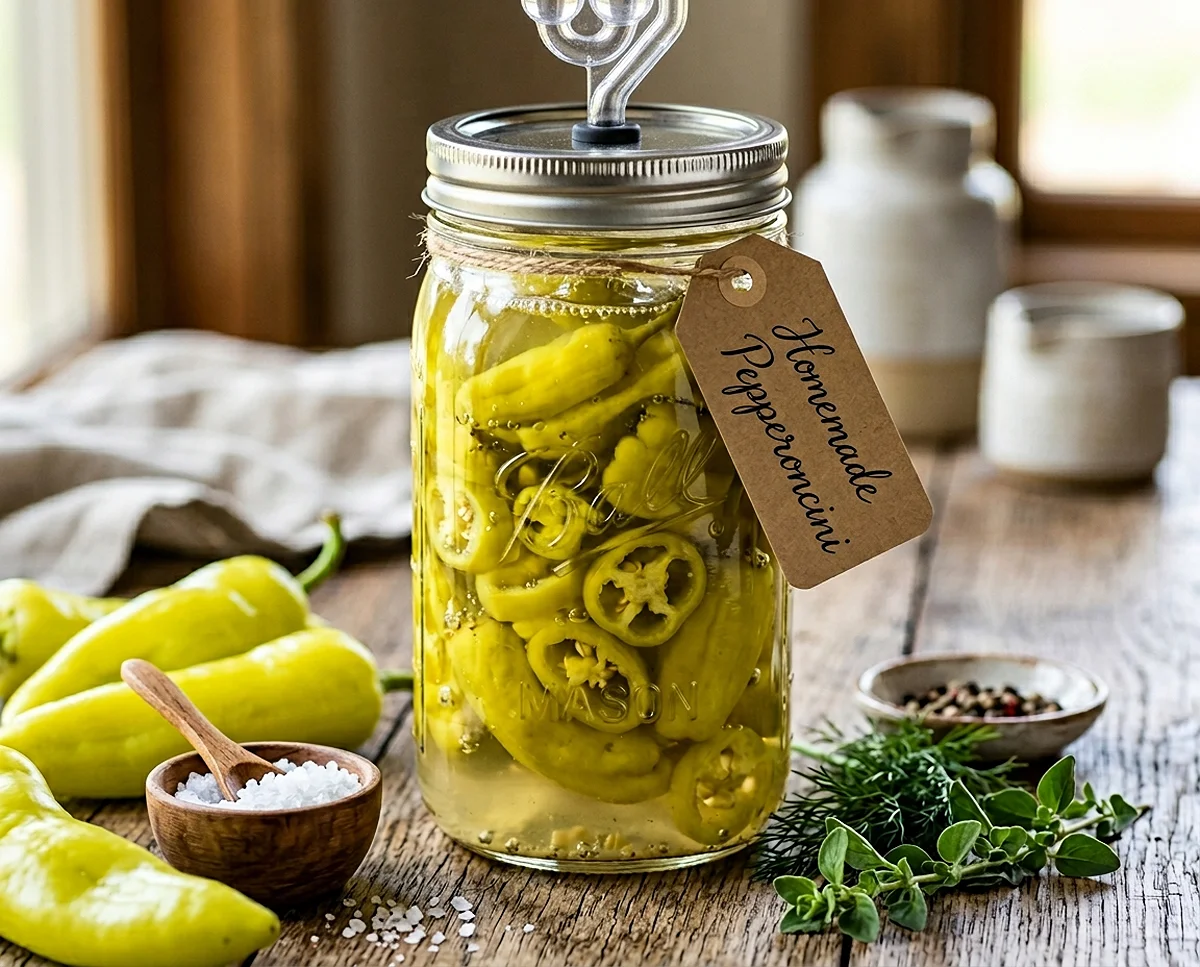
pepperoncini recipe
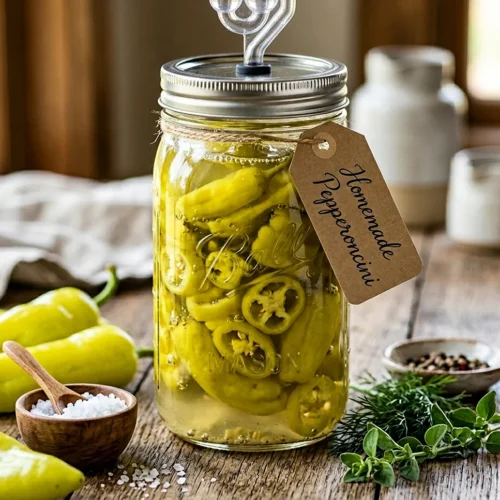
Okay, so I’ll be honest — I was a little skeptical the first time I tried fermenting my own peppers. I mean, leaving vegetables in salty water for a month felt a little… suspicious? But one bite of these homemade pickled pepperoncini later, I was fully converted.
This pepperoncini recipe is ridiculously simple, uses just three ingredients, and the result is so much better than anything you’d grab off a store shelf.
Table of Contents
What Makes This Pepperoncini Recipe So Good?
This isn’t your typical vinegar-brine situation. We’re talking about lacto-fermented pepperoncini — the kind that develops deep, complex tang naturally over time. You get that satisfying crunch, a bright acidic kick, and all the probiotic goodness that comes with fermentation. Think Italian pepperoncini vibes but made right in your own kitchen.
You only need three ingredients: Italian sweet peppers, water, and sea salt. That’s it. No special equipment beyond a mason jar and a fermentation weight. It’s genuinely one of the most low-effort, high-reward things you can make at home.
Ingredients
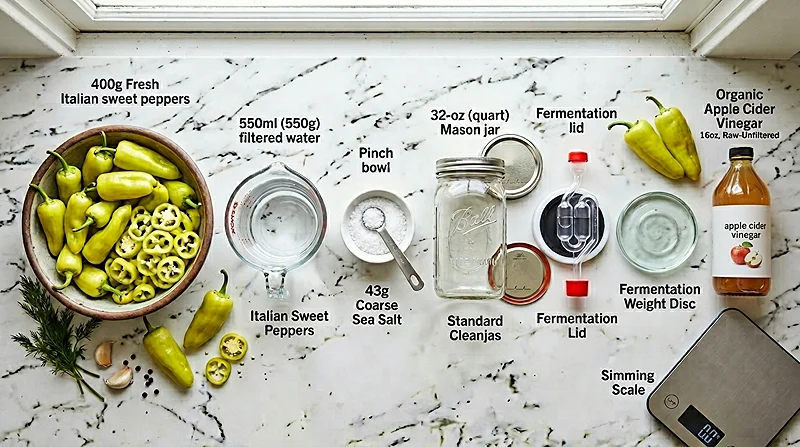
| Category | Ingredient | Amount |
|---|---|---|
| Peppers | Italian sweet peppers (pepperoncini-style) | 400 grams |
| Brine | Filtered water | 550 grams |
| Brine | Sea salt (non-iodized) | 43 grams |
A quick note on the peppers: Italian sweet peppers are the classic choice here, but if you can’t find them, a banana pepper substitute works beautifully. They’re similarly mild and fleshy, so the fermentation process is basically identical.
How to Make Fermented Pepperoncini Step by Step
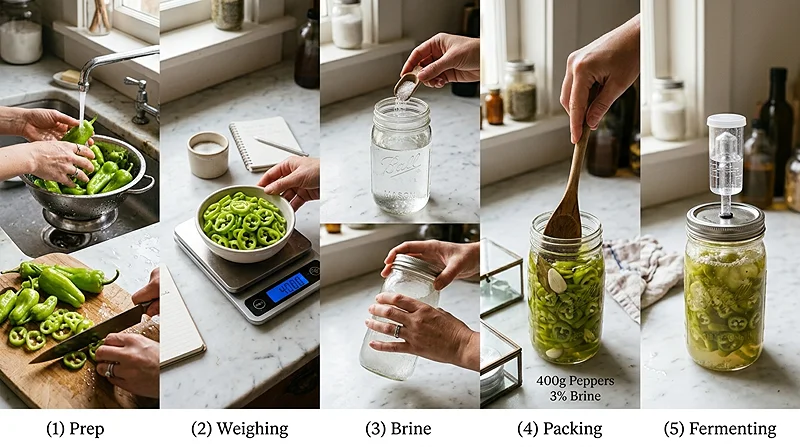
Step 1: Get Your Gear Clean
Start by thoroughly washing your fermentation jar, lid, and fermentation weight. You don’t need to sterilize like you’re making canned jam, but you do want everything squeaky clean. Any unwanted bacteria hanging around can mess with the ferment, and nobody wants that.
Step 2: Prep Your Peppers
Rinse your Italian sweet peppers and decide how you want to cut them. You can go with rings, slices, or even leave them whole if you’re feeling lazy (no judgment). Whole peppers give you that classic pickled pepperoncini look, while rings are great if you’re planning to toss them straight onto a hearty dinner like this hamburger steak bake.
Step 3: Weigh Everything Out Precisely
This is where a kitchen scale becomes your best friend. Pop a mixing bowl onto your scale, tare it to zero, and weigh out exactly 400 grams of peppers. Precision matters in fermentation — too little salt and things can get funky (in a bad way), too much and you’ll kill the good bacteria.
Next, place your clean mason jar on the scale, tare it again, and add 550 grams of filtered water directly into the jar. Filtered water is key here — tap water often contains chlorine, which can interfere with fermentation.
Step 4: Weigh the Salt
Grab a small bowl, tare your scale, and weigh out 43 grams of sea salt. Make sure you’re using non-iodized salt — iodized salt can inhibit the good bacteria we’re trying to cultivate. Add the salt directly into the jar with the water.
Step 5: Combine and Shake
Add your prepped peppers into the mason jar with the salted water. If you left them whole, you might need to give them a little squeeze to fit everything in. It’s a bit of a puzzle, honestly — kind of satisfying when it all clicks together. If a little water spills over the top as you pack them in, just pour off the excess.
Put the standard lid on the jar and shake it for a solid 2 minutes. This helps dissolve the salt and gets the brine evenly distributed around all those peppers.
Step 6: Add the Fermentation Weight
Remove the standard lid and place your fermentation weight inside the jar. The goal is to keep all the pepper pieces fully submerged below the brine. Any bits poking above the liquid can grow mold, which is a total buzzkill. Make sure the weight itself is also fully submerged.
Then secure your fermentation lid (the kind with an airlock or loose-fitting lid that lets gases escape). This is what keeps your ferment happy and anaerobic.
Step 7: Wait (The Hardest Part)
Set your jar somewhere at room temperature — ideally between 65–75°F — and let it ferment for 4 to 5 weeks. Yes, weeks. I know, I know. But trust the process! You’ll start to see tiny bubbles forming within the first few days, which means things are working exactly as they should.
“Fermentation is basically watching your food slowly transform into something more delicious. It’s the original slow cooker.”
Step 8: The Optional (but Recommended) Finishing Touch
After five weeks, here’s a little trick that makes these peppers truly special: remove the fermentation weight, add a small splash of apple cider vinegar, and give the jar a stir. This balances out any earthiness that can develop during long ferments and brightens up the flavor considerably. Totally optional, but I do it every time.
Step 9: Into the Fridge They Go
Once your peppers taste tangy and delicious (give one a nibble!), remove the fermentation weight and seal the jar with a regular lid. Transfer to the fridge. These pepperoncini will keep for up to two years refrigerated, though I seriously doubt they’ll last that long once you taste them.
Expert Tips, Variations, and Troubleshooting
Tips for the Best Fermented Pepperoncini
Always use filtered water. This is genuinely one of the most important tips. Chlorinated tap water can slow or even stop fermentation by killing the beneficial bacteria. If you don’t have a filter, you can leave tap water out uncovered for a few hours to let the chlorine dissipate.
Keep peppers submerged. Check your jar every day or two during the first week to make sure nothing is poking above the brine. If something floats up, push it back down. This is the number one thing you can do to prevent surface mold.
Temperature matters. Warmer environments speed up fermentation; cooler ones slow it down. If your house runs cold in winter, expect the process to take closer to 5–6 weeks. If it’s warm, you might be checking at 3.5 weeks.
Flavor Variations Worth Trying
Spicy version: Toss in a few sliced jalapeños or a dried chili with your Italian sweet peppers. The heat mellows beautifully during fermentation and plays really nicely against the tang.
Garlic lover’s version: Add 3–4 smashed garlic cloves to the jar. This gives you garlicky, Italian pepperoncini energy that’s absolutely incredible sliced on top of a creamy tomato garlic pasta.
Banana pepper substitute: As mentioned, banana peppers work just as well as Italian sweet peppers in this recipe. They’re a touch milder and slightly thicker-walled, but the end result is just as snackable.
Herb-infused: Add a sprig of fresh dill or oregano to the jar before fermenting. Italian herbs pair especially well with this pepperoncini recipe and give it a more complex, aromatic profile.
Troubleshooting Common Issues
White film on top of the brine? This is called kahm yeast — it’s not dangerous, but it can affect flavor. Skim it off gently with a clean spoon whenever you see it. It’s more likely to appear if your ferment is running warm or if salt levels are a bit low.
Peppers taste too salty? This is totally normal right at the start. As fermentation progresses, the saltiness mellows out significantly. If they’re still super salty at week five, try rinsing them lightly before eating.
Nothing is bubbling after a week? Don’t panic. A cooler environment can slow things down considerably. Give it another week before worrying. As long as everything smells pleasantly sour (not rotten), you’re fine.
Storage Instructions
| Storage Method | Container | Duration |
|---|---|---|
| Refrigerator | Sealed mason jar with brine | Up to 2 years |
| Countertop (active ferment only) | Jar with airlock lid | 4–6 weeks max |
| Freezer | Not recommended | — |
Reheating and No-Waste Kitchen Ideas
Fermented pickled pepperoncini are best served cold or at room temperature — you don’t really “reheat” them. Heat kills the probiotic cultures and softens the texture, so keep them cool for maximum benefit and crunch.
No-waste ideas for the brine: Don’t you dare throw out that fermentation liquid! The brine is tangy, salty, probiotic gold. Use it as a salad dressing base, splash it into a bowl of creamy garlic ramen for an acidic kick, or use it in place of vinegar in marinades.
Using up the peppers: Slice them over pizza, chop them into egg salads, layer them on sandwiches, or mix them into cream cheese for an insanely good dip. They also make a fantastic topping alongside garlic butter steak with parmesan cream sauce — the acidity cuts right through the richness.
Nutritional Information
Per serving (approx. 5–6 pepper rings or 1–2 whole small peppers)
| Nutrient | Amount per Serving |
|---|---|
| Calories | ~5 kcal |
| Carbohydrates | ~1g |
| Protein | <1g |
| Fat | 0g |
| Sodium | ~200mg |
| Probiotics | Present (live cultures) |
| Vitamin C | Good source |
Nutritional values are estimates and will vary based on pepper size, fermentation length, and how much brine is consumed. Sodium content decreases slightly as peppers ferment longer.
pepperoncini recipe FAQs
Can I use this pepperoncini recipe without a fermentation weight?
Technically yes, but it’s risky. The whole point of the weight is to keep everything submerged below the brine, which prevents mold from forming on any exposed bits. If you don’t have a weight, you can try using a small zip-lock bag filled with brine to press the peppers down.
Just check the jar daily to make sure nothing is floating up.
Are pickled pepperoncini and fermented pepperoncini the same thing?
Not quite! Most store-bought pickled pepperoncini are made with vinegar brine, which gives you that instant tang but doesn’t involve live fermentation. This recipe creates lacto-fermented pepperoncini, which develop their tang naturally through bacterial activity.
They taste more complex, have probiotic benefits, and honestly just taste better — though I may be biased.
Can I use a banana pepper substitute in this recipe?
Absolutely. Banana peppers are one of the best banana pepper substitutes for Italian sweet peppers in this recipe. They’re similar in heat level and texture, so the fermentation timeline and salt ratios stay the same.
The flavor will be slightly different — banana peppers have a thicker flesh and a mildly sweeter taste — but the result is still fantastic.
What should fermented peppers smell like during the process?
Good fermented peppers smell pleasantly sour and tangy — kind of like a mild vinegar crossed with something earthy. That’s the good stuff happening. If your jar smells truly rotten, putrid, or like garbage (not just funky-sour), that’s a sign something went wrong and you should start over. When in doubt, trust your nose.
Can I season these peppers with a dry rub or spice blend before fermenting?
You can definitely add spices! Whole peppercorns, dried chili flakes, bay leaves, and fresh herbs all play beautifully with this pepperoncini recipe. Avoid anything with oil in it though — oil and fermentation don’t mix well.
If you love seasoned peppers, try making a homemade ranch seasoning blend to sprinkle on your finished peppers after they come out of the fridge.
Ready to Give This Pepperoncini Recipe a Try?
Honestly, if you’ve been on the fence about fermentation, this pepperoncini recipe is the perfect starting point. Three ingredients, minimal hands-on time, and the reward is a jar full of tangy, crunchy, probiotic-packed peppers that make everything they touch taste better. It’s one of those recipes you’ll come back to again and again.
If you make these, I’d absolutely love to hear how they turned out! Drop a comment below and let me know how you served them. And if you’re as proud of your fermentation jar as I am of mine, please share this recipe on Pinterest — it helps other home fermenters find it, and it makes my day every single time.
Irresistible Fermented Pepperoncini
Equipment
- Kitchen scale
- Large mason jar
- Fermentation weight
- Fermentation lid or airlock lid
- Mixing bowl
- Small bowl
Ingredients
Peppers
- 400 g Italian sweet peppers washed; can be left whole, sliced into rings, or minced
Brine
- 550 g filtered water avoid chlorinated tap water
- 43 g sea salt non-iodized
Instructions
- Thoroughly wash your fermentation jar, fermentation weight, and lid. Everything should be squeaky clean to prevent unwanted bacteria from interfering with the ferment.
- Wash your Italian sweet peppers and decide how you want to cut them — rings, slices, or leave them whole. Whole peppers give the classic pickled pepperoncini look; rings are great for topping dishes straight from the jar.
- Place a mixing bowl on your kitchen scale and tare/zero it. Add peppers until the scale reads exactly 400 grams. Remove the bowl and set aside.
- Place your clean mason jar on the scale and tare/zero it. Make sure the scale is set to grams, then add 550 grams of filtered water directly into the jar.
- Place a small bowl on the scale, tare/zero it, and weigh out 43 grams of sea salt. Add the salt into the jar of water.
- Add the prepped peppers into the mason jar with the salted water. If leaving them whole, squeeze them in to fit. If water spills over the top as you pack them in, just pour off the excess — that’s totally fine.
- Place the standard mason jar lid on the jar and secure it. Shake the jar for 2 full minutes to dissolve the salt and evenly distribute the brine.
- Remove the standard lid. Place the fermentation weight inside the jar, pressing down to fully submerge all pepper pieces and the weight itself below the brine. No bits should be poking above the liquid.
- Secure the fermentation lid (airlock or loose-fitting lid) onto the jar to keep the ferment anaerobic while allowing gases to escape.
- Ferment at room temperature (ideally 65–75°F) for 4 to 5 weeks. You should see tiny bubbles forming within the first few days — that means it’s working! Check occasionally to make sure all peppers stay submerged.
- (Optional) After five weeks, remove the fermentation weight and add a small splash of apple cider vinegar to the jar. Stir gently. This balances the flavor and adds a bright finishing note.
- Once the peppers taste tangy and delicious, remove the fermentation weight and seal the jar with a regular lid. Transfer to the refrigerator. The pepperoncini will keep for up to 2 years refrigerated.