Sourdough Lemon Blueberry Focaccia Bread
This bright and fluffy sourdough lemon blueberry focaccia bread combines tangy lemon, sweet blueberries, and a buttery glaze for a showstopping treat that’s perfect for brunch or afternoon snacking.
You know that moment when you pull something out of the oven and everyone in the house suddenly appears in the kitchen asking “what smells so good?” Yeah, that’s this bread.
I stumbled onto this recipe when I had way too many blueberries and an active sourdough starter staring at me from the counter, and honestly? It’s become my go-to whenever I want to impress people without actually stressing myself out.
Table of Contents
What Makes This Recipe So Special
Here’s the thing about this sourdough lemon blueberry focaccia bread—it looks fancy, tastes incredible, and uses that sourdough discard you’ve been hoarding in your fridge. The lemon gives it this bright, sunshine-y flavor that pairs perfectly with the burst of sweet blueberries, and that buttery glaze on top? Chef’s kiss.
It’s like if a blueberry muffin and focaccia had a baby, and that baby was absolutely delicious.
The texture is dreamy too. You get those classic focaccia dimples filled with melted butter, a soft and airy crumb from the sourdough fermentation, and pockets of jammy blueberries throughout. It’s sweet enough for dessert but not so sweet that you can’t justify eating it for breakfast. Trust me, I’ve done the research.
Why You’ll Love This Blueberry Lemon Focaccia
Let me count the ways. First off, this is one of those sourdough recipes that’s actually forgiving. Yes, it takes time (hello, fermentation), but most of that is hands-off. You’re literally just letting it do its thing while you binge your favorite show or pretend to be productive.
Second, it uses simple ingredients you probably already have. No weird specialty flours or hard-to-find items here. And if you’ve been collecting sourdough discard recipes like I have, this is a fantastic way to use up that starter.
Third—and this is huge—it makes your kitchen smell absolutely amazing. The combination of lemon, butter, and baking bread is basically aromatherapy. Your family will think you’ve turned into a professional baker overnight.
This is the kind of recipe that makes you want to cook everything in sight. Lucky for you, the Lemon Blueberry Snacks & Breakfast collection is full of exactly that. Go explore and find your new go-to dish.
Ingredients You’ll Need
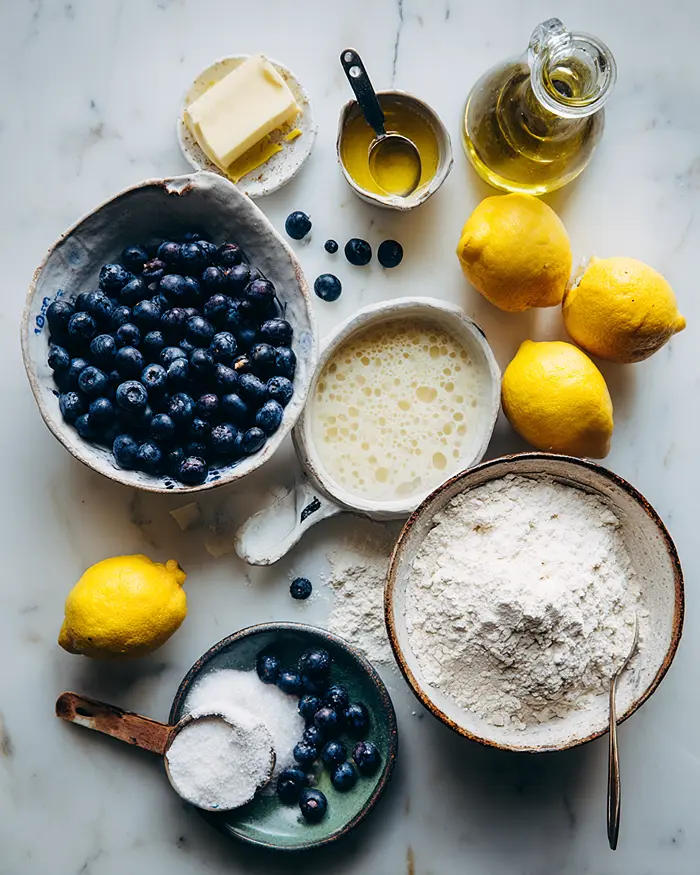
Here’s everything you need to make this beauty. I’ve organized it by section so you’re not scrambling around trying to figure out what goes where.
| Ingredient Category | Ingredients |
|---|---|
| Dough Ingredients | 100 g active sourdough starter (⅓ cup) |
| 400 g warm water (1⅔ cups) | |
| 50 g granulated sugar (¼ cup) | |
| 10 g salt | |
| 500 g bread flour (4 cups) | |
| 3 tbsp lemon juice (1 large lemon) | |
| 3 tsp lemon zest (1 large lemon) | |
| 30 g olive oil (for the pan, don’t add to dough!) | |
| Topping | 1 cup fresh blueberries |
| 62 g unsalted butter, melted (¼ cup) | |
| Lemon Glaze | 2-3 tbsp lemon juice |
| 130 g powdered sugar (1 cup) |
A quick note on the ingredients: make sure your sourdough starter is active and bubbly. If it’s been hanging out in the fridge, you’ll need to feed it ahead of time (I’ll walk you through that). And please, please use fresh blueberries if you can. Frozen ones will work in a pinch, but they release more moisture and can make things a bit soggy.
Step-by-Step Instructions
Alright, let’s make this happen. Don’t let the length of these instructions scare you—most of it is just waiting around. You’ve got this!
Prep Your Sourdough Starter
About 4-6 hours before you want to mix your dough, feed your sourdough starter. I use a 1:1:1 ratio, which means equal parts flour, water, and starter. So if you have 50g of starter in your jar, add 50g of flour and 50g of water, give it a good stir, and let it sit on the counter.
You’ll know it’s ready when it’s doubled in size, super bubbly, and passes the float test (drop a small spoonful in water—if it floats, you’re golden). The timing depends on how warm your kitchen is and how happy your starter is feeling that day. Mine usually takes about 4-5 hours, but I’ve had it take up to 8 hours in the winter.
Mix the Dough
Grab a large bowl and add your 100 g active sourdough starter, 500 g bread flour, 400 g warm water, 10 g salt, 3 tbsp lemon juice, 3 tbsp lemon zest, and 50 g sugar. Use a Danish dough whisk (or honestly, just a wooden spoon works fine) and mix everything until you don’t see any dry flour streaks.
Cover the bowl with a clean kitchen towel or plastic wrap and let it rest for 30 minutes. This is called autolyse, and it basically lets the flour absorb the water so you get a better texture. Think of it as a little spa time for your dough.
Stretch and Fold Time
After that 30-minute rest, it’s time for your first set of stretch and folds. Wet your hands a bit (this dough is sticky, and wet hands are your best friend here), grab one side of the dough, pull it straight up until it stretches, then fold it over onto itself in the middle of the bowl.
Rotate the bowl a quarter turn and repeat. Keep going around the bowl for about 12-15 stretches total. The dough will start to feel smoother and more elastic. Cover it back up and let it rest for another 30 minutes.
Repeat this stretch-and-fold process two more times for a total of 3 sets. I know it seems like a lot, but each set only takes like 2 minutes, and it’s what gives you that gorgeous, airy texture. Between sets, I usually do laundry or scroll through Instagram. Multitasking at its finest.
Bulk Fermentation (First Rise)
After your last set of stretch and folds, cover the bowl and let it hang out in a warm spot for bulk fermentation. This is where the magic happens. You’re looking for the dough to roughly double in size and get nice and puffy with visible air bubbles.
This usually takes 3-6 hours depending on how warm your kitchen is. In the summer, mine can be done in 3 hours. In winter? Closer to 6. You can also stick it in the oven with just the light on to create a warm little fermentation chamber. Just don’t forget it’s in there before you preheat the oven later. Yes, I’ve learned this the hard way.
Here’s what to look for: the dough should have a domed top, jiggly texture when you shake the bowl, and visible bubbles on the surface. If you’re still not sure, do the poke test—gently poke the dough with a wet finger. If it springs back slowly and leaves a small indentation, you’re ready to move on.
Cold Fermentation
Once bulk fermentation is done, cover your bowl tightly and pop it in the fridge overnight. This cold ferment is optional, but it does two amazing things: it develops more complex sourdough flavor, and it makes the dough way easier to handle the next morning.
I usually mix my dough in the evening, let it bulk ferment, then stick it in the fridge before bed. The next morning, it’s ready to shape. Easy peasy.
Shape and Second Rise
The next morning (or whenever you’re ready), grab a 9×13-inch baking pan and line the bottom with parchment paper. Drizzle 30 g of olive oil all over that parchment. Don’t skip this step—the oil creates this incredible crispy bottom crust that’s absolutely addictive.
Use a bowl scraper to gently turn your cold dough out into the prepared pan. Rub a little olive oil on your fingers (seriously, oil is your friend here) and gently stretch and press the dough toward the edges of the pan. It might not reach the corners right away, and that’s totally fine. Let it rest for 10 minutes, then come back and stretch it some more.
Cover the pan with a clean tea towel and put it in a warm spot for 4-5 hours. During this second rise, the dough will puff up, fill out the pan, and develop lots of beautiful air bubbles just under the surface. It’s honestly mesmerizing to watch.
If your kitchen is on the cooler side, stick the pan in your oven with just the light on. It creates the perfect warm environment. Just make sure to take it out before you preheat!
Dimple and Bake
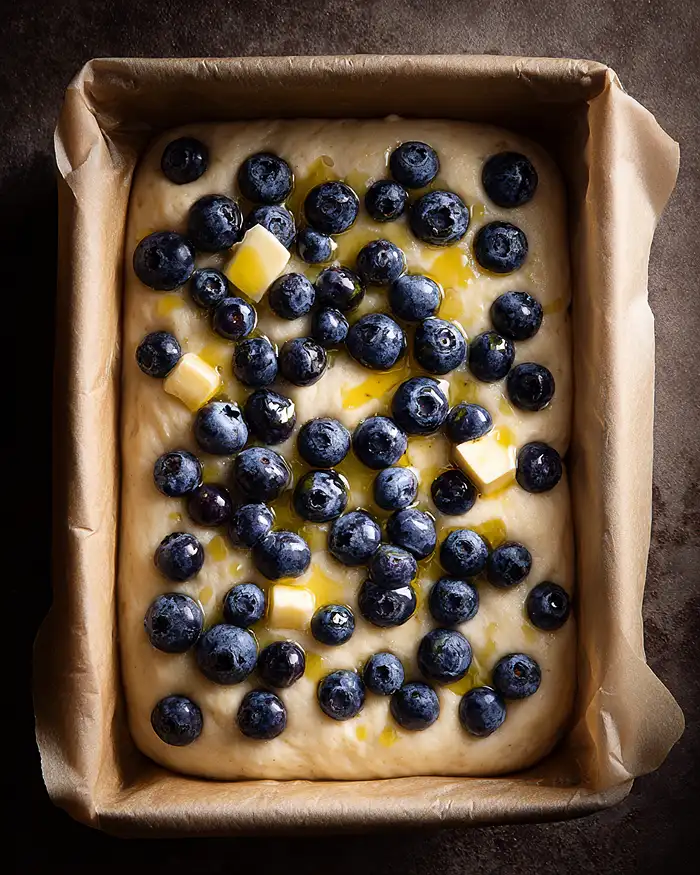
This is the fun part. Preheat your oven to 400°F. Sprinkle your fresh blueberries all over the top of the risen dough. Then pour that melted butter evenly across the surface. Yes, the whole thing.
Now comes the signature focaccia move—dimpling. Press your fingertips straight down into the dough, creating dimples all across the entire pan. This is where the butter and blueberries will pool, creating those gorgeous pockets of flavor. Don’t be shy; really press down there.
Slide the pan into your preheated oven and bake for 30-40 minutes. You’re looking for a light golden brown top and an internal temperature of 200°F if you want to be precise. The smell at this point will be absolutely intoxicating.
Make the Lemon Glaze
While your focaccia is baking, whisk together 2-3 tablespoons of fresh lemon juice and 130 g powdered sugar in a small bowl. Start with 2 tablespoons and add more if you need it to get a smooth, pourable consistency.
The glaze should be thick enough to cling to the bread but thin enough to drizzle. Think of it like the consistency of honey. If it’s too thick, add a tiny bit more lemon juice. Too thin? Add a bit more powdered sugar.
Cool and Glaze
When the focaccia comes out of the oven, let it cool in the pan for about 5 minutes, then carefully lift it out using the parchment paper and transfer it to a wire rack. Peel off the parchment paper and let it cool to room temperature.
This is the hardest part—waiting. But trust me, if you glaze it while it’s hot, the glaze will just melt and disappear into the bread. Once it’s cooled, drizzle that gorgeous lemon glaze all over the top in a zigzag pattern. It’ll set up slightly and create this beautiful, tangy-sweet finish.
Expert Tips for Perfect Results
Don’t stress about the sticky dough. The lemon juice and high hydration make this dough wetter and stickier than typical bread dough. That’s normal! It’s what gives you that soft, open crumb. Just keep your hands wet or oiled when handling it.
Room temperature matters. If your kitchen is super cold (below 65°F), everything will take longer. If it’s warm (above 75°F), things will move faster. Just keep an eye on the dough rather than watching the clock religiously.
Test your starter. Seriously, make sure that starter is active and bubbly before you use it. Sluggish starter = dense, sad focaccia. Nobody wants that. If you’re not sure, do the float test before mixing your dough.
Use bread flour. All-purpose will technically work, but bread flour has more protein, which gives you better structure and that beautiful chewy texture. It’s worth buying a bag if you don’t have it already.
Variations to Try
Want to switch things up? Here are some fun variations on this blueberry lemon focaccia that I’ve tested:
Raspberry Lemon Version: Swap the blueberries for fresh raspberries. They’re a bit more tart and create gorgeous pink pools when they burst. Same process, different berry.
Orange Blueberry: Replace the lemon juice and zest with orange juice and orange zest for a sweeter, more mellow citrus flavor. The orange and blueberry combo is seriously underrated.
Add Herbs: Sprinkle some fresh thyme or rosemary over the top before baking. I know it sounds weird with the sweet stuff, but the herbaceous notes actually complement the lemon beautifully. It’s like sweet and savory had a delicious compromise.
Glaze Options: Not a fan of super sweet? Skip the powdered sugar glaze and just do a simple lemon drizzle with 2 tablespoons lemon juice and 1 tablespoon honey whisked together. It’s lighter and lets the blueberry flavor shine more.
Troubleshooting Common Issues
My dough didn’t rise: Check your starter first. Was it bubbly and active? Also, temperature plays a huge role. If your kitchen is cold, your dough will need more time. Give it patience.
The focaccia is dense: This usually means either under-fermentation (didn’t rise enough) or over-mixing at the beginning. You want to mix just until combined, not knead the heck out of it.
Blueberries sank to the bottom: This can happen if you add them too early or if your dough is under-risen. Make sure the dough has completed its second rise and is nice and puffy before adding the berries on top.
It’s too tart: If you find the lemon flavor too intense, cut back to 2 tablespoons of lemon juice in the dough and use just the zest. You can always adjust the glaze to taste too.
How to Store Your Focaccia
Let’s be real—this bread is best eaten the same day you bake it. That’s when the texture is absolutely perfect and the glaze is still slightly tacky and gorgeous. But I know leftovers happen.
| Storage Method | Instructions | How Long |
|---|---|---|
| Room Temperature | Store in an airtight container or wrap tightly in plastic wrap | 1-2 days |
| Refrigerator | Wrap in plastic wrap, then place in an airtight container | 3-4 days |
| Freezer | Wrap individual slices tightly in plastic wrap, then place in a freezer bag | Up to 3 months |
Reheating Tips
If you’ve got leftover focaccia (lucky you), here’s how to bring it back to life. Pop individual pieces in the toaster oven at 350°F for about 5-7 minutes. It won’t be quite the same as fresh, but it’ll warm up the blueberries and crisp up the edges nicely.
You can also microwave it for 15-20 seconds if you’re in a rush, but I find it makes the texture a bit rubbery. Not ideal, but it works when you’re desperate for a quick snack.
No-Waste Kitchen Ideas
Got focaccia that’s getting a little stale? Don’t toss it! Cut it into cubes and make bread pudding with it. The lemon and blueberry flavors work beautifully with a custard base. You can also tear it into chunks and toast them for sweet croutons to sprinkle over yogurt or ice cream.
Or hey, just eat it as-is with your morning coffee. Slightly stale focaccia dunked in coffee is weirdly delicious. I’m not judging.
Nutrition Information

Here’s the breakdown per serving, assuming you cut this into 12 pieces. Keep in mind this is an estimate based on the ingredients we used.
| Nutrient | Per Serving (1/12 of recipe) |
|---|---|
| Calories | 285 |
| Total Fat | 7g |
| Saturated Fat | 3g |
| Cholesterol | 12mg |
| Sodium | 325mg |
| Total Carbohydrates | 49g |
| Dietary Fiber | 2g |
| Sugars | 16g |
| Protein | 6g |
Is this a health food? Nah. Is it worth every single calorie? Absolutely. Life’s too short to not eat delicious bread.
Frequently Asked Questions
Can I use sourdough discard instead of active starter?
You technically can, but I don’t recommend it for this recipe. Active starter gives you the rise and texture you want. That said, if you want to use discard, you’ll need to add commercial yeast (about 1 teaspoon) to help with the rise. It won’t have quite the same tangy sourdough flavor, but it’ll still be tasty.
Can I make this without a stand mixer?
Absolutely! This recipe doesn’t require a stand mixer at all. Everything is mixed by hand with a dough whisk or wooden spoon, and the stretch-and-fold technique develops the gluten naturally. Your arms might get a tiny workout, but it’s totally doable.
What if I don’t have bread flour?
All-purpose flour will work, but you might get a slightly less chewy texture. If you do substitute, the recipe and technique stay exactly the same. It’ll still be delicious, just a bit different in texture.
Can I use frozen blueberries?
You can, but here’s the deal: frozen blueberries release more moisture as they bake, which can make your focaccia a bit soggy. If you use frozen, don’t thaw them first—add them frozen to minimize the moisture issue. Fresh is really better here if you can swing it.
How do I know when bulk fermentation is done?
Look for these signs: the dough has roughly doubled in size, you can see bubbles on the surface and around the edges, and when you gently shake the bowl, the dough jiggles. The poke test works too—poke it with a wet finger, and if it slowly springs back leaving a small indent, you’re good to go.
More Sweet Treats You’ll Love
If you’re vibing with this sweet-meets-bread situation, you might also love my vanilla bean frappuccino recipe for a refreshing drink to pair with your focaccia. And if you’re in a chocolate mood, these peanut butter cups are insanely easy and perfect for when you need a quick sweet fix.
For special occasions, my chocolate peanut butter Valentine’s heart is a showstopper, and if you’re trying to keep things a bit lighter, the protein copycat Reese’s cups satisfy that chocolate-peanut butter craving without all the guilt.
Final Thoughts
This sourdough lemon blueberry focaccia bread is one of those recipes that looks impressive but is actually pretty forgiving once you understand the rhythm of sourdough. Yeah, it takes time, but most of that is passive waiting while the dough does its thing.
The combination of tangy sourdough, bright lemon, and sweet blueberries is just magical. That buttery top, those jammy berry pockets, and the sweet glaze make this feel special enough for brunch guests but easy enough for a weekend baking project.
So grab your sourdough starter, pick up some fresh blueberries, and give this a shot. Your kitchen will smell incredible, you’ll feel like a baking rockstar, and you’ll have the most gorgeous bread to show for it.
If you make this sourdough lemon blueberry focaccia bread, I’d absolutely love to hear how it turned out! Snap a pic, share it on Pinterest, and tag me so I can see your beautiful creation. And let me know in the comments if you tried any of the variations—I’m always looking for new flavor combos to test.
Happy baking, friends!

Heavenly Sourdough Lemon Blueberry Focaccia Bread
Equipment
- Large mixing bowl
- Danish dough whisk or wooden spoon
- 9×13-inch baking pan
- Parchment paper
- Bowl scraper
- Tea towel or plastic wrap
- Wire cooling rack
- Small bowls for glaze
- Whisk
Ingredients
Dough Ingredients
- 100 g active sourdough starter ⅓ cup
- 400 g warm water 1⅔ cups
- 50 g granulated sugar ¼ cup
- 10 g salt
- 500 g bread flour 4 cups
- 3 tbsp lemon juice 1 large lemon
- 3 tsp lemon zest 1 large lemon
- 30 g olive oil for the pan, don’t add to dough
Topping
- 1 cup fresh blueberries
- 62 g unsalted butter, melted ¼ cup
Lemon Glaze
- 2-3 tbsp lemon juice
- 130 g powdered sugar 1 cup
Instructions
- About 4-6 hours before you want to mix your dough, feed your sourdough starter using a 1:1:1 ratio (equal parts flour, water, and starter). Let it sit on the counter until it’s doubled in size, super bubbly, and passes the float test.
- In a large bowl, add 100 g active sourdough starter, 500 g bread flour, 400 g warm water, 10 g salt, 3 tbsp lemon juice, 3 tsp lemon zest, and 50 g sugar. Mix with a Danish dough whisk or wooden spoon until no dry flour streaks remain. Cover and let rest for 30 minutes.
- Wet your hands and perform the first set of stretch and folds. Grab one side of the dough, pull it straight up, and fold it over onto itself in the middle. Rotate the bowl a quarter turn and repeat for 12-15 stretches total. Cover and rest for 30 minutes.
- Repeat the stretch and fold process two more times for a total of 3 sets, with 30 minutes rest between each set. The dough will remain loose and sticky—this is normal.
- After the last set of stretch and folds, cover the bowl and let it bulk ferment in a warm spot for 3-6 hours. The dough should roughly double in size, become puffy with visible air bubbles, and jiggle when you shake the bowl.
- Once bulk fermentation is complete, cover the bowl tightly and refrigerate overnight for cold fermentation.
- The next morning, line a 9×13-inch baking pan with parchment paper and drizzle 30 g olive oil evenly over the parchment. Use a bowl scraper to turn the cold dough out into the pan. Rub olive oil on your fingers and gently stretch the dough toward the edges of the pan.
- Cover the pan with a tea towel and place in a warm spot for 4-5 hours for the second rise. The dough will visibly rise and develop air bubbles beneath the surface.
- Preheat oven to 400°F. Sprinkle fresh blueberries over the top of the risen dough, then pour melted butter evenly over the surface.
- Press your fingertips straight down into the dough, creating dimples across the entire pan. Bake for 30-40 minutes until the top is light golden brown and the internal temperature reads 200°F.
- While the bread bakes, prepare the glaze by whisking together 2-3 tbsp lemon juice and 130 g powdered sugar in a small bowl until smooth and pourable. Add more lemon juice if needed for consistency.
- Remove the focaccia from the oven and let cool in the pan for 5 minutes. Transfer to a wire rack, peel off the parchment paper, and let cool to room temperature before drizzling the lemon glaze over the top.