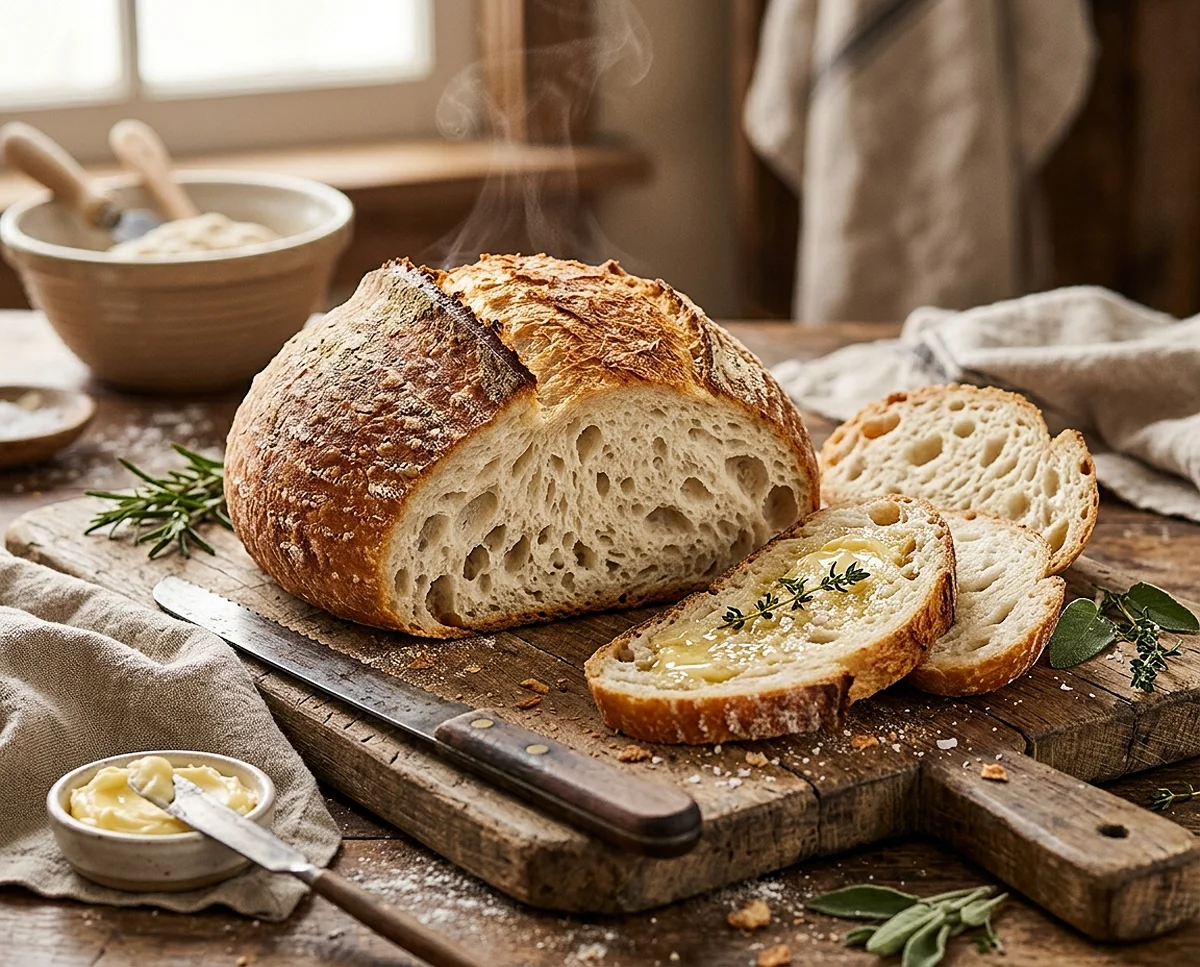
Yeast Bread Recipe
Craving the smell of fresh homemade bread but terrified of yeast? This yeast bread recipe is so simple, even the most kitchen-averse person will pull off a golden, crusty loaf on the first try — no kneading, no fancy equipment, just pure, delicious magic.
Look, I used to think baking bread was something reserved for grandmas and serious foodies. Then one rainy afternoon I threw together this basic bread recipe almost on a whim — and the result was so good, my family thought I’d bought it from a bakery. I’ve been making it ever since, and I promise it’s way easier than it looks.
Table of Contents
What Makes This Homemade Bread Recipe So Great
This isn’t your average, intimidating loaf. This is a no-knead, dump-and-go kind of deal — the kind of classic white bread that makes your whole house smell incredible for hours. The crust is shatteringly crispy, the inside is chewy and soft, and it comes together with just 4 ingredients. Seriously, that’s it.
We’re talking a proper artisan-style loaf baked in a Dutch oven, which is the secret weapon here. The steam trapped inside creates that bakery-quality crust you’d normally only get from a fancy bread oven.
And if you’ve got a little patience for the rise, you can even refrigerate the dough for up to three days to develop an even deeper flavor — like a sourdough-lite situation, without the sourdough drama.
Ingredients
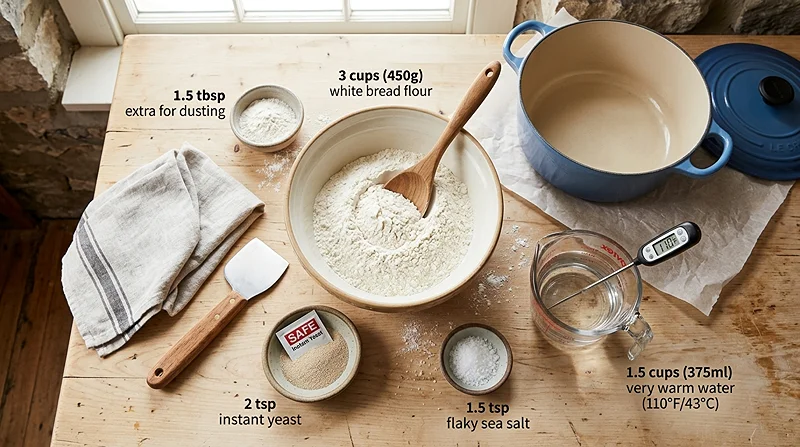
Here’s everything you need for this simple yeast bread recipe. Short list, big reward.
| Category | Ingredient | Amount |
|---|---|---|
| Dough | Bread flour or all-purpose flour | 3 cups (450g) |
| Instant or rapid rise yeast | 2 tsp | |
| Cooking/kosher salt (halve if using table salt) | 1½ tsp | |
| Very warm tap water (not boiling — up to 55°C/130°F) | 1½ cups (375ml) | |
| Shaping | Flour (for dusting) | 1½ tbsp |
Note on flour: Bread flour gives you a chewier, more structured crumb, but all-purpose works just fine for a slightly softer loaf. Either way, you win.
Note on water temp: Think “warm bath,” not “hot tub.” Too hot kills the yeast; too cold slows it way down.
Step-by-Step Instructions
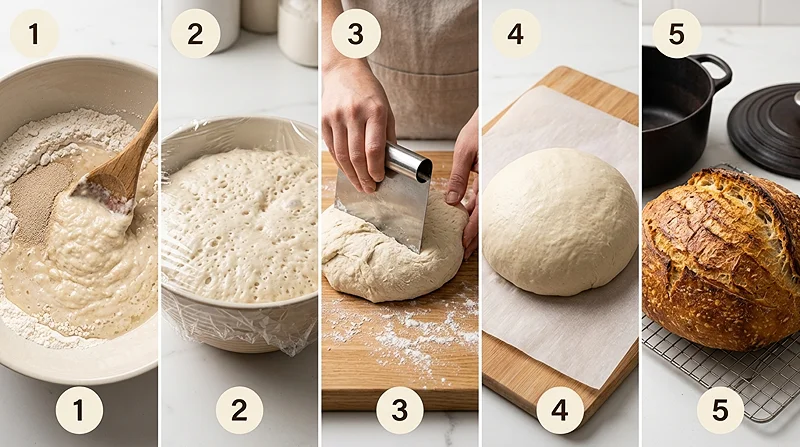
Step 1: Mix the Dough
In a large bowl, combine the flour, yeast, and salt. Give it a quick stir to combine, then pour in the warm water. Use the handle of a wooden spoon (this keeps things simple and prevents a doughy mess on your hands) to stir everything together until all the flour is incorporated.
The dough will look wet, sticky, and a bit sloppy — and that’s totally correct. It won’t be kneadable, but it also shouldn’t be runny like cake batter. If it seems too stiff, add a tiny splash more water. Too loose? A little more flour. Trust the process here.
“This is a forgiving dough. It wants to work with you.”
Step 2: Let It Rise
Cover the bowl with plastic wrap or a plate and leave it on the counter for 2 to 3 hours. You’re waiting for the dough to double in size, get wobbly like jelly when you shake the bowl, and develop a bubbly top.
That bubbling = yeast doing its thing = flavor.
If after an hour nothing much is happening, move the bowl somewhere warmer — near a warm oven, on top of the fridge, or even in an oven with just the light on. Cold kitchens slow yeast down.
Step 3 (Optional but Amazing): Refrigerate for Flavor
Once the dough has risen, you can bake it immediately OR pop it in the fridge for up to 3 days. Refrigerating slows fermentation and develops a deeper, more complex flavor — almost like a very easy sourdough. If you go this route, take the dough out of the fridge and let it sit on the counter for 45 to 60 minutes before baking so it can warm up a bit. Cold dough doesn’t rise as well in the oven.
This make-ahead option is honestly one of my favorite things about this classic white bread — you can prep it Sunday and bake fresh bread Wednesday like some kind of miracle worker.
Step 4: Preheat the Oven (and Your Dutch Oven)
Place your Dutch oven — lid on — into a cold oven, then crank the heat to 230°C / 450°F (220°C fan). Let it preheat for at least 30 minutes. You want that pot scorching hot before the dough goes in.
Why? Because a preheated Dutch oven mimics a professional bread oven. The steam from the dough gets trapped inside the pot during the first bake, keeping the crust soft and allowing the bread to fully expand before it sets. Then when you remove the lid, the crust crisps up beautifully.
No Dutch oven? No problem — use a heavy oven-safe pot with a lid, or even two roasting pans stacked together. It works!
Step 5: Shape the Dough
Lightly dust your work surface with about 1 tablespoon of flour, then scrape the dough out of the bowl. Sprinkle the top with the remaining ½ tablespoon of flour.
Using a dough scraper, a cake server, a large spatula — whatever flat-ish tool you have — fold the edges of the dough inward about 6 times to roughly form a round shape. You’re not going for perfection here. The goal is just to gently deflate those big bubbles and create a shape you can actually move.
Step 6: Transfer to Parchment Paper
Slide a large piece of parchment paper (not wax paper — it’ll smoke!) next to your dough blob, then flip the dough upside down onto the paper. Smooth side should be facing up, seam side down.
Gently nudge it toward the center of the paper and reshape it into something roughly round. Here’s the thing — lopsided is actually good. Wonky edges mean more ridges, and more ridges mean more of those gorgeous crispy bits. Embrace the chaos.
Step 7: Bake
Very carefully remove the piping hot Dutch oven from your oven. Use the parchment paper as a sling to lower the dough gently into the pot, then put the lid back on.
Bake covered for 30 minutes, then uncover and bake for another 12 minutes until the crust is deeply golden and sounds hollow when you tap the bottom. That sound is the universe telling you that you nailed it.
Step 8: Cool Before Slicing
This is the hardest part, I won’t lie. Let the loaf cool on a wire rack for at least 10 minutes before slicing. Cutting into it too soon releases the steam that’s still finishing the crumb — it can make the inside gummy. Ten minutes. You can do this.
Expert Tips, Variations & Troubleshooting
Tips for the Perfect Loaf
Use the right water temperature. This is the most common mistake. If the water is too hot (above 55°C/130°F), it kills the yeast before fermentation even starts. Use a thermometer if you have one, or go for water that feels very warm but not uncomfortable on your wrist.
Don’t skip the preheat time. Thirty minutes in a hot oven is the minimum for a properly heated Dutch oven. Rushing this step can result in a flat loaf with a pale, soft crust — and nobody wants that.
Flour matters more than you think. Bread flour has more protein, which creates more gluten structure and a chewier crumb. If you’re aiming for that classic artisan bakery vibe, bread flour is your best friend. All-purpose works great for a softer, more sandwich-style bread.
Fun Variations to Try
Herb & garlic bread: Add 1 teaspoon of dried rosemary, thyme, or Italian seasoning along with 2 minced garlic cloves to the dough. Incredible alongside Italian pinwheels or a big bowl of soup.
Seeded crust: After flipping the dough onto the parchment, press sesame seeds, poppy seeds, or everything bagel seasoning onto the top of the loaf. Stunning and delicious.
Cheesy bread: Fold in ½ cup of shredded cheddar or parmesan when you shape the dough. It gets melty pockets throughout — absolutely wild.
Overnight fridge dough: Mix the dough the night before, let it rise at room temperature for just 1 hour, then refrigerate overnight. Bake fresh in the morning. Your family will think you secretly became a professional baker.
Troubleshooting Common Problems
Dough isn’t rising: Your kitchen might be too cold, or your yeast could be old. Test your yeast by dissolving it in warm water with a pinch of sugar — it should get foamy within 10 minutes. If it doesn’t foam, the yeast is dead and you’ll need a fresh packet.
Bread is dense: Usually means the dough didn’t rise long enough, the water was too hot and killed the yeast, or the oven wasn’t hot enough. Make sure you’re giving the dough the full 2–3 hours and that Dutch oven is seriously preheated.
Crust is soft, not crispy: You either didn’t preheat the pot long enough, or you didn’t bake the final 12 minutes uncovered. Both steps are crucial for that crackly crust.
Bread stuck to pot: Always use parchment paper as a liner. Never skip this step. It’s your best insurance policy.
Storage Instructions
| Method | How Long | Tips |
|---|---|---|
| Room temperature (wrapped) | 2–3 days | Wrap in a clean tea towel or paper bag — not plastic, which softens the crust |
| Airtight container | Up to 3 days | Acceptable, but the crust will soften |
| Freezer (sliced) | Up to 3 months | Slice before freezing for easy grab-and-toast mornings |
| Freezer (whole loaf) | Up to 3 months | Wrap tightly in foil + freezer bag |
Reheating
To revive day-old bread, pop the whole loaf (unwrapped) in a 180°C/350°F oven for 10 minutes. The crust comes right back to life. For individual slices, a toaster works just fine.
No-Waste Kitchen Ideas
Got a loaf that’s gone a bit stale? Don’t throw it away! Tear it into chunks for homemade croutons (toss with olive oil and bake at 200°C until golden), blitz it into breadcrumbs for coating chicken or topping casseroles, or use thick slices as the base for a gorgeous bruschetta. Pair it with crispy smashed carrots or smothered green beans for an easy side spread that looks incredibly impressive.
Nutritional Information
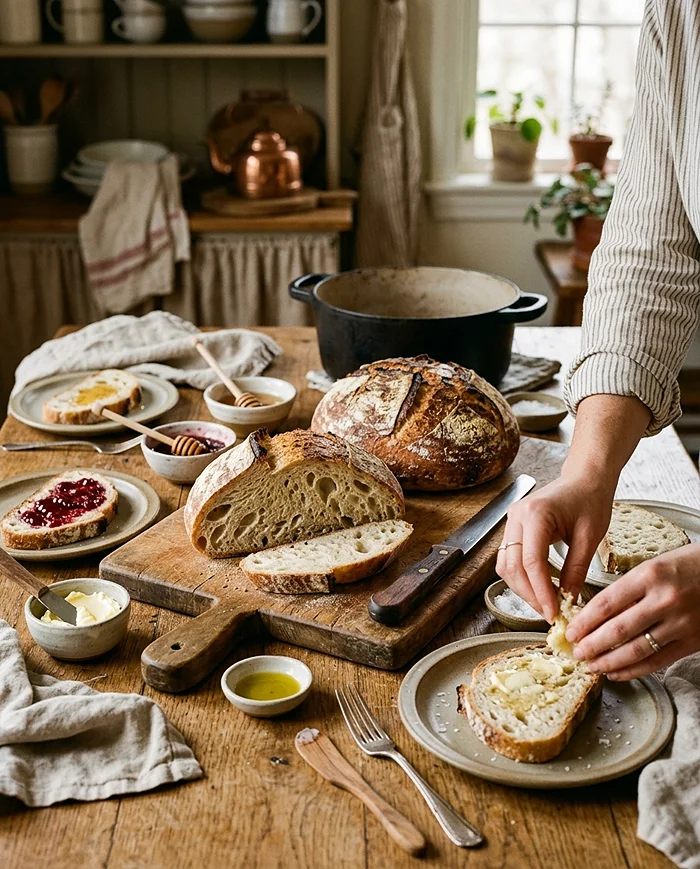
Based on 1 slice (approx. 1/10 of loaf). Values are estimates.
| Nutrient | Per Slice |
|---|---|
| Calories | ~145 kcal |
| Carbohydrates | 29g |
| Protein | 5g |
| Fat | 0.5g |
| Fiber | 1g |
| Sodium | 290mg |
Frequently Asked Questions
Can I use active dry yeast instead of instant yeast?
Yes! Active dry yeast just needs a little extra help to get going. Dissolve it in the warm water with a pinch of sugar and let it sit for 5–10 minutes until foamy before adding it to the flour. Add about 25% more yeast (roughly 2½ tsp total) since active dry is slightly less potent. Everything else stays the same.
Can I make this yeast bread recipe without a Dutch oven?
Totally. You can use any heavy, oven-safe pot with a tight-fitting lid — a large casserole dish works well. Another option is to bake the loaf on a preheated baking stone or heavy sheet pan and place a roasting pan of hot water on the rack below to create steam. The crust won’t be quite as dramatic, but it’ll still taste incredible.
Why is my dough so wet and sticky — did I do something wrong?
Nope, that’s exactly right! This is a high-hydration, no-knead dough, which means it’s supposed to be loose and sticky. That moisture is what creates the open, chewy crumb and allows it to rise without kneading. Resist the urge to add too much extra flour — a slightly wetter dough is always better than a stiff one here.
Can I make gluten-free bread with this basic bread recipe?
This specific recipe relies on gluten development to give the bread its structure and chew, so it won’t work directly with a gluten-free flour swap. For a great gluten-free option, check out this gluten-free pancake recipe as a starting point — and look for gluten-free bread flour blends specifically formulated with xanthan gum for best results.
How do I know when the bread is fully baked?
The easiest test: tap the bottom of the loaf — it should sound hollow. You can also use an instant-read thermometer: the internal temperature should read 93–96°C (200–205°F). And visually, that deep golden-brown crust is your best friend. Pale = needs more time. Deep golden = perfection.
Now Go Make Some Bread!
If you’ve been putting off trying a homemade bread recipe because it seemed complicated or fussy — this is your sign. This classic white bread recipe is genuinely one of the most satisfying things you can make in a kitchen, and it’s so simple that it almost feels like cheating. Four ingredients, a few hours of patience, and you’ve got a loaf that’ll honestly impress everyone who smells it baking.
Give it a try this weekend! And if you do make it, I’d love to know how it went — drop a comment below with your experience, any tweaks you made, or which variation you tried.
Love this recipe? Save it to Pinterest so you can find it again easily and share it with your fellow bread-loving friends.
And while you’re at it, check out some other favorites like this lemon pound cake for dessert, or these spinach and feta pinwheels for a fun appetizer to serve alongside your fresh loaf. Happy baking!
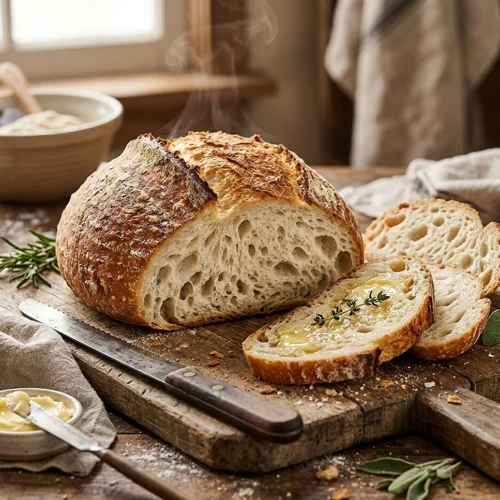
The Most Foolproof Yeast Bread Recipe You’ll Ever Make
Equipment
- Large mixing bowl
- Wooden spoon
- Dough scraper
- Dutch oven (26cm / 10″ or larger)
- Parchment paper
- Wire cooling rack
- Cling wrap or plate (for covering)
Ingredients
Dry Ingredients
- 3 cups Bread flour or all-purpose flour 450g. Bread flour gives a chewier crumb, but plain all-purpose works beautifully too.
- 2 tsp Instant or rapid rise yeast For active dry yeast, dissolve in warm water first and let sit 5 minutes until foamy before mixing.
- 1.5 tsp Cooking salt / kosher salt Halve if using table salt.
Wet Ingredients
- 1.5 cups Very warm tap water 375ml. Not boiling — up to 55°C / 130°F. Aim for comfortable bath temperature.
For Shaping
- 1.5 tbsp Flour For dusting the work surface and top of dough.
Instructions
- Mix flour, yeast, and salt in a large bowl and give them a quick stir. Pour in the warm water, then use the handle of a wooden spoon to mix until all the flour is incorporated. The dough will be wet and shaggy — not kneadable, but not runny like cake batter. Adjust with more water or flour if needed for the right consistency.
- Cover the bowl tightly with cling wrap or a plate and leave it on the counter for 2 to 3 hours. You’re waiting for the dough to double in size, turn wobbly like jelly, and develop bubbles on the surface. If after 1 hour it doesn’t seem to be rising, move it somewhere warmer — near the oven, on top of the fridge, or inside a cold oven with just the light on.
- Optional: Once the dough has risen, you can bake it right away or refrigerate it for up to 3 days for deeper, more complex flavor. If refrigerated, pull the dough out 45 to 60 minutes before baking and let it come back to room temperature while the oven preheats.
- Place your Dutch oven with the lid on inside the oven and preheat to 230°C / 450°F (220°C fan) for at least 30 minutes before baking. A blazing hot pot is what gives the bread its dramatic oven spring and crackly crust.
- Dust your work surface with about 1 tablespoon of flour and scrape the dough out of the bowl. Sprinkle the top of the dough with the remaining half tablespoon of flour. Using a dough scraper, cake server, or large spatula, fold the edges inward about 6 times to form a rough round shape. You’re deflating big bubbles and getting the dough into a moveable lump — don’t stress about perfection.
- Slide a large piece of parchment paper beside the dough, then flip it upside down onto the paper so the smooth side faces up and the seam side sits on the bottom. Nudge it into a roundish shape. Lopsided is actually better — more ridges means more crunchy bits!
- Carefully remove the hot Dutch oven from the oven. Use the parchment paper to lower the dough into the pot. Place the lid on and return the pot to the oven. Bake covered for 30 minutes, then remove the lid and bake for another 12 minutes until the crust is deep golden and sounds hollow when tapped. Cool on a wire rack for at least 10 minutes before slicing.