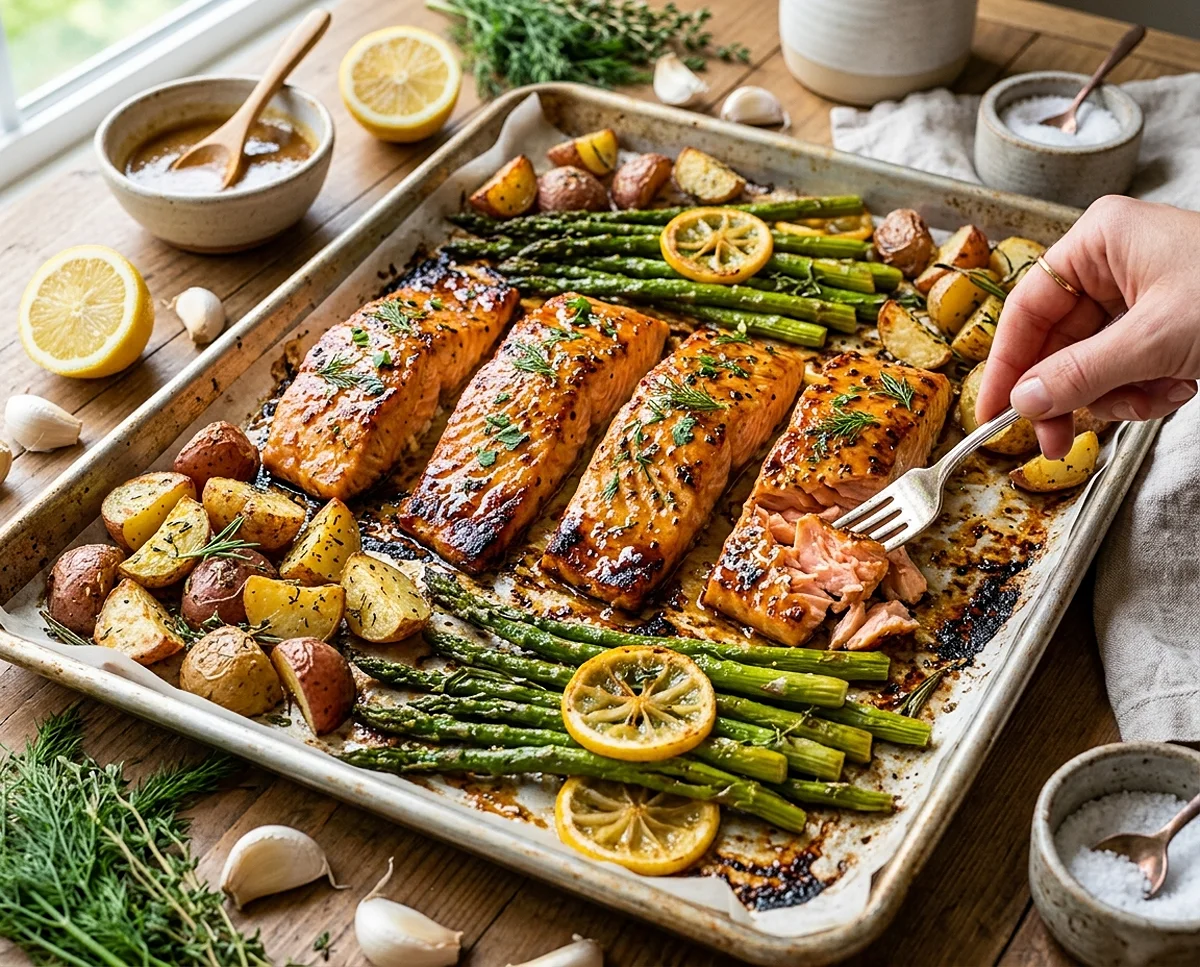
Baked Salmon with Potatoes and Asparagus
This baked salmon with potatoes and asparagus is a one-pan wonder ready in under 35 minutes — seasoned to perfection with garlic, herbs, and a dreamy honey mustard glaze. Weeknight dinner just got a serious upgrade.
Okay, real talk — this baked salmon with potatoes and asparagus has saved me more weeknight dinners than I can count. It all started on a chaotic Tuesday when I had zero energy to cook anything elaborate, tossed everything onto a sheet pan, and somehow ended up with the most flavor-packed meal I’d made in weeks.
Now it’s on permanent rotation in my kitchen, and once you try it, I have a feeling it’ll be in yours too.
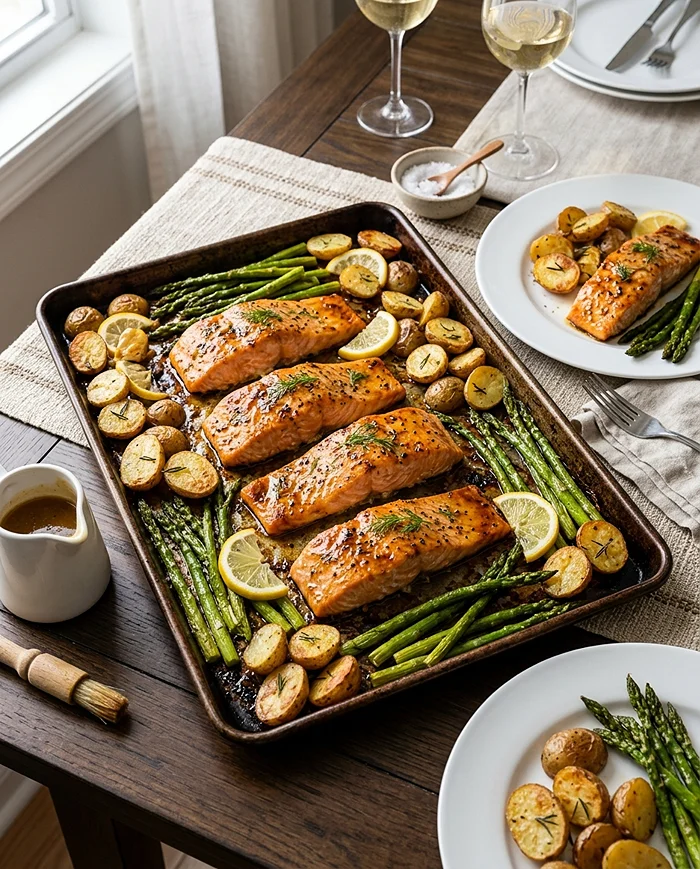
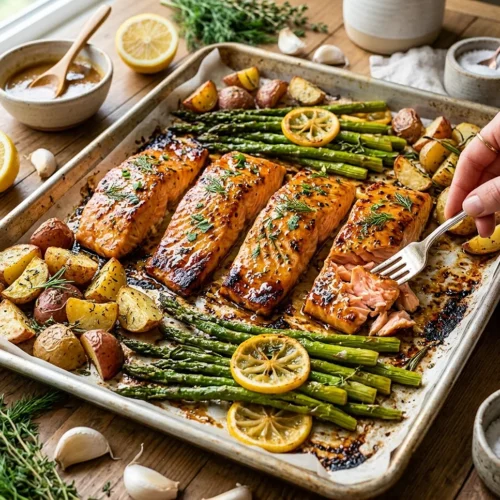
We’re talking tender, flaky salmon brushed with a buttery honey-dijon glaze, crispy herbed potatoes, and perfectly roasted asparagus with lemon — all done on one pan. Less mess, less stress, and honestly? It looks impressive enough to serve to guests. Win-win.
Table of Contents
Why You’ll Love This Recipe
This garlic herb salmon recipe is the kind of dinner that checks every box. It’s fast, it’s filling, it’s nutritious, and the flavor is genuinely restaurant-worthy. The honey dijon glaze gives the salmon this gorgeous caramelized finish, while the Italian herbs and garlic make the potatoes completely irresistible.
Everything cooks together on a single sheet pan, which means you spend less time washing up and more time actually enjoying your meal. If you’re looking for a reliable salmon with potatoes and asparagus dish that the whole family will devour, you’ve found it.
Ingredients You’ll Need
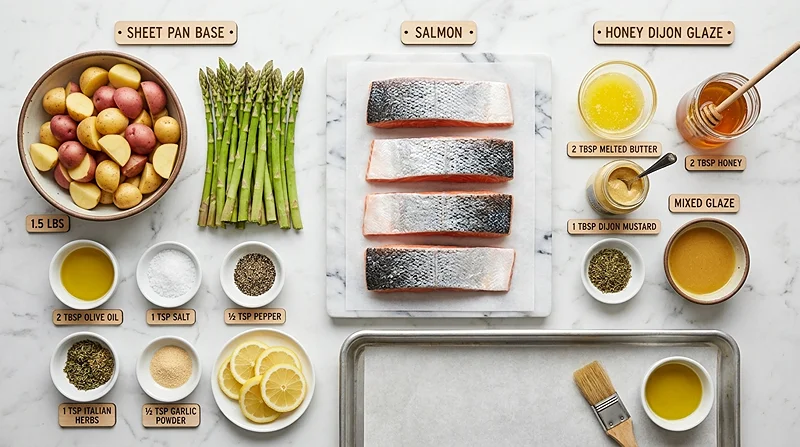
Here’s everything laid out so you can shop or prep without any second-guessing. I’ve grouped it by what goes where — super handy when you’re moving fast in the kitchen.
| Component | Ingredient | Amount |
|---|---|---|
| Sheet Pan Base | Baby red or gold potatoes, quartered | 2 pounds |
| Sheet Pan Base | Fresh asparagus, ends trimmed | 1 pound |
| Sheet Pan Base | Olive oil | 3 tablespoons (divided) |
| Sheet Pan Base | Salt and pepper | To taste |
| Sheet Pan Base | Italian herb blend | 2 teaspoons |
| Sheet Pan Base | Garlic powder | 1 teaspoon |
| Sheet Pan Base | Lemon, thinly sliced | ½ lemon |
| Salmon | Salmon fillets | 4 fillets |
| Honey Dijon Glaze | Butter, melted | 2 tablespoons |
| Honey Dijon Glaze | Honey | 2 tablespoons |
| Honey Dijon Glaze | Dijon mustard | 1 teaspoon |
| Honey Dijon Glaze | Italian herb blend | ½ teaspoon |
Note on Italian herb blend: Store-bought works perfectly here. It usually contains a mix of basil, oregano, rosemary, and thyme — that classic combination is exactly what makes this salmon with asparagus and thyme feel so aromatic and comforting. If you’re making your own, just mix equal parts of those four dried herbs.
How to Make Baked Salmon with Potatoes and Asparagus
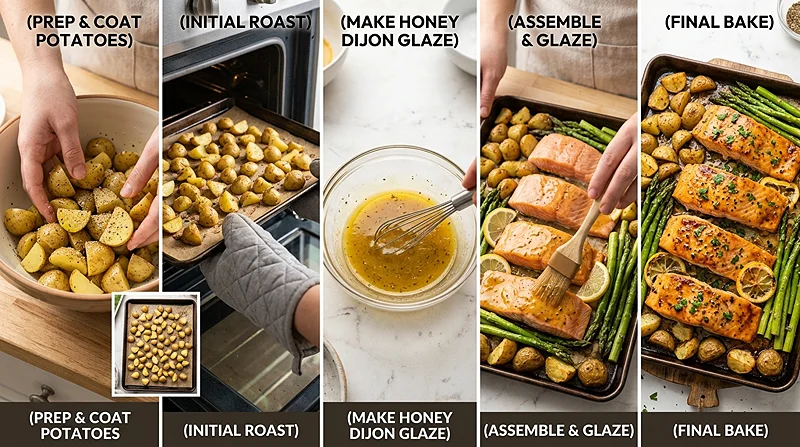
This comes together in four simple steps. I’ll walk you through each one with a few tips tucked in so you get perfect results every single time.
Step 1: Start Those Potatoes Early
Preheat your oven to 400°F. While it heats up, toss your quartered potatoes in a large bowl with 2 tablespoons of olive oil, salt, pepper, garlic powder, and 2 teaspoons of Italian herb blend. Give everything a good toss so every piece is coated — you’ll smell that garlic and herb mixture and immediately want dinner to be ready NOW.
Spread the potatoes in a single layer on a large sheet pan. Pop them in the oven for 10 minutes before anything else goes on the pan. Potatoes need a head start since they take longer to cook than the salmon or asparagus — skipping this step means you’ll end up with underdone potatoes and overcooked fish. Don’t skip it!
Step 2: Make That Dreamy Honey Dijon Glaze
While the potatoes get their head start, whisk together the melted butter, honey, dijon mustard, and ½ teaspoon of Italian herb blend in a small bowl. This glaze is genuinely magical — sweet, tangy, herby, and buttery all at once. You’ll want to lick the spoon. (Go ahead, I won’t tell anyone.)
Set the glaze aside — you’ll brush it onto the salmon in just a minute.
Step 3: Build Your Sheet Pan
After the potatoes have had their 10 minutes, pull the pan out of the oven. Nestle your salmon fillets right onto the pan, skin-side down if they have skin. Add the trimmed asparagus spears around the salmon and potatoes.
Brush that gorgeous honey dijon glaze generously over each salmon fillet — don’t be shy with it. Drizzle the asparagus with the remaining 1 tablespoon of olive oil, season with salt and pepper, and tuck thin lemon slices in between the asparagus spears.
Those lemon slices aren’t just pretty — they steam slightly during baking and infuse the whole pan with a subtle citrus brightness that ties everything together beautifully.
“Pro tip: If your salmon fillets have the skin on, that’s actually a good thing — the skin acts as a little barrier from the heat and keeps the bottom of the fish moist while the top gets that gorgeous glaze.”
Step 4: Bake and Serve
Slide the pan back into the oven and bake for 15 minutes. You’re looking for asparagus that’s tender with a slight char on the tips, potatoes that yield easily to a fork, and salmon that flakes gently when you press it with a fork. If your fillets are on the thicker side, add 2–3 extra minutes.
Serve immediately straight from the pan — this is absolutely a “dinner at the table still on the sheet pan” kind of meal. Totally acceptable. Highly encouraged, actually.
Expert Tips, Variations & Troubleshooting
Tips for the Best Results
Cut the potatoes small and evenly. Quartered baby potatoes cook quickly and evenly. If your potatoes are large, cut them into sixths so they’re done at the same time as everything else.
Don’t crowd the pan. Crowding traps steam and leads to soggy potatoes instead of crispy ones. Use a large sheet pan (18×13 inches works great) and spread everything in a single layer. If needed, use two pans.
Pat your salmon dry before glazing. A quick pat with paper towels helps the glaze stick better and promotes a nicer caramelized finish on top.
Tasty Variations to Try
Swap the herb blend: This garlic herb salmon recipe is super flexible. Try fresh dill instead of Italian herbs for a more classic salmon pairing, or use Herbs de Provence for a slightly floral, French-inspired twist.
Add cherry tomatoes: Toss a handful of cherry tomatoes onto the pan with the asparagus. They burst and get jammy in the oven and add a lovely sweetness to the whole dish.
Make it spicy: Add a pinch of red pepper flakes to the honey dijon glaze for a sweet-heat combo that works incredibly well with salmon.
Try different veggies: No asparagus? Green beans, broccolini, or zucchini all work beautifully here. Just adjust timing — more delicate veggies might only need 10 minutes.
Troubleshooting Common Issues
Salmon is sticking to the pan: Make sure the pan is lightly greased or use parchment paper. A light coating of olive oil on the pan before adding the potatoes goes a long way.
Potatoes aren’t crispy: This usually means they’re too close together or got too much moisture. Spread them out more and make sure they’re well coated in oil before baking.
Salmon is overcooked and dry: Keep a close eye after the 12-minute mark. Salmon goes from perfectly flaky to dry pretty quickly. Aim for an internal temp of 125–130°F for medium, 145°F for fully cooked.
Storage, Reheating & No-Waste Tips
| Storage Method | Container | Duration |
|---|---|---|
| Refrigerator | Airtight container | Up to 3 days |
| Freezer (salmon only) | Freezer-safe bag or container | Up to 2 months |
| Freezer (potatoes) | Not recommended — texture suffers | — |
Reheating: The best way to reheat salmon is gently — microwave on 50% power in 30-second bursts, or warm in a 275°F oven covered with foil for about 10 minutes. This keeps the fish from drying out. The potatoes reheat beautifully in an air fryer at 375°F for 5 minutes to get them crispy again.
No-waste ideas: Leftover salmon flakes perfectly into a next-day salmon pasta, a grain bowl, or a quick salmon salad with capers and lemon. Leftover potatoes make a fantastic hash with fried eggs the next morning — seriously good.
Nutritional Information (Per Serving)
| Nutrient | Amount |
|---|---|
| Calories | ~520 kcal |
| Protein | ~38g |
| Carbohydrates | ~38g |
| Fat | ~22g |
| Fiber | ~5g |
| Sodium | ~320mg |
Nutritional values are estimates based on standard ingredients and may vary depending on specific brands and portion sizes.
What to Serve with This Dish
This meal is really a full dinner on its own, but if you’re feeding a crowd or just want to round things out, here are a few ideas. A simple green salad on the side always works, or if you want something a little heartier, my Mexican street corn pasta salad makes a surprisingly fun pairing for a summer spread.
And for dessert? Honestly, after something this satisfying, you want something light and bright. My lemon bundt cake is absolutely perfect — citrus on citrus in the best way possible. Or if you’re going all-out for a special occasion, the Mother’s Day pink velvet cake is a total showstopper.
Frequently Asked Questions
Can I use frozen salmon for this recipe?
Yes, but make sure to thaw it completely first and pat it dry before adding the glaze. Frozen salmon tends to release more moisture during baking, which can water down the glaze and make the potatoes around it a bit soggy. Thawing overnight in the fridge is the easiest, safest method.
What’s the best type of potato for this sheet pan dinner?
Baby red or baby gold potatoes are the move here — they cook quickly, have a naturally buttery flavor, and get beautifully crispy on the edges. Yukon Golds work great too. Avoid large russets, as they take much longer to cook and can end up undercooked by the time the salmon is done.
Can I make this garlic herb salmon recipe ahead of time?
You can prep the glaze and chop the potatoes a day ahead and store them separately in the fridge. But the actual baking should happen right before serving — salmon is one of those things that’s genuinely best fresh out of the oven. Leftovers are still good, but nothing beats that first hot-from-the-oven bite.
How do I know when the salmon is done?
The easiest way is to press gently on the thickest part of the fillet — it should flake easily and the color should shift from translucent to opaque throughout.
If you have an instant-read thermometer, aim for 125–130°F for medium (slightly translucent in the center) or 145°F for fully cooked. At 400°F, most fillets hit that mark right around the 15-minute mark.
Can I use fresh thyme instead of Italian herb blend for the salmon with asparagus and thyme variation?
Absolutely! Fresh thyme is amazing here and gives the whole dish a more herby, earthy aroma. Use about 1 tablespoon of fresh thyme leaves in place of the ½ teaspoon of dried Italian blend on the salmon.
Fresh herbs are a little more delicate, so add a tiny extra pinch at the end after baking too — it really brightens everything up.
Ready to Make It?
If you’ve been on the fence about trying this baked salmon with potatoes and asparagus — this is your sign. It’s fast, it’s ridiculously delicious, and it’s the kind of dinner that makes you feel like you actually have your life together (even on a Wednesday). One pan, zero fuss, maximum flavor.
Give it a try this week and let me know how it goes! Drop a comment below with your feedback, any tweaks you made, or just to tell me how much you loved it — I genuinely love hearing from you. And if you make it, please save it to your Pinterest boards so other people can find it too. It really does help more than you know!
Happy cooking!
Baked Salmon with Potatoes and Asparagus
Equipment
- Large Sheet Pan (18×13 inch)
- Mixing bowl
- Small bowl
- Whisk
- Pastry brush
- Instant-Read Thermometer
Ingredients
Sheet Pan Base
- 2 pounds Baby red or gold potatoes quartered
- 1 pound Fresh asparagus ends trimmed
- 3 tablespoons Olive oil divided — 2 tbsp for potatoes, 1 tbsp for asparagus
- Salt and pepper to taste
- 2 teaspoons Italian herb blend for potatoes — mix of basil, oregano, rosemary, and thyme
- 1 teaspoon Garlic powder
- ½ Lemon thinly sliced
Salmon
- 4 Salmon fillets skin-on recommended
Honey Dijon Glaze
- 2 tablespoons Butter melted
- 2 tablespoons Honey
- 1 teaspoon Dijon mustard
- ½ teaspoon Italian herb blend for the glaze
Instructions
- Preheat your oven to 400°F (200°C). Toss the quartered baby potatoes in a large bowl with 2 tablespoons of olive oil, salt, pepper, 1 teaspoon garlic powder, and 2 teaspoons of Italian herb blend until every piece is well coated. Spread them in a single layer on a large sheet pan.
- Bake the potatoes in the preheated oven for 10 minutes. This head start is essential — potatoes take longer to cook than the salmon or asparagus, so don’t skip this step.
- While the potatoes bake, whisk together the melted butter, honey, dijon mustard, and ½ teaspoon of Italian herb blend in a small bowl until smooth. Set the honey dijon glaze aside.
- Remove the pan from the oven. Nestle the salmon fillets onto the pan skin-side down, and arrange the trimmed asparagus spears around the salmon and potatoes. Brush the honey dijon glaze generously over each salmon fillet.
- Drizzle the asparagus with the remaining 1 tablespoon of olive oil, season with salt and pepper, and tuck thin lemon slices in between the asparagus spears.
- Return the pan to the oven and bake for 15 minutes, until the asparagus is fork-tender, the potatoes are crispy on the edges, and the salmon flakes easily when pressed with a fork (internal temp 125–145°F). Serve immediately straight from the pan.