Hollandaise Sauce Recipe
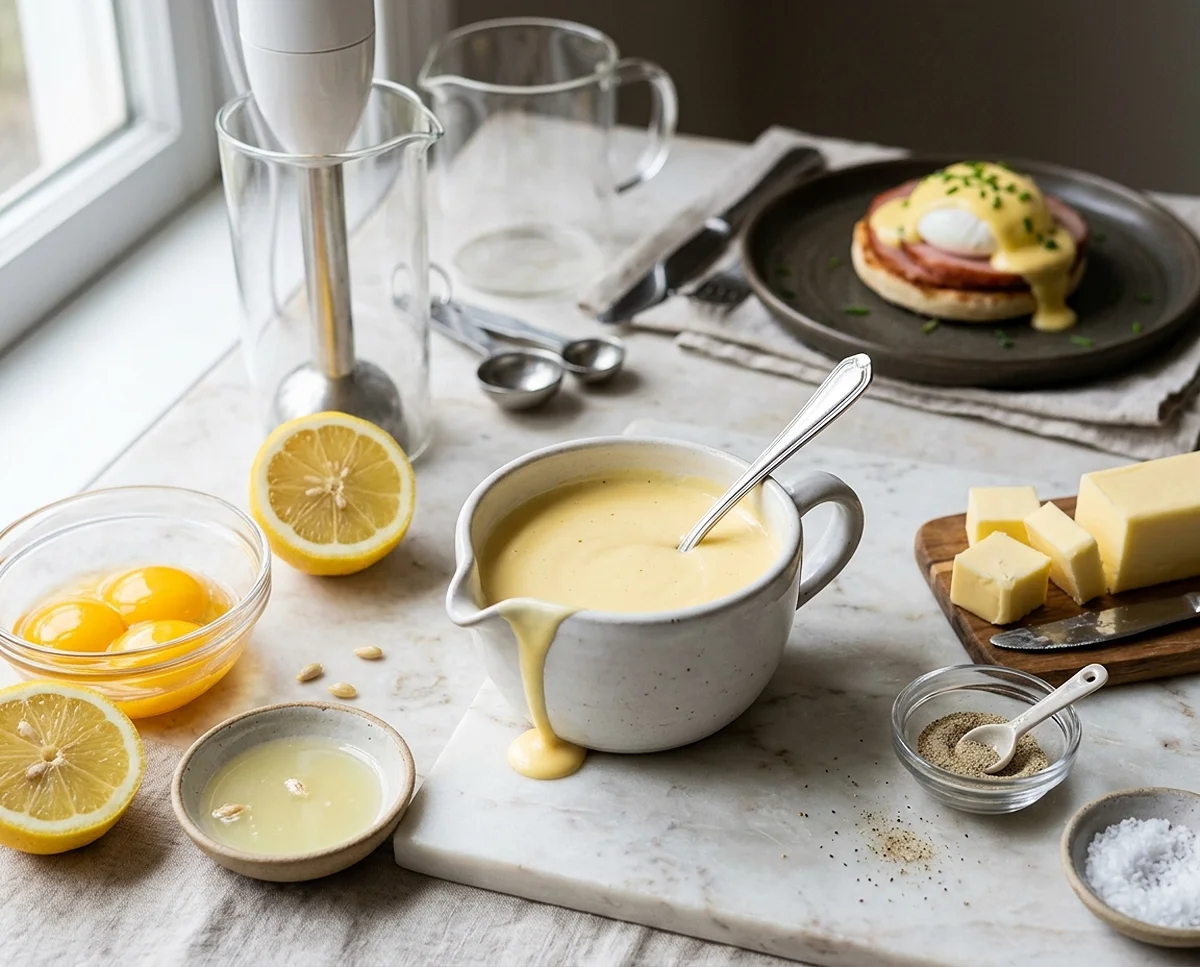
This silky, buttery hollandaise sauce recipe is made effortlessly with a blender stick in under 5 minutes. Rich, tangy, and absolutely foolproof, it’s the ultimate homemade hollandaise sauce for Eggs Benedict, asparagus, salmon, and beyond.
I’ll be honest with you — the first time I tried making hollandaise sauce from scratch, I ended up with lemony scrambled eggs. Not cute. But the day I discovered the blender stick method? Game changer. Now I make this breakfast sauce recipe on lazy Sunday mornings without even breaking a sweat.
Table of Contents
Why You’ll Love This Hollandaise Sauce Recipe
This isn’t your fussy, double-boiler, stand-over-the-stove-sweating kind of hollandaise. This is the real deal made fast, easy, and consistently perfect every single time.
The texture is thick, velvety, and utterly luxurious. It’s got that perfect balance of buttery richness and bright lemon tang. And the best part? You only need one tall container and a stick blender to pull it off.
Whether you’re drizzling it over crispy air fryer corn ribs as a fancy side sauce or doing classic Eggs Benedict on a Sunday, this homemade hollandaise sauce will make you feel like a five-star chef.
Ingredients You’ll Need
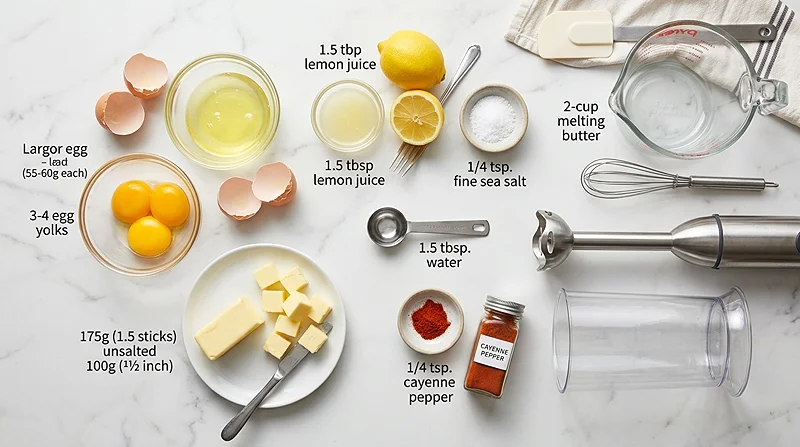
The ingredient list is beautifully short. Nothing fancy, just pantry staples that come together into something truly magical.
| Group | Ingredient | Amount |
|---|---|---|
| Egg Base | Large egg yolks (55-60g / 2 oz each) | 3 yolks |
| Seasoning | Cayenne pepper or white pepper | 1/4 tsp |
| Seasoning | Salt | 1/4 tsp |
| Acid | Fresh lemon juice, plus more to taste | 1 1/2 tbsp |
| Liquid | Water | 1 1/2 tbsp |
| Fat | Unsalted butter, cut into 1.5 cm cubes | 175g / 1 1/2 sticks |
Note on egg yolks: Use large, fresh eggs for the best emulsification. The yolks do all the heavy lifting in this blender hollandaise sauce, so quality matters here.
Note on butter: Unsalted butter gives you full control over the saltiness. You’ll be leaving behind the milky white solids, so cutting it into cubes helps it melt evenly and fast.
Step-by-Step Instructions
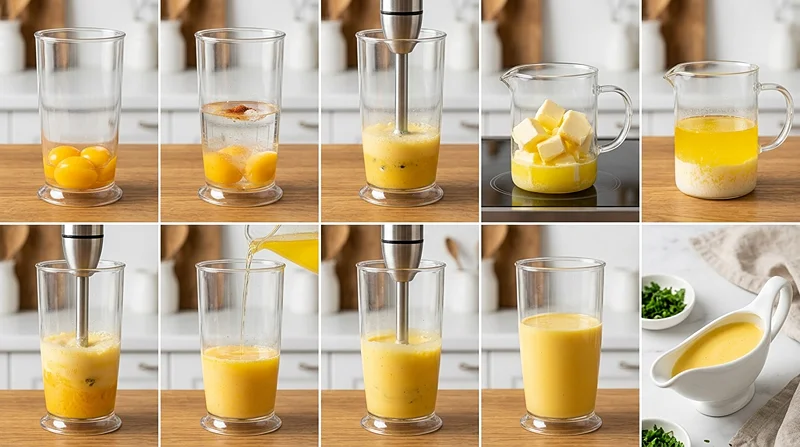
Here’s where the magic happens. Follow these steps and you’ll have a glossy, restaurant-worthy hollandaise sauce recipe done in minutes — no double boiler required.
Step 1: Set Up Your Egg Base
Grab a tall, narrow container — the kind your stick blender fits snugly into all the way to the base. This is key. Drop in your 3 egg yolks, then add the water, lemon juice, cayenne or white pepper, and salt.
Give it a quick blitz just to combine everything. You’re not blending to fluffy oblivion here, just a quick mix to get things acquainted.
Step 2: Melt the Butter — Carefully!
Melt your butter in a heatproof jug. If you’re using the microwave, please be careful — hot butter can explode if you’re not paying attention. Short bursts are your friend.
If you use the stovetop, pour the melted butter into a jug once it’s fully liquid. You need it hot — like just-melted, steaming hot — for the emulsification to work properly.
Step 3: Let the Butter Rest (Just 15 Seconds!)
Once your butter is melted and hot, let it stand for just 15 seconds. You’ll notice the milky white solids settling to the bottom of the jug. That’s clarified butter doing its thing.
You’ll be leaving most of those milky whites behind when you pour. That’s what gives homemade hollandaise sauce its silky, smooth finish instead of a greasy one.
Step 4: The Big Blend
This is where it all comes together. With your stick blender running on high speed, slowly — and I mean slowly — pour the hot butter in a thin, steady stream into the egg mixture.
Take about 45 seconds to pour it all in. Don’t rush this step! The slow pour is what creates that gorgeous, thick emulsion. Leave behind about 1 1/2 tablespoons of the milky whites sitting in the bottom of the butter jug.
“Once all the butter is in, your blender hollandaise sauce should be thick, creamy, smooth, and a beautiful pale yellow color.”
Step 5: Final Blitz
After all the butter is incorporated, keep the blender going for another 10 seconds, moving the stick gently up and down. This gives the sauce a final polish and makes sure everything is perfectly emulsified.
Your hollandaise sauce recipe is basically done at this point. How satisfying is that?
Step 6: Adjust and Season
Now taste and tweak. This is where you make it yours.
- Too thick? Stir in warm tap water, one teaspoon at a time, until you reach your desired consistency.
- Salt adjustment: Add a little extra salt if you’re serving over something mild like asparagus. Leave it as-is for salty pairings like Eggs Benedict, steak, or fish.
- Lemon adjustment: Make it slightly more tangy than you think you want when pairing with rich foods like steak or salmon — it mellows out once plated. For lighter foods like asparagus, make it exactly as lemony as you like it.
Expert Tips for the Perfect Hollandaise Every Time
Temperature Is Everything
Your butter absolutely needs to be hot when it hits the eggs. Lukewarm butter won’t emulsify properly, and you’ll end up with a sad, greasy puddle instead of that gorgeous sauce. Hot butter = proper emulsion. Simple as that.
Go Slow on the Pour
If you dump the butter in all at once, the sauce will break. A thin, steady stream over 45 seconds gives the egg yolks time to grab onto each fat droplet and create that silky texture. Patience pays off here.
Use the Right Container
A wide bowl won’t work as well for this blender hollandaise sauce method. You need a tall, narrow container so the stick blender head is fully submerged during blending. This creates the suction and emulsification you need.
Adjust for Your Pairing
Think about what you’re serving this breakfast sauce recipe with before you finalize the seasoning. Rich, salty foods need a brighter, more lemony sauce. Mild vegetables can handle a more buttery, lightly salted version. The sauce is your canvas — paint accordingly.
Variations to Try
Spicy Hollandaise
Double the cayenne or add a dash of hot sauce for a kicked-up version. It’s absolutely incredible spooned over a breakfast spread with fresh guacamole on the side.
Herb Hollandaise
Stir in a tablespoon of fresh chopped tarragon or chives after blending for a herby, French-bistro vibe. This version pairs especially beautifully with fish or steamed vegetables.
Citrus Twist
Swap half the lemon juice for fresh orange juice for a softer, sweeter hollandaise. It sounds unexpected but it’s genuinely wonderful drizzled over salmon or asparagus.
Troubleshooting: When Things Go Wrong
Sauce Broke / Too Thin and Greasy
This usually happens when the butter was poured too fast or wasn’t hot enough. To fix a broken hollandaise, start fresh with one egg yolk in a clean container, then slowly drizzle in the broken sauce while blending. It almost always comes back together.
Sauce Is Too Thick
Easy fix — add warm tap water a teaspoon at a time and stir gently until it loosens to your liking. Don’t add cold water; it can cause the sauce to seize.
Sauce Tastes Flat
It needs more lemon juice or salt. Add a small squeeze of lemon, taste, repeat. Season boldly — this is a rich sauce and it can handle it.
Storage and Reheating
Hollandaise is best served fresh and warm, but here’s how to handle leftovers like a pro.
| Method | Duration | Notes |
|---|---|---|
| Room Temperature (covered) | Up to 1 hour | Wrap container in a tea towel to keep warm |
| Refrigerator | Up to 2 days | Store in an airtight container |
| Freezer | Not recommended | Sauce breaks upon thawing |
How to Reheat Hollandaise Sauce
Reheat gently in a heatproof bowl set over warm (not boiling) water, whisking constantly. Or microwave in 10-second bursts, stirring between each one. Do not rush — high heat will scramble the eggs in the sauce.
If it thickens in the fridge, add a teaspoon of warm water at a time while stirring until you get the right consistency back.
No-Waste Kitchen Ideas
Have leftover egg whites from separating your yolks? Don’t toss them! Use them to make light meringues, fluffy omelets, or even mix them into a smoothie for extra protein. You can also freeze egg whites flat in a zip bag for later use.
What to Serve With Hollandaise Sauce
This homemade hollandaise sauce is incredibly versatile. Here are some of my favorite ways to use it beyond the classic Eggs Benedict:
- Spooned over steamed or roasted asparagus
- Drizzled over pan-seared salmon or baked fish
- Served alongside grilled steak for an elevated weeknight dinner
- Paired with these mini no-bake key lime pies as a fun brunch spread dessert
- Used as a dip for roasted vegetables or crusty bread
For a full brunch table, you could also whip up these strawberry sugar cookie bars for something sweet to balance the richness. And if you want a no-effort dessert to finish things off, this no-bake strawberry lasagna is always a crowd-pleaser.
Nutritional Information

Based on 8 servings. These values are approximate and will vary based on exact ingredients used.
| Nutrient | Per Serving (approx.) |
|---|---|
| Calories | ~195 kcal |
| Total Fat | ~21g |
| Saturated Fat | ~13g |
| Cholesterol | ~120mg |
| Sodium | ~90mg |
| Protein | ~1.5g |
| Carbohydrates | ~0.5g |
Yes, hollandaise is rich. It’s butter and egg yolks. Embrace it — it’s a special occasion sauce, not a daily drizzle. Everything in moderation, right?
Frequently Asked Questions
Can I make hollandaise sauce ahead of time?
You can make this hollandaise sauce recipe up to a day in advance and store it in the fridge. Reheat very gently over warm water or in the microwave in short 10-second bursts, whisking as you go. It won’t be quite as silky as fresh, but it’ll still taste amazing.
Why did my homemade hollandaise sauce break?
The most common reason is pouring the butter too quickly or using butter that wasn’t hot enough. The good news is a broken sauce can usually be rescued by starting with a fresh egg yolk and slowly blending the broken sauce back in.
Can I use a regular blender instead of a stick blender?
Yes, you can make blender hollandaise sauce in a regular countertop blender too. Blend the egg mixture first, then with the blender running on low, slowly pour the hot butter through the lid opening in a thin stream. Works beautifully!
Is this breakfast sauce recipe safe to eat with raw egg yolks?
The hot butter partially cooks the egg yolks during emulsification, which reduces but doesn’t eliminate risk. If you’re serving pregnant women, elderly guests, or young children, consider using pasteurized eggs for extra peace of mind.
What’s the best way to keep hollandaise sauce warm before serving?
Cover the container and wrap it snugly in a clean tea towel. This keeps the sauce warm for up to 15 minutes. For longer holding, keep it in a warm (not hot!) water bath and stir occasionally to maintain the texture.
Go Make It — You’ve Got This!
Honestly, once you try this blender hollandaise sauce method, you’ll never go back to the complicated stovetop version. It’s fast, forgiving, and the results are absolutely gorgeous.
This hollandaise sauce recipe is one of those things that sounds way more impressive than the effort involved. Five minutes. One container. A stick blender. That’s it.
If you try it, I’d love to hear how it went! Leave a comment below and let me know what you served it with. And if it turned out beautifully — and it will — please share it on Pinterest so more people can discover this easy breakfast sauce recipe. You’ll be doing the world a real service.
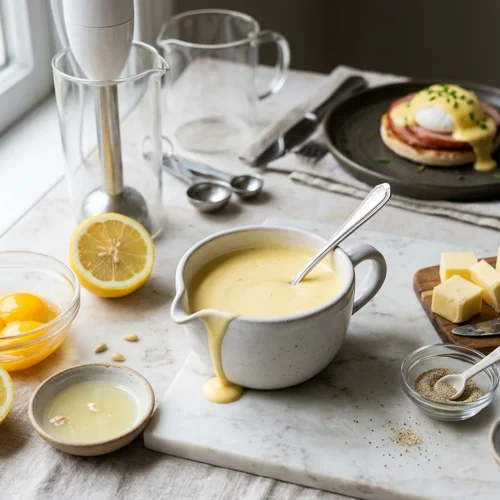
Hollandaise Sauce
Equipment
- Stick blender (immersion blender)
- Tall narrow container
- Heatproof jug
- Microwave or stovetop
Ingredients
Egg Base
- 3 large egg yolks from large eggs, 55-60g / 2 oz each
Seasoning
- ¼ tsp cayenne pepper or white pepper
- ¼ tsp salt or to taste
Acid
- 1 ½ tbsp fresh lemon juice plus more to taste
Liquid
- 1 ½ tbsp water
Fat
- 175 g unsalted butter cut into 1.5 cm / 1/2″ cubes (approximately 1 1/2 sticks)
Instructions
- Place the egg yolks in a tall, narrow container that your stick blender fits into all the way to the base. Add the water, lemon juice, cayenne or white pepper, and salt. Blitz briefly just to combine everything.
- Melt the butter in a heatproof jug until hot. If using a microwave, be very careful — heat in short bursts to avoid splattering. If using the stovetop, melt the butter fully then pour into a jug.
- Let the melted butter stand for just 15 seconds so the milky white solids settle to the bottom of the jug. You will leave most of these behind when pouring.
- With the stick blender running on high speed, slowly pour the hot butter in a thin, steady stream into the egg mixture over approximately 45 seconds. Leave behind about 1 1/2 tablespoons of the milky white solids in the jug. Once all the butter is incorporated, the sauce should be thick, creamy, smooth, and pale yellow.
- Continue blending for a further 10 seconds, moving the stick blender gently up and down to give the sauce a final polish and ensure everything is perfectly emulsified.
- If the sauce is too thick, stir in warm tap water one teaspoon at a time until you reach your desired consistency.
- Adjust seasoning to taste. Add extra salt if serving with mild foods like asparagus; leave as-is for salty pairings like Eggs Benedict, steak, or fish. Make the sauce slightly more tangy than you think you want when pairing with rich foods, as the lemon mellows once plated.
- Serve immediately, or keep warm by covering the container and wrapping it in a tea towel — it will stay warm for up to 15 minutes. Use warm tap water to loosen the sauce if needed before serving.