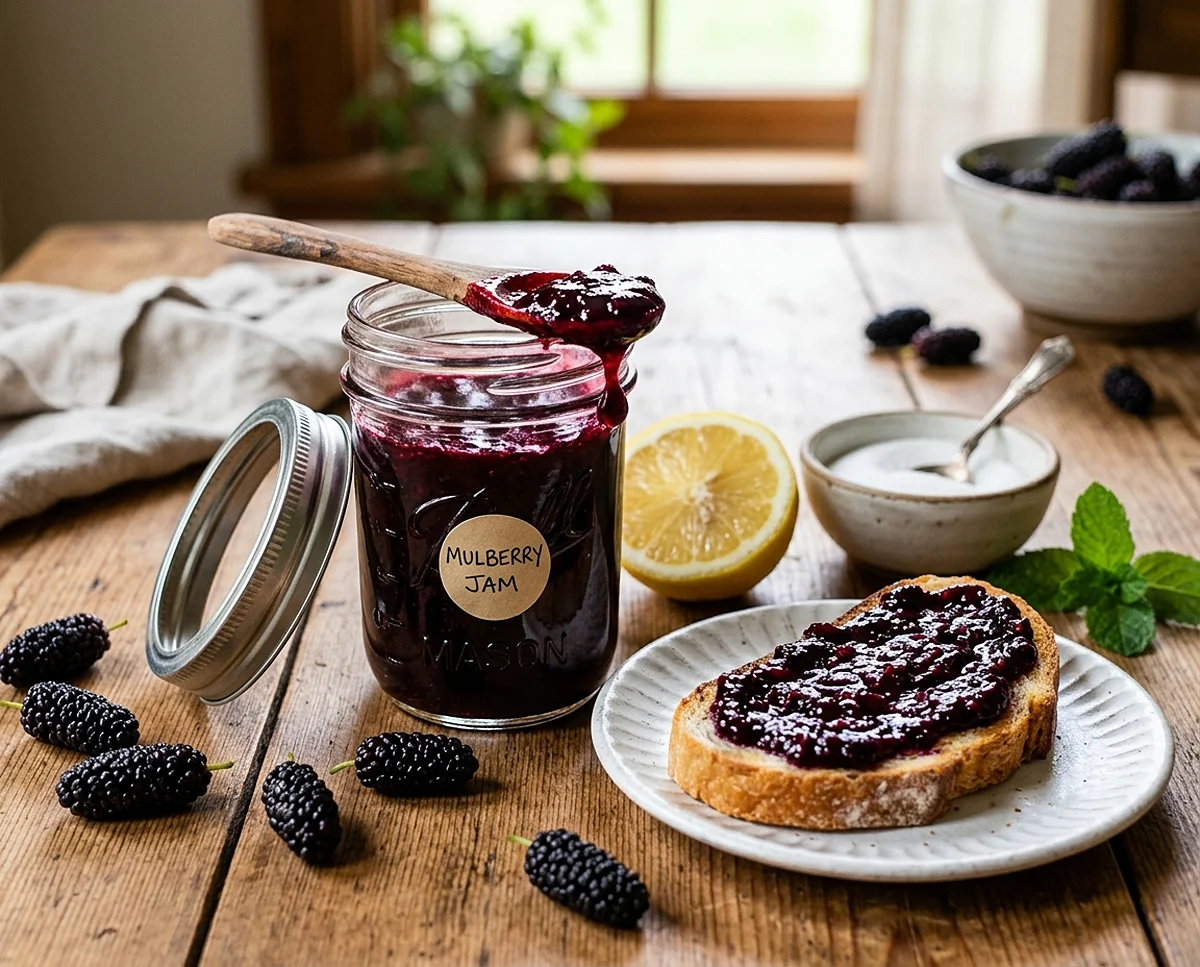
Mulberry Jam Recipe
There’s nothing quite like a homemade mulberry jam recipe that turns a pile of fresh-picked berries into glossy, jewel-toned jars of pure joy. One spoonful and you’re basically a cottage-core legend. This is the jam recipe your grandma wishes she had written down.
Table of Contents
Why You’ll Fall Head Over Heels for This Mulberry Jam
Mulberries are like the underdog of the fruit world. They’re sweet, a little tart, deeply flavorful, and honestly, most people walk right past them. That’s more jam for us, honestly.
This mulberry jam recipe is beginner-friendly, uses straightforward ingredients, and delivers a thick, luscious spread that works on literally everything. Toast, biscuits, cheese boards, your finger at 2am — no judgment here.
It’s also a fantastic base if you want to explore jam recipes homemade style, without any of the intimidating fuss. Think of it as your gateway jam.
Quick Overview: What This Recipe Delivers
This mulberry jam recipe gives you a rich, deeply colored preserve with a bold berry flavor, a hint of brightness from fresh lemon juice, and a subtle warmth from nutmeg. It’s thick, spreadable, and absolutely gorgeous in the jar.
Liquid pectin makes the process reliable and consistent — no guessing whether your jam will set. You’ll end up with several jars of shelf-stable goodness that make brilliant homemade gifts. And if you’ve been eyeing that cozy Irish colcannon recipe for a comfort food night in, having a jar of this jam nearby for the bread course is a very smart move.
Ingredients for Mulberry Jam
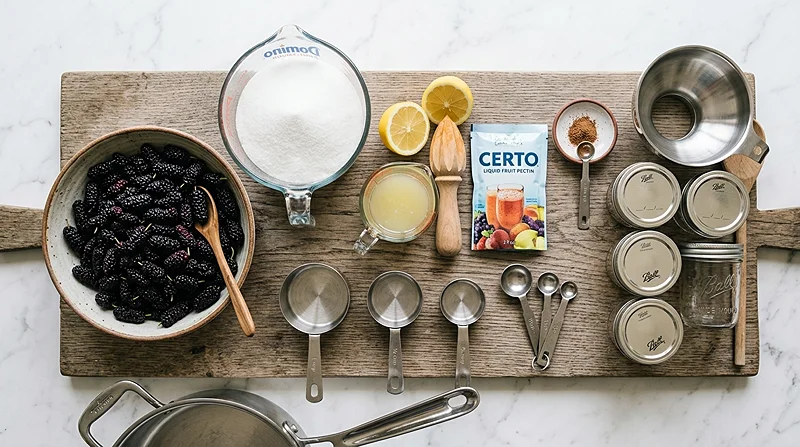
Here’s everything you’ll need, laid out cleanly so you can get your mise en place on before the berry chaos begins.
| Category | Ingredient | Amount |
|---|---|---|
| Fruit | Fresh or frozen mulberries, stems removed | 2 lb (900g) |
| Sweetener | White granulated sugar (Domino works great) | 6 cups |
| Acid | Fresh lemon juice (squeeze it yourself, please) | 1/2 cup |
| Setting Agent | Liquid pectin, Certo brand recommended | 1 (3-oz) pouch |
| Spice | Ground nutmeg | 1 pinch |
A quick note on mulberries: Fresh is ideal when they’re in season, but frozen mulberries work beautifully year-round. Just make sure all the stems are removed — they can add a slightly bitter note you don’t want sneaking into your jam.
Step-by-Step Instructions for Homemade Mulberry Jam
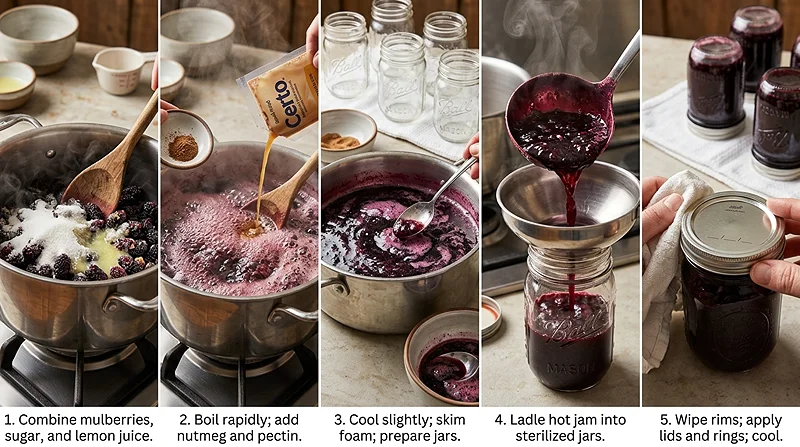
Let’s walk through this together. This is your kitchen, your jam, your moment. Pour yourself something nice and let’s get started.
Step 1: Combine and Cook the Fruit
Add your mulberries, sugar, and fresh lemon juice into a large, heavy-bottomed pot. Stainless steel or enameled cast iron are your best friends here. Avoid bare aluminum or non-enameled cast iron — they can react with the acid and give your jam a funky metallic taste.
Bring everything to a boil over high heat, stirring constantly. You want to dissolve that sugar fully and prevent anything from sticking or scorching on the bottom. The smell at this stage? Absolutely incredible.
“Stir like you mean it at this stage. A wooden spoon is your best kitchen companion right now.”
Step 2: Add the Nutmeg and Pectin
Once the sugar is fully dissolved and the mixture is bubbling nicely, stir in your pinch of ground nutmeg. It sounds like a tiny detail, but it adds a warm, subtle depth that makes this mulberry jam taste like it came from a fancy artisan shop.
Next, add in your liquid pectin and stir it in well. Bring the mixture back to a full, rolling boil and keep it there for exactly 1 minute, stirring the whole time. Don’t walk away — this is the moment that determines your jam’s set.
Step 3: Cool and Skim
Take the pot off the heat. You’ll likely see a frothy, pinkish foam sitting on top of the jam — that’s totally normal. Skim it off with a spoon and discard it. It’s not harmful, just a bit foamy and not exactly photogenic.
If you’re not canning the jam and prefer to just refrigerate or freeze it, let it cool completely at this stage, stirring occasionally to help it gel. Then transfer to airtight containers. Easy as that.
Step 4: Sterilize and Fill Your Jars
For shelf-stable jam, you’ll need sterilized canning jars. Boil them in water for a few minutes, then let them drain on a clean towel. Working quickly while the jam is still hot, ladle it carefully into the jars. Leave about 1/2 inch of headspace at the top — that gap matters for the seal.
Wipe the jar rims clean with a damp cloth before putting the lids on. Any jam residue on the rim can prevent a proper seal. Don’t skip this step, especially if you’re counting on these jars to last in the pantry.
Step 5: Process in a Water Bath
Secure your lids and rings, then process the jars in a boiling water bath for 5 minutes. Use a proper jar lifter or tongs to pull them out safely — those jars are hot and slippery and dropping one is heartbreaking.
Set the jars on a cooling rack or folded towels, spaced about an inch apart. Now comes the satisfying part: as they cool over the next 12 to 14 hours, you’ll hear that iconic pop or ping as each lid seals. It’s genuinely one of the best sounds in home cooking.
Step 6: Check Seals and Store
Once fully cooled, press down on the center of each lid. A properly sealed jar will feel firm — no flex, no bounce back. If a lid pops back up when you press it, that jar didn’t seal and should go straight into the fridge for immediate use.
Store your sealed jars in a cool, dark place (a pantry or cupboard works great) for up to 18 months. Once opened, keep them refrigerated.
Expert Tips for Perfect Mulberry Jam Every Time
Getting the Right Set
Liquid pectin is more forgiving than powdered, but the timing still matters. That 1-minute full rolling boil after adding pectin is non-negotiable. A full rolling boil means it can’t be stirred down — big, churning bubbles all the way across the surface.
If your jam seems too runny after it cools, don’t panic. It can take up to 24 to 48 hours for the pectin to fully activate. Give it time before writing it off.
Flavor Variations Worth Trying
Want to make a mulberry jelly recipe instead? Strain the cooked berries through a fine mesh strainer or jelly bag to remove the solids, then proceed with just the liquid. You’ll get a crystal-clear, gorgeously colored jelly that’s elegant enough to serve at a dinner party.
For a bolder flavor twist, try adding a splash of balsamic vinegar or a cinnamon stick while the jam cooks. Both pair beautifully with mulberries and create a more complex, grown-up jam. Pair a jar alongside rich homemade onion gravy at your next roast dinner and watch your guests lose their minds.
Troubleshooting Common Issues
Foam won’t stop forming? Keep skimming — it’s just proteins releasing from the fruit. Adding half a teaspoon of butter to the pot can help reduce foam production significantly.
Jam too sweet? Next time, try reducing the sugar by half a cup and increasing the lemon juice slightly. The balance between sweet and tart is personal, and this recipe is pretty forgiving with minor tweaks.
Jam crystallizing in the jar? This usually happens when the sugar ratio is too high or the jam was stirred too much after setting. A little lemon juice in future batches helps prevent crystallization.
Storage Instructions
| Storage Method | Container | Duration |
|---|---|---|
| Pantry (sealed jars) | Sterilized, sealed canning jars | Up to 18 months |
| Refrigerator (open or unsealed) | Airtight container or jar with lid | Up to 3 weeks |
| Freezer | Freezer-safe containers, leave headspace | Up to 1 year |
Reheating and Serving Ideas
Jam doesn’t really need reheating, but if you want a warm, saucy version to drizzle over ice cream or pancakes, just gently warm a few tablespoons in a small saucepan over low heat. Add a tiny splash of water if it feels too thick.
No-Waste Kitchen Tips
Those mulberry stems you removed? Compost them. Any foam you skimmed off? Spread it on toast immediately — it tastes just like jam, it’s just not jar-pretty. And if a jar doesn’t seal properly, use it as an excuse to make buttery biscuit chicken pot pie with a mulberry jam glaze on the side. No waste, maximum deliciousness.
Got leftover jam near the end of a jar? Swirl it into yogurt, stir it into salad dressings, or use it as a glaze on roasted meats. Mulberry jam is surprisingly versatile beyond just breakfast toast.
Nutritional Information
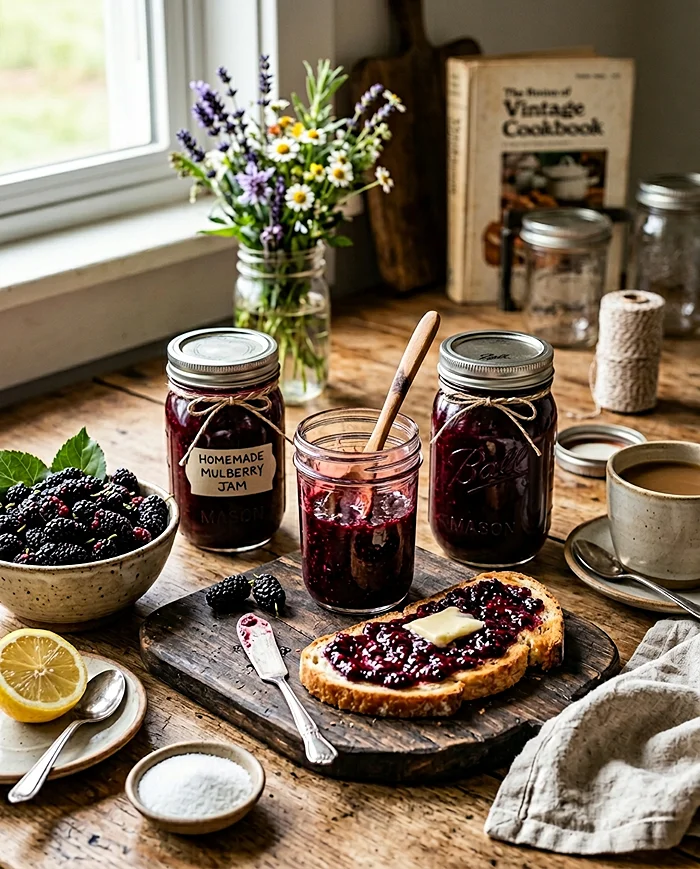
Based on approximately 1 tablespoon serving size.
| Nutrient | Amount Per Serving |
|---|---|
| Calories | ~50 kcal |
| Total Carbohydrates | ~13g |
| Sugars | ~12g |
| Total Fat | 0g |
| Protein | 0g |
| Vitamin C | Small amount (from lemon juice and mulberries) |
Nutritional values are approximate and will vary based on exact ingredient brands and quantities used.
FAQs About This Mulberry Jam Recipe
Can I use frozen mulberries for this jam?
Absolutely, yes. Frozen mulberries work just as well as fresh in this recipe. Let them thaw slightly before cooking so they break down evenly in the pot. The flavor and color will be just as gorgeous as if you’d picked them fresh that morning.
What’s the difference between mulberry jam and mulberry jelly?
Great question! Mulberry jam is made with the whole crushed fruit, seeds and all, which gives it a thicker, more textured consistency. A mulberry jelly recipe uses only the strained juice, resulting in a smooth, clear spread with a more refined appearance. Both are delicious — it really comes down to your texture preference.
Do I have to use liquid pectin? Can I use powdered?
You can use powdered pectin, but the method is different — powdered pectin is typically added to the fruit before heating, not after the boil. If you substitute, follow the specific instructions on your pectin package. Liquid pectin (especially Certo) is what this recipe is tested with and delivers consistent results.
How do I know if my jam has set properly?
The classic way is the cold plate test: pop a small plate in the freezer, then drizzle a bit of jam onto it. Push it with your finger after 30 seconds — if it wrinkles and holds its shape, it’s set. If it runs freely, give it a bit more cooking time. Remember, jam also firms up considerably as it fully cools in the jars.
Can I reduce the sugar in this mulberry jam recipe?
You can experiment with slightly less sugar, but keep in mind that sugar plays a dual role here — it’s both the sweetener and a key preservative. Dropping it significantly may affect the jam’s shelf life and its ability to set properly with standard pectin. If you want a lower-sugar version, look for pectin specifically formulated for reduced-sugar jam recipes homemade style — they’re widely available and work well.
Ready to Make Your Own Mulberry Jam?
There you have it — a simple, reliable, absolutely delicious mulberry jam recipe that’ll make you wonder why you ever bought jam at the store. Those glossy purple jars lined up on your pantry shelf? Pure satisfaction.
Whether you go classic with this jam, experiment with a mulberry jelly recipe, or start gifting jars to everyone you know (highly recommend), this is one of those jam recipes homemade fans come back to again and again.
And hey, while you’re in a cozy home cooking mood, why not also try this hearty Polish potato soup or whip up a batch of slow cooker garlic butter beef bites for a full cozy-day spread.
Tried this recipe? I’d love to hear how it turned out! Drop a comment below with your thoughts, any fun variations you tried, or just to tell me you ate half a jar straight off the spoon (no shame). And if you loved it, please save it to your Pinterest boards so other jam lovers can find it too — it means the world and helps this little recipe reach more kitchens where it belongs.
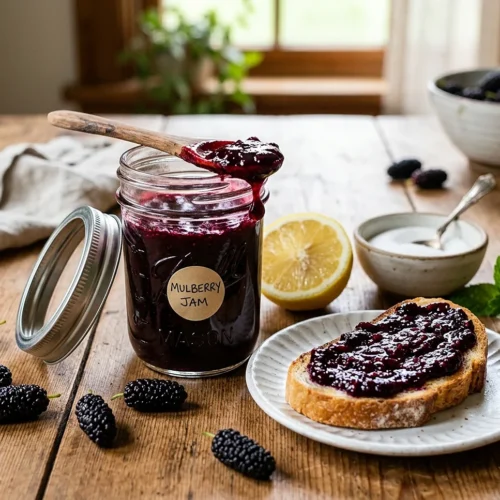
The Most Delightful Mulberry Jam Recipe You’ll Ever Make at Home
Equipment
- Large stainless steel or enameled cast iron pot
- Wooden spoon
- Ladle
- Canning jars with lids and rings
- Jar lifter or tongs
- Boiling water bath canner
- Cooling rack
- Damp cloth or paper towels
Ingredients
Fruit
- 2 lb Mulberries fresh or frozen, stems removed (900g)
Sweetener
- 6 cups White granulated sugar Domino granulated sugar recommended
Acid
- ½ cup Lemon juice freshly squeezed (120ml)
Setting Agent
- 1 pouch Liquid pectin 3-oz pouch, Certo brand recommended
Spice
- 1 pinch Ground nutmeg
Instructions
- Place 2 pounds of fresh or frozen mulberries, 6 cups of granulated sugar, and 1/2 cup of freshly squeezed lemon juice into a large, non-reactive pot. Use stainless steel or enameled cast iron — avoid aluminum or non-enameled cast iron to prevent off flavors. Bring the mixture to a boil over high heat, stirring constantly to dissolve the sugar and prevent scorching.
- Once the sugar has completely dissolved, stir in a pinch of freshly ground nutmeg. Add one 3-oz pouch of liquid pectin and stir well to combine. Return the mixture to a full rolling boil and let it boil for 1 minute, stirring continuously.
- Remove the pot from the heat. Skim off any foam that has formed on the surface using a spoon and discard it. If not canning, let the jam cool completely, stirring occasionally to encourage gelling, then transfer to airtight containers for refrigeration or freezing.
- Sterilize your canning jars in boiling water, then let them drain on a clean towel. Using a ladle, fill each sterilized jar with jam, leaving 1/2 inch of headspace at the top. Wipe the jar rims clean with a damp cloth to remove any residue before sealing.
- Secure the lids and rings on the jars, then process them in a boiling water bath for 5 minutes. Carefully remove the jars using a jar lifter or tongs and place them on a cooling rack or towels spaced 1 inch apart. Allow the jars to cool undisturbed for 12 to 14 hours. You may hear the lids pop or ping as they seal.
- Once cooled, test each seal by pressing down on the center of the lid — it should feel firm and not flex back. Any jars that did not seal properly should be refrigerated and used promptly, or reprocessed within 24 hours with new lids. Store properly sealed jars in a cool, dark place for up to 18 months.