Semiya Payasam Recipe
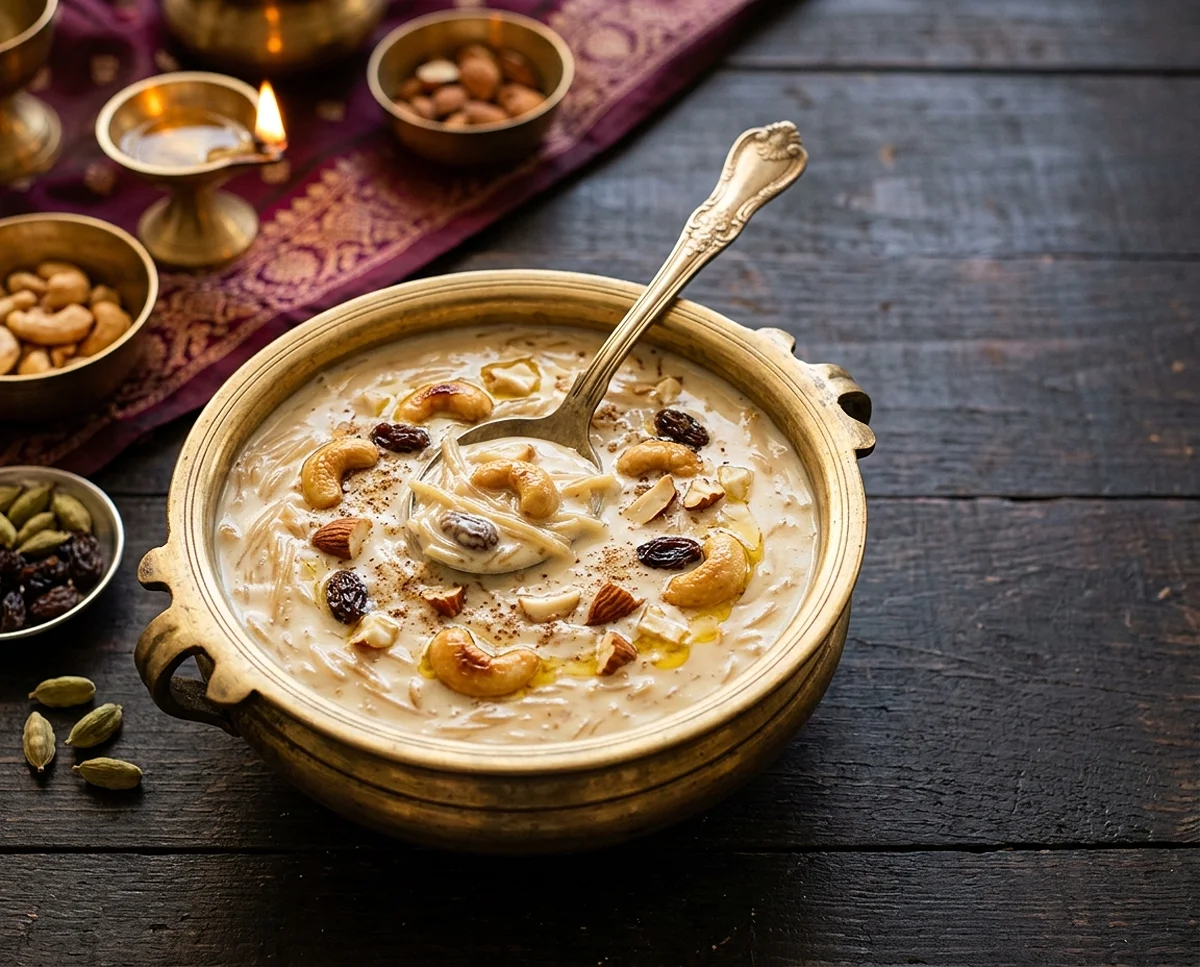
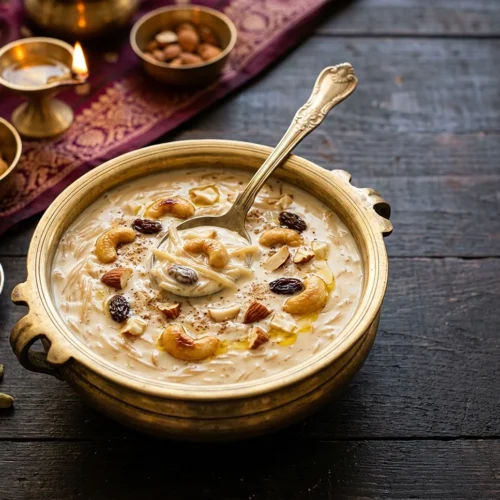
A creamy, fragrant bowl of semiya payasam recipe is basically a warm hug in dessert form. This silky vermicelli kheer is the kind of sweet that makes festivals feel complete and ordinary evenings feel like celebrations.
My grandmother used to make this every single Eid, and the smell of ghee and cardamom floating through the house was basically the starting gun for dessert madness. One bite and you’re instantly transported.
Table of Contents
What Makes This Semiya Payasam Recipe So Special
This is a classic South Indian and Pakistani payasam semiya recipe that comes together with just a handful of pantry staples. Roasted wheat vermicelli simmered in full-fat milk, perfumed with cardamom, and topped with ghee-fried cashews and raisins — it’s simple but absolutely stunning.
The secret is patience. Letting the milk thicken slowly is what gives this best semiya payasam recipe that rich, creamy texture you dream about. No shortcuts, no condensed milk needed — just real, honest ingredients doing their thing.
If you love comforting one-pot meals, you’ll feel right at home here. Think of it like our one-pot cheeseburger macaroni — simple method, big reward.
Quick Overview
This recipe for semiya payasam is a stovetop dessert that delivers a luscious, creamy payasam with tender vermicelli strands, toasty nuts, and plump raisins in every spoonful.
It’s vegetarian, naturally satisfying, and works beautifully as a festive dessert or a special weekend treat. Serve it warm, at room temperature, or chilled — it’s delicious every way.
Ingredients

| Category | Ingredient | Amount |
|---|---|---|
| Fat & Frying | Ghee | 3 tablespoons |
| Nuts & Dried Fruits | Cashew nuts (chopped) | 10-12 pieces |
| Nuts & Dried Fruits | Almonds (chopped) | 10-12 pieces |
| Nuts & Dried Fruits | Raisins | 1/4 cup |
| Base | Roasted wheat semiya / vermicelli | 75g (about 1/2 cup) |
| Base | Boiling water | 1 cup |
| Sweetened Milk | Whole milk (full-fat) | 4 cups |
| Sweetened Milk | Granulated white sugar | 1/4 cup |
| Spice | Cardamom powder | 1/2 teaspoon |
Step-by-Step Instructions

Step 1: Fry the Nuts and Raisins
Heat the ghee in a wide, heavy-bottomed pan over medium heat. Once it’s shimmering and fragrant, add your chopped cashews and almonds. Fry them, stirring often, until they turn a gorgeous golden brown.
Remove them onto a plate — don’t walk away at this step, because nuts go from golden to burnt in seconds. Next, drop the raisins into the same ghee and fry until they puff up like little pillows. Remove them too and set aside.
Step 2: Toast the Vermicelli
Add the roasted wheat semiya directly into the pan with the remaining ghee. Stir it continuously and roast until the strands turn a deep, rich brown. You’ll smell this before you see it — nutty, warm, and absolutely inviting.
Important: Keep stirring and stay present. Uneven roasting or a moment of distraction can lead to burnt vermicelli, and that bitter taste will carry through the whole payasam. Medium heat is your best friend here.
Step 3: Cook the Vermicelli
Now carefully pour in the boiling water — it’ll sizzle dramatically, so stand back just a little. Let the semiya cook in the water, stirring gently a few times, until the strands are completely soft and cooked through.
This usually takes just a few minutes. You want the vermicelli fully tender before moving on. If there’s still a bite to it, give it another minute. Patience here pays off big time.
Step 4: Add Milk and Sugar
Once the vermicelli is cooked through, pour in the full-fat milk and add the sugar. Stir well to combine everything. The milk will look thin at first — don’t panic, that’s completely normal.
Key tip: Do NOT add the sugar before the vermicelli is properly cooked. Sugar actually stops the cooking process, so adding it too early leaves you with undercooked, chewy semiya. Add it only after the strands are fully soft.
Step 5: Thicken the Payasam
Bring the mixture to a gentle simmer and cook for 10 to 12 minutes, stirring frequently. The milk will slowly reduce and thicken into a creamy, velvety payasam. You’ll see it coating the back of your spoon — that’s your cue it’s coming together.
Add the cardamom powder now and stir it in. That floral, slightly spicy aroma is what takes this from good to unforgettable. Simmer for a few more minutes until it reaches your desired consistency.
Step 6: Finish and Serve
Taste it. Does it need more sugar? Add a little more and stir through. Then fold in almost all of the fried cashews, almonds, and raisins — save a small handful for garnishing on top.
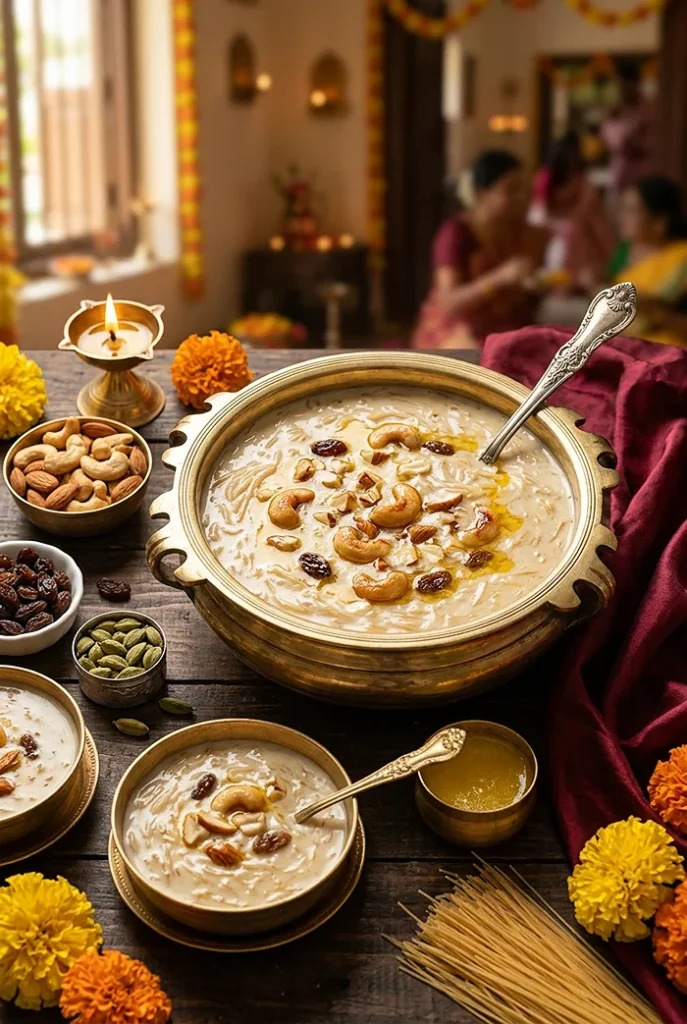
Turn off the heat and let the payasam rest for a few minutes. Serve it warm, chilled, or at room temperature, topped with those reserved nuts and golden raisins. Every single bowl is a little moment of joy.
Expert Tips for the Best Semiya Payasam
Use Full-Fat Milk
Whole milk is non-negotiable for this recipe for semiya payasam. The fat content is what gives you that rich, creamy consistency. Low-fat or skimmed milk will leave your payasam watery and lacking that luxurious body.
Don’t Rush the Thickening
Medium-low heat and frequent stirring is the move. High heat might seem faster, but it’ll scorch the milk at the bottom of the pan and you’ll have burnt bits ruining your otherwise beautiful dessert.
Roast Your Own Semiya
If you have unroasted vermicelli, you can roast it yourself in the ghee before adding water. Just take your time with it. Pre-roasted wheat semiya is also widely available and works perfectly here.
Variations to Try
Add Condensed Milk
For an even richer, sweeter payasam semiya recipe, swap out half the sugar for a few tablespoons of condensed milk. It makes the final payasam thicker and more indulgent — perfect for special occasions.
Try It With Rose Water
A teaspoon of rose water stirred in at the very end adds a delicate floral note that pairs beautifully with the cardamom. It’s a small addition that makes a big impression at dinner parties.
Go Vegan
Swap the ghee for coconut oil and use full-fat coconut milk instead of dairy milk. The flavor will be slightly different — a bit more tropical — but still absolutely delicious and completely plant-based.
Troubleshooting
Payasam Too Thin?
Just keep simmering on low heat, stirring regularly. It will thicken as it cooks. Also remember — payasam thickens even more as it cools, so don’t over-reduce it on the stove.
Payasam Too Thick?
If it becomes thicker than you like, especially after resting, stir in a splash of warm milk to loosen it back up. This is especially useful when reheating leftovers the next day.
Semiya Is Lumpy or Clumped?
This usually happens if you add cold milk too quickly. Always use room-temperature or slightly warm milk, and stir gently but constantly when adding it to the pan. That’s all it takes.
Storage and Reheating
| Method | Duration | Notes |
|---|---|---|
| Refrigerator | Up to 3 days | Store in an airtight container |
| Freezer | Not recommended | Texture suffers significantly |
| Room Temperature | Up to 4 hours | Cover and keep away from heat |
To reheat, warm the payasam in a small saucepan over low heat, adding a splash of milk to bring it back to a creamy consistency. Stir gently as it heats through.
No-Waste Kitchen Ideas
Leftover payasam can be used as a warm topping over vanilla ice cream for a creative fusion dessert. You can also stir it into oatmeal the next morning for a cardamom-scented breakfast treat.
Love making comforting, crowd-pleasing dishes? Browse our full recipe collection for more ideas that work any night of the week.
Nutritional Information (Per Serving)
| Nutrient | Amount (Approximate) |
|---|---|
| Calories | 320 kcal |
| Carbohydrates | 38g |
| Protein | 8g |
| Fat | 15g |
| Saturated Fat | 8g |
| Sugar | 22g |
| Fiber | 1g |
| Calcium | 210mg |
Nutritional values are estimates based on 4 servings and may vary depending on specific ingredients used.
Frequently Asked Questions
Can I make semiya payasam ahead of time?
Absolutely! This payasam semiya recipe actually tastes even better the next day once the flavors have had time to meld together. Make it a day ahead, refrigerate in an airtight container, and reheat gently with a splash of milk before serving.
What type of semiya is best for this recipe?
Roasted wheat semiya (vermicelli) works best for this semiya payasam recipe. It holds its texture beautifully and gives a lovely nutty flavor when toasted in ghee. Avoid using rice vermicelli or very thin noodles as the texture and cook time will differ.
Why is my payasam not thickening?
The most common reason is using low-fat milk. Full-fat whole milk is essential for a creamy, thick consistency. Also, make sure you are simmering on medium-low heat long enough, stirring frequently. The payasam will also thicken more as it cools down.
Can I use sugar alternatives in this recipe?
Yes, you can use jaggery or coconut sugar for a more traditional or less refined option. Keep in mind that jaggery adds a slightly earthy, caramel-like flavor which many people actually love in this best semiya payasam recipe. Add it slowly and taste as you go.
Is semiya payasam gluten-free?
Traditional semiya payasam uses wheat-based vermicelli, so it is not gluten-free. However, you can substitute rice vermicelli to make a gluten-free version. Just adjust the cooking time slightly as rice vermicelli cooks faster than wheat semiya.
Final Thoughts
This semiya payasam recipe is proof that the most comforting desserts are often the simplest ones. A little ghee, some roasted vermicelli, good whole milk, and time — that’s really all it takes to make something truly special.
Whether you’re making this for a festival, a family gathering, or just a quiet evening at home, it never disappoints. It’s one of those recipes that feels like a tradition from the very first time you make it.
Craving more cozy, comforting recipes? Check out our hearty ground beef taco casserole or our cheesy ground beef and rice casserole for weeknight dinner inspiration.
Tried this recipe? We’d love to know how it turned out! Drop a comment below with your thoughts, any fun variations you tried, and please share it on Pinterest so others can find it too. Happy cooking!
Semiya Payasam Recipe
Equipment
- Wide heavy-bottomed pan
- Stirring spoon
- Plate
Ingredients
Ingredients
- 3 tablespoons Ghee
- 10-12 pieces Cashew nuts chopped
- 10-12 pieces Almonds chopped
- ¼ cup Raisins
- 75 g Roasted wheat semiya / vermicelli about 1/2 cup
- 1 cup Boiling water
- 4 cups Whole milk full-fat
- ¼ cup Granulated white sugar
- ½ teaspoon Cardamom powder
Instructions
- Heat the ghee in a wide, heavy-bottomed pan over medium heat. Fry the chopped cashews and almonds until golden brown. Remove and set aside. Fry the raisins in the same ghee until they puff up, then remove and set aside.
- Add the roasted wheat semiya to the pan and roast, stirring continuously, until the strands turn a deep brown and develop a nutty aroma.
- Carefully pour in the boiling water and cook the semiya until completely soft and tender.
- Add the full-fat milk and sugar. Stir well to combine. Ensure the vermicelli is fully cooked before adding sugar.
- Bring the mixture to a gentle simmer and cook for 10 to 12 minutes, stirring frequently, until the milk thickens. Stir in the cardamom powder and simmer for a few more minutes.
- Taste and adjust sweetness if needed. Fold in most of the fried nuts and raisins, reserving some for garnish. Let the payasam rest briefly, then serve warm, chilled, or at room temperature with the remaining nuts and raisins on top.