Homemade Candy Apples
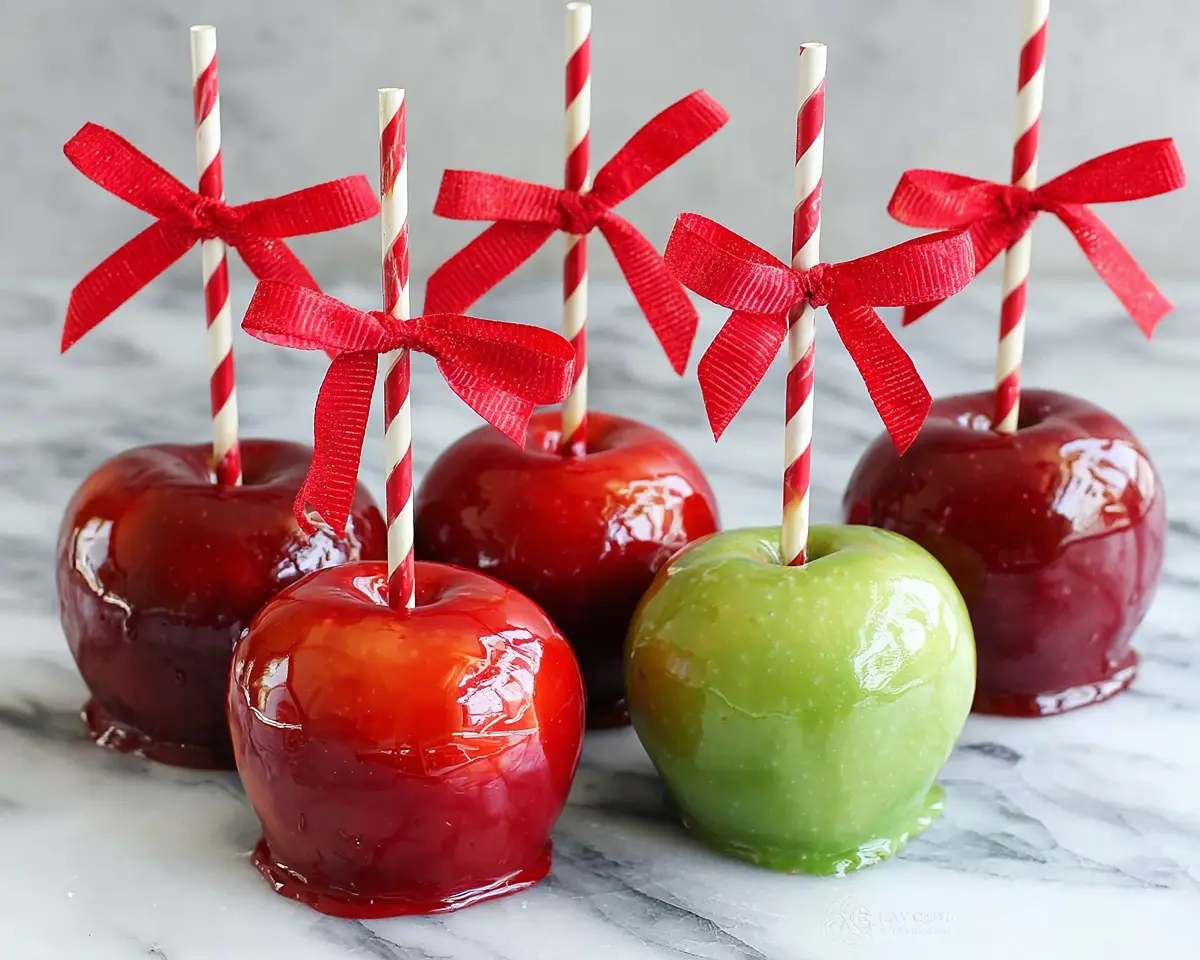
Crunchy, glossy, and bursting with nostalgia, these easy homemade candy apples are a fall favorite that transforms simple ingredients into carnival magic right in your kitchen.
There’s something about biting through that crackling candy shell into a crisp, juicy apple that takes me straight back to childhood fall festivals. I used to think candy apples were some kind of carnival wizardry, but turns out? They’re ridiculously simple to make at home, and honestly, way better than anything you’ll find at a fair.
Table of Contents
Why You’ll Love This Simple Candy Apple Recipe
This homemade candy apples recipe is the perfect blend of nostalgic fun and impressive presentation. You get that iconic candy-red shine, that satisfying crack when you bite through the coating, and the sweet-tart contrast that makes these treats absolutely addictive.
Plus, making them yourself means you control the ingredients—no questionable carnival mystery coating here. They’re surprisingly beginner-friendly too, requiring just a handful of pantry staples and about 30 minutes of your time. Whether you’re prepping for Halloween, a fall party, or just want to relive your childhood, this candy apples recipe delivers every single time.
What You’ll Need for Homemade Candy Apples
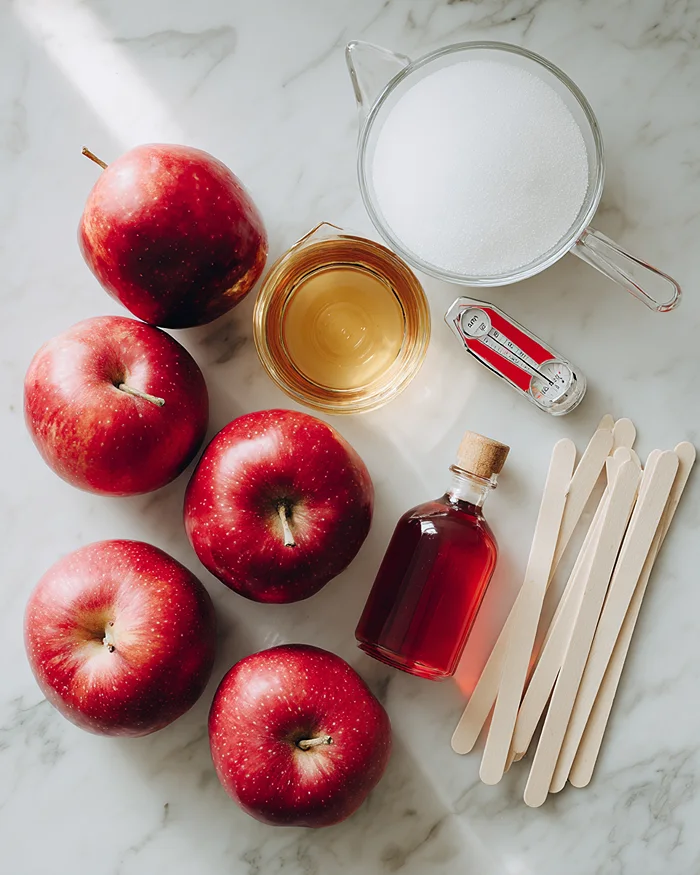
Let’s talk ingredients. The beauty of this recipe is how straightforward everything is—no weird additives or hard-to-find items.
| Ingredient Category | What You’ll Need | Why It Matters |
|---|---|---|
| The Star | 12 small red or green apples (any variety works!) | Smaller apples are easier to coat and eat. Granny Smiths give you that classic tart contrast, while sweet varieties like Gala or Fuji keep things candy-sweet throughout. |
| For Holding | 12 lollipop or popsicle sticks | These need to be sturdy enough to hold the apple and coating without bending. |
| The Coating | 3 cups sugar, ½ cup light corn syrup, 1 cup water | This trio creates that glossy, hard-crack candy shell we’re after. |
| Color | ½ teaspoon red food coloring | This gives you that iconic carnival-red look, though you can skip it or switch colors if you’re feeling creative. |
| Essential Tool | Candy thermometer | Not optional, folks. Temperature precision is everything here. |
Pro tip: I always grab organic apples when I can because they tend to have less waxy coating, which means better candy adhesion. Speaking of which, that wax is your enemy here—we’ll talk about dealing with it in the instructions.
How to Make the Best Easy Homemade Candy Apples
Alright, let’s get into the fun part. This is where the magic happens, and I promise it’s easier than you think.
Prep Your Apples Like a Pro
First things first—wash those apples like you mean it. I’m talking hot water, a good scrub, maybe even a little white vinegar rinse if they feel particularly waxy. The wax coating that makes apples shiny in the store? It’ll prevent your candy coating from sticking, and nobody wants sad, naked apples after all that effort.
Dry them completely. Like, really completely. Any moisture will make your candy coating slide right off or create weird bubbles. I usually set mine on a kitchen towel for 15-20 minutes to air dry after patting them down.
Now grab those lollipop or popsicle sticks and push them firmly into the stem end of each apple. You want them secure enough that they won’t wiggle loose when you’re dipping. Set your prepped apples on a cookie sheet lined with wax paper that you’ve spritzed with cooking spray. Trust me on the spray—it makes cleanup a million times easier.
Cook the Candy Coating to Perfection
Here’s where your candy thermometer becomes your best friend. Toss your sugar, corn syrup, and water into a heavy-bottomed saucepan. The heavy bottom is key because it distributes heat evenly and prevents scorching. Nobody wants burnt-tasting candy apples.
Crank the heat to medium and bring everything to a boil, stirring occasionally at first. Once it’s boiling, clip your candy thermometer to the side of the pan and watch it like a hawk. You’re aiming for exactly 300°F—that’s the “hard crack stage” in candy-making terms, which means your coating will harden to that perfect crunchy shell.
Real talk: This takes about 15-20 minutes usually, but don’t rush it by cranking up the heat. Slow and steady wins the race here. If you go too fast, you risk burning the sugar or getting an uneven temperature reading.
Add Color and Start Dipping
Once you hit 300°F, immediately remove the pan from heat. Now carefully—and I mean carefully—stir in that red food coloring. This stuff can splash and it’s hot as lava, so keep your face back and maybe wear an oven mitt on your stirring hand.
You might need more than the ½ teaspoon depending on your food coloring brand. Some are more concentrated than others. I usually add it gradually until I get that deep, vibrant red I’m after. If you’re wondering about natural alternatives, beet juice or pomegranate juice can work, but they won’t give you quite the same bright carnival color.
The Dipping Dance
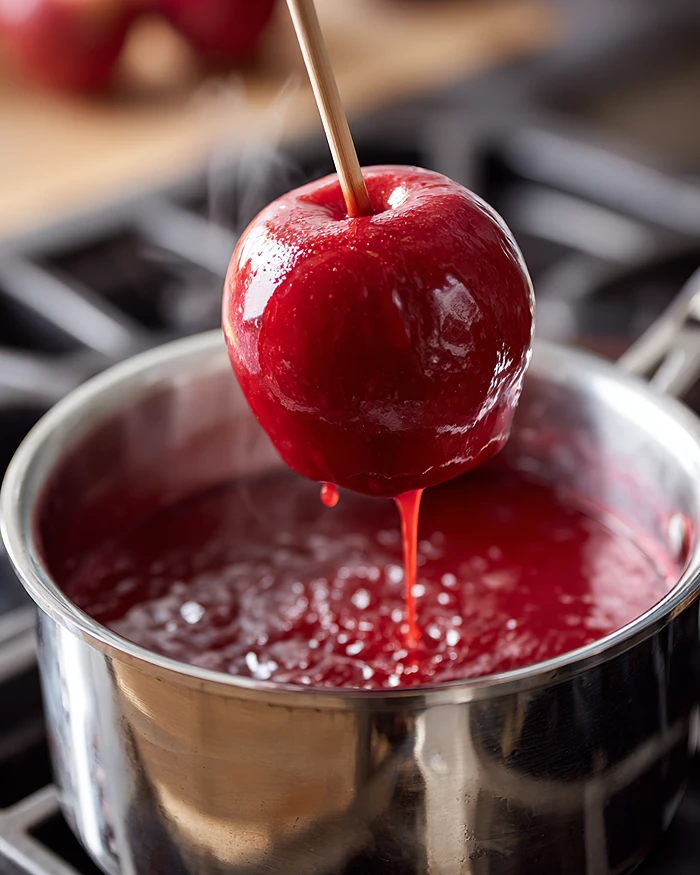
Here’s where things get a little tricky but also kind of fun. Working quickly (the candy coating starts to harden as it cools), grab an apple by its stick and dip it into the hot candy mixture. Swirl it around to coat it completely, letting the excess drip back into the pan. Don’t rush this dripping part—if you transfer the apple too quickly, you’ll end up with a puddle of candy at the base.
Place each coated apple back on your prepared cookie sheet. The candy will start setting almost immediately, which is super satisfying to watch. Do this one apple at a time, and if your candy mixture starts to thicken too much, you can pop it back on low heat for just a minute to loosen it up.
Let them cool completely—usually about 30 minutes at room temperature. Don’t try to speed this up in the fridge; the temperature change can cause cracking.
Expert Tips for Perfect Candy Apples Every Time
After making these more times than I can count, I’ve learned a few tricks that make the difference between okay candy apples and amazing ones.
Temperature is everything. Seriously, that 300°F isn’t a suggestion. Too low and your coating stays sticky; too high and it’ll taste burnt and might crack weirdly as it cools. Get yourself a good candy thermometer and actually use it.
Work in batches if you’re nervous. There’s no shame in making half the recipe first to get the hang of it. The whole process moves quickly once you start dipping, so if you’re not confident yet, start small.
Humidity is not your friend. I learned this the hard way on a particularly humid September day. If it’s super humid where you are, your candy coating might never fully harden or could get sticky over time. Try to make these on a dry day if possible, or at least in an air-conditioned kitchen.
Room temperature apples work best. Cold apples from the fridge can cause the candy coating to crack as it cools due to the temperature difference. Let them come to room temp before you start.
Fun Variations to Try
Once you’ve mastered the classic version, there’s a whole world of candy apple variations to explore.
Color me creative: Skip the red and try blue, purple, or even black food coloring for Halloween. You can also make a rainbow batch using different colors—just make smaller portions of each color.
Flavor it up: Add a teaspoon of cinnamon extract to the candy mixture for a Red Hots vibe, or try peppermint extract for a holiday twist. Just add these with the food coloring, after you’ve removed the pan from heat.
Toppings galore: Before the coating fully hardens, roll your apples in crushed nuts, sprinkles, mini chocolate chips, or even crushed cookies. This is where things get really fun and your cheesy hashbrown casserole guests will be seriously impressed.
Caramel-candy hybrid: Drizzle cooled candy apples with melted caramel for a sweet overload that’s totally worth it. It’s like the candy apple version of cheesy funeral potatoes—extra indulgent and completely irresistible.
Troubleshooting Common Candy Apple Problems
Let’s talk about what can go wrong and how to fix it, because nobody’s perfect on their first try.
Coating won’t stick: This is almost always a wax problem. Try this next time: dip your apples briefly in boiling water, then scrub them with a textured cloth and dry thoroughly. Some people even use a little white vinegar to cut through stubborn wax.
Coating is sticky instead of hard: You probably didn’t reach 300°F, or your thermometer might be off. Test your thermometer in boiling water—it should read 212°F. If it doesn’t, adjust accordingly.
Bubbles in the coating: Moisture on your apples or in your candy mixture causes this. Make sure everything is bone dry, and avoid stirring the candy mixture too much once it starts boiling—that can incorporate air bubbles.
Apples sliding off sticks: Your sticks might not be in far enough. Push them in about ¾ of the way through the apple for a secure hold. Also, removing the stem first gives you a better insertion point.
How to Store Your Homemade Candy Apples
Proper storage keeps these beauties looking and tasting great for days.
| Storage Method | Duration | Best Practices |
|---|---|---|
| Room Temperature | 1-2 days | Keep in a cool, dry place away from direct sunlight. Don’t cover tightly—you want air circulation to prevent condensation. |
| Refrigerated | Up to 1 week | Wrap individually in wax paper and store in an airtight container. Let come to room temp before eating for the best texture. |
| Not Recommended | N/A | Don’t freeze these—the coating can crack and become sticky when thawed. |
Reheating tip: If your candy coating gets sticky from humidity, you can briefly hit it with a hair dryer on low to re-harden the surface. Weird trick, but it works.
No-waste idea: If you have leftover candy mixture, pour it onto a greased baking sheet, let it harden, then break it into pieces for homemade lollipops. Just another reason to love this simple candy apple recipe.
Nutrition Information
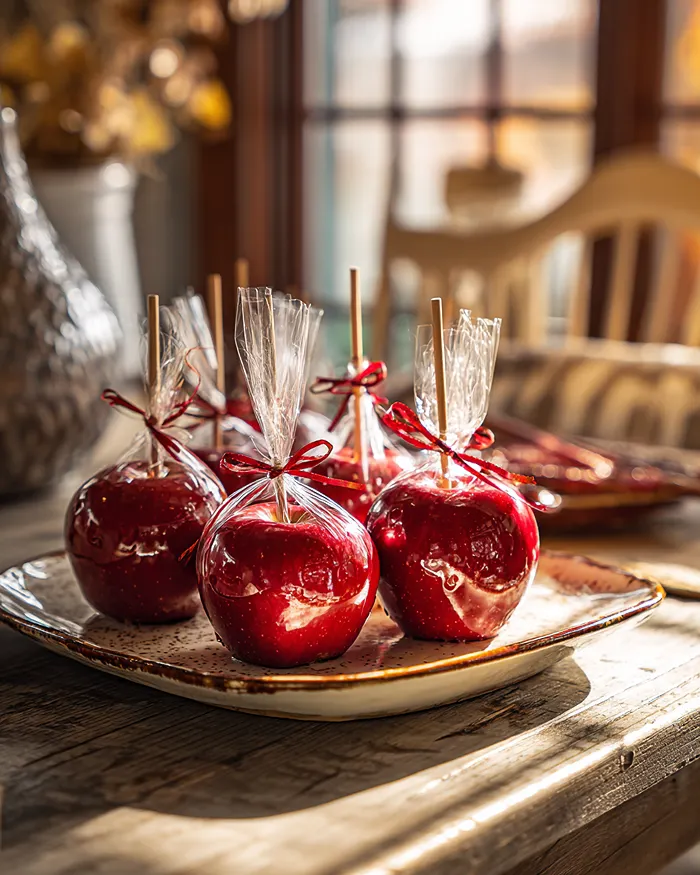
Here’s the nutritional breakdown per candy apple, though let’s be real—these are a treat, not a health food.
| Nutrient | Per Serving |
|---|---|
| Calories | Approximately 280 |
| Total Fat | 0g |
| Sodium | 20mg |
| Total Carbohydrates | 72g |
| Sugars | 68g |
| Protein | 0g |
Note: These are estimates based on standard ingredients. The apple provides a small amount of fiber and nutrients, which somewhat offsets the sugar bomb happening on the outside.
Frequently Asked Questions
Can I use different types of apples for this candy apples recipe?
Absolutely! While small red apples give you that classic look, any variety works great. Granny Smiths are my personal favorite because the tartness balances the sweet coating beautifully. Just stick with smaller apples—they’re easier to handle and eat without your jaw getting tired.
How far in advance can I make these homemade candy apples?
I’d say 2-3 days max for the best quality. They’ll technically last longer in the fridge, but the coating can start getting sticky or the apples can release moisture over time. For parties, I usually make them the day before or the morning of for optimal freshness and crunch.
Why won’t my candy coating harden properly?
Nine times out of ten, this is a temperature issue. Make sure you’re hitting that full 300°F on an accurate candy thermometer. Also, super humid weather can prevent proper hardening. If it’s muggy outside, crank the AC and try again on a drier day.
Can I make candy apples without corn syrup?
Technically yes, but I don’t recommend it for beginners. Corn syrup prevents crystallization and gives you that smooth, glossy finish. Without it, you might end up with grainy or cloudy coating. If you must substitute, look up recipes specifically designed without corn syrup—they usually use different ratios and techniques.
What’s the best way to eat a candy apple without losing teeth?
Ha! The struggle is real. I like to tap the apple on a hard surface first to crack the coating into manageable pieces, then eat it like that.
Or you can slice the whole thing into wedges with a sharp knife. No judgment if you just go for it and embrace the sticky chaos—that’s half the fun, honestly, kind of like diving into a big serving of shepherd’s pie at Sunday dinner.
Time to Make Some Candy Apple Magic
So there you have it—everything you need to create gorgeous, delicious, easy homemade candy apples right in your own kitchen. These beauties are perfect for fall gatherings, Halloween parties, or just because you’re feeling nostalgic for carnival treats without the carnival prices.
The best part? Once you nail this recipe, you’ll realize candy-making isn’t nearly as intimidating as it seems. And the look on people’s faces when you casually mention you made these yourself? Priceless.
Give this simple candy apple recipe a try this weekend and let me know how it goes! Drop a comment below with your results, any fun variations you tried, or just to tell me I’m wrong about Granny Smiths being the superior choice (I’ll fight you on this). And if you loved these as much as my family does, save this recipe to Pinterest so you can find it again next fall.
Maybe pair them with a batch of homemade limoncello for the adults at your next gathering—because why should kids have all the fun?
Happy candy apple making!
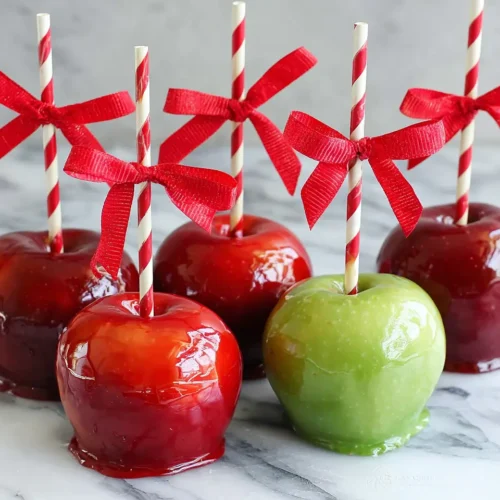
Irresistible Easy Homemade Candy Apples
Equipment
- Candy thermometer
- Heavy-bottomed saucepan
- Cookie sheet
- Wax paper
- Cooking spray
Ingredients
The Apples
- 12 small red or green apples any variety
The Sticks
- 12 lollipop sticks or popsicle sticks
The Candy Coating
- 3 cups granulated sugar
- ½ cup light corn syrup
- 1 cup water
- ½ teaspoon red food coloring adjust to desired color intensity
Instructions
- Wash the apples really well under warm water and dry them completely with a clean towel. Give them a good scrub to remove the waxy coating. Some people even dip them in boiling water for a few seconds to remove the wax.
- Firmly insert lollipop sticks or popsicle sticks into the top of each apple where the stem was. Make sure they’re secure enough that they won’t wiggle loose when dipping.
- Line a cookie sheet with wax paper and give it a light coat of cooking spray. This is where your finished candy apples will cool.
- In a heavy-bottomed saucepan, combine the sugar, corn syrup, and water over medium heat. Stir until everything’s mixed, then clip your candy thermometer to the side of the pan.
- Let the mixture come to a boil without stirring constantly. Watch the thermometer carefully and wait for it to reach 300°F (the hard crack stage). This will take about 15-20 minutes.
- Once the mixture hits 300°F, immediately remove the pan from heat. Carefully stir in the red food coloring, standing back as it may splash and bubble up. Add more food coloring if needed for a more vivid color.
- Working quickly, hold an apple by its stick and dip it into the candy mixture. Swirl it around to coat completely, then hold it up and let excess drip back into the pan. Give it a little twist as the dripping slows down.
- Place each coated apple on the prepared cookie sheet. Repeat with remaining apples, working quickly before the candy cools too much.
- Allow the candy apples to cool and harden completely for at least 30 minutes before touching or serving.